Is It Worth Going To Modena, Italy?
A direct answer to whether Modena deserves your travel days, what the city gives back, and how to scale a visit from thirty minutes to a full day.
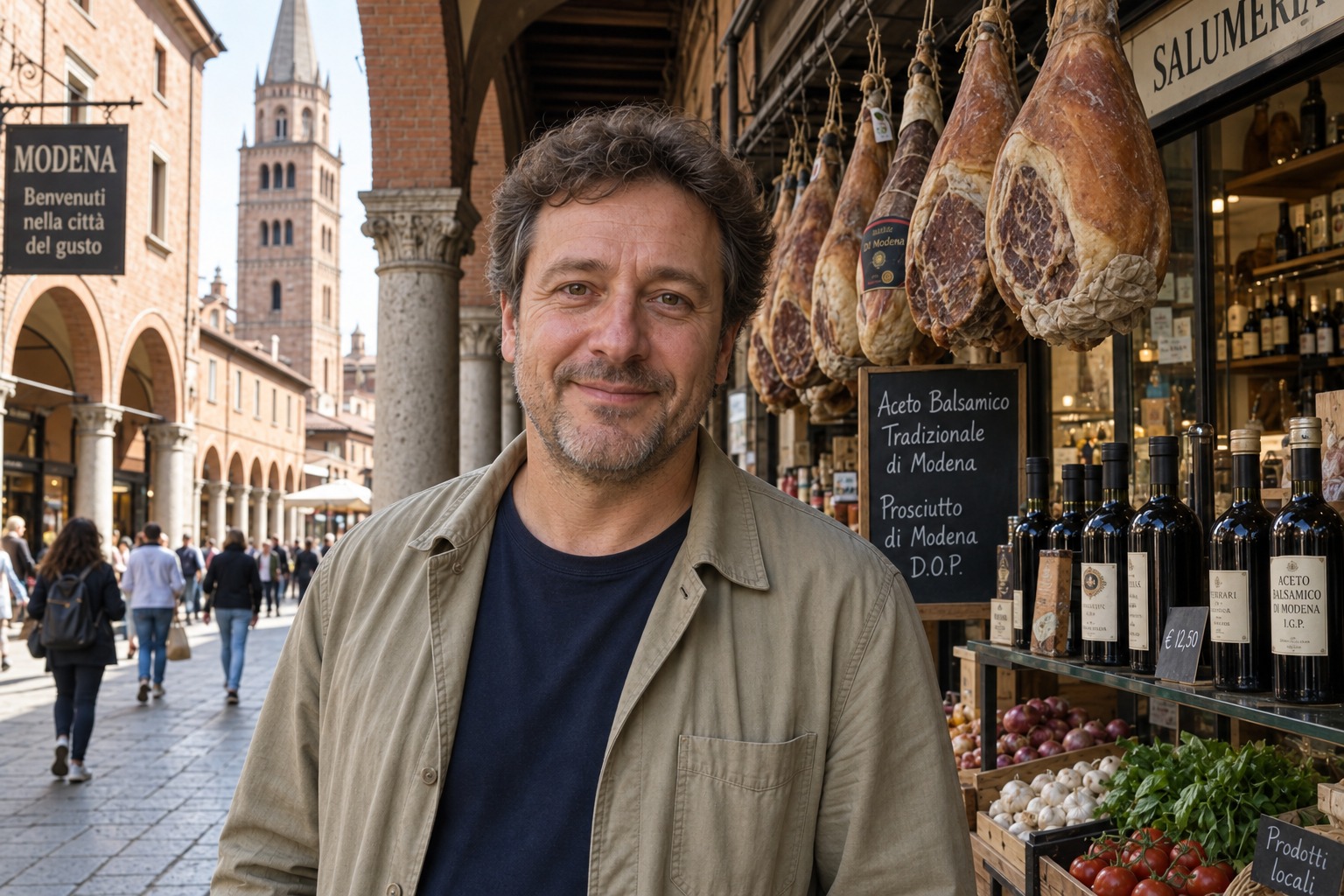 By Marco Montanari, Modena food tour guide and Emilian culinary specialist
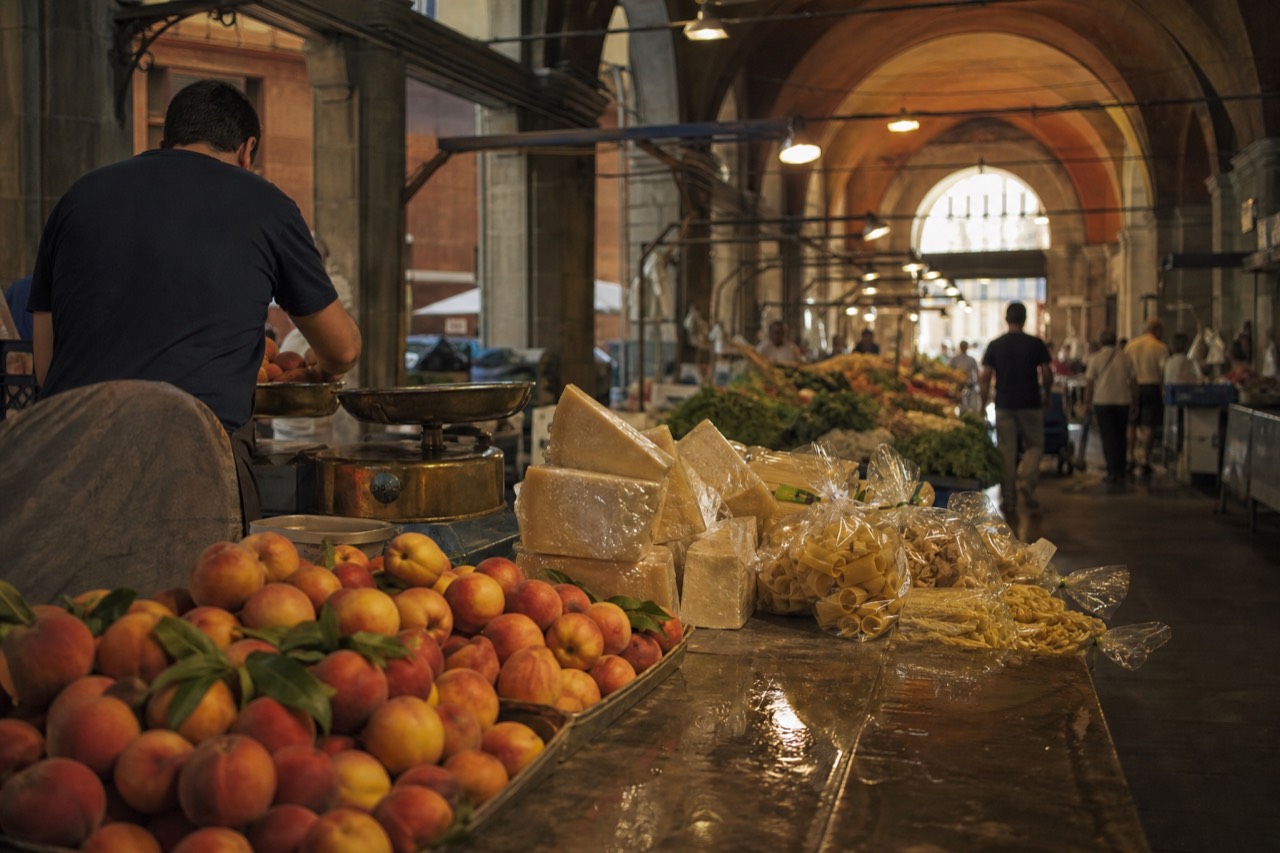
Yes, if food is the reason you travel and you are willing to book ahead. Modena is a compact provincial capital whose fame rests on three protected products, Parmigiano Reggiano DOP, Aceto Balsamico Tradizionale di Modena DOP and Lambrusco, plus one of the most discussed restaurant tables in the world. The city itself takes half a day to see. The experiences around it, dairies, barrel lofts and vineyards, are what turn a stopover into a trip worth the train fare.
That is the honest shape of the answer. Visitors who arrive expecting a Tuscan hill town or a Rome-scale monument walk come away underwhelmed, and the reviews that say Modena is "just another Italian city" usually come from people who saw the Piazza Grande, the cathedral and the Ghirlandina tower, and left (see Best Food City). Those three together are a UNESCO World Heritage site and deserve an hour, not a day.
What Modena actually offers is density. Within roughly half an hour of the centre you can stand over copper vats while Parmigiano Reggiano is made, walk a barrel loft where vinegar has been ageing since before you were born, and drink Lambrusco in the hills where the grapes grow (see Drinking Lambrusco). Almost none of that is walk-in. The dairies take reservations, the acetaie take reservations, and the best tables take reservations months out. Plan for that and the city over-delivers.
The site behind this article, Food Tours in Modena, exists precisely because the answer to this question is "yes, but book first." The rest of this piece sizes the trip honestly, from a thirty-minute stop between trains to a full day, and prices out what each version costs.
If you are already convinced and only want the shortlist, these three experiences cover the range: a private balsamic tasting inside the city, a food walk that ends inside a working acetaia, and a small-group day that pairs the dairies with the Ferrari museums.
What Is Modena Actually Famous For?
Modena is famous for three protected foods and one restaurant. Parmigiano Reggiano DOP, whose entire production zone spans Parma, Reggio Emilia, Modena, part of Bologna and part of Mantova; Aceto Balsamico Tradizionale di Modena DOP, which by law can only be made, aged and bottled inside the province of Modena; and Lambrusco, whose consortium covers six DOC denominations, four of them in Modena province. On top of those sits Osteria Francescana, voted The World's Best Restaurant in 2016 and 2018.
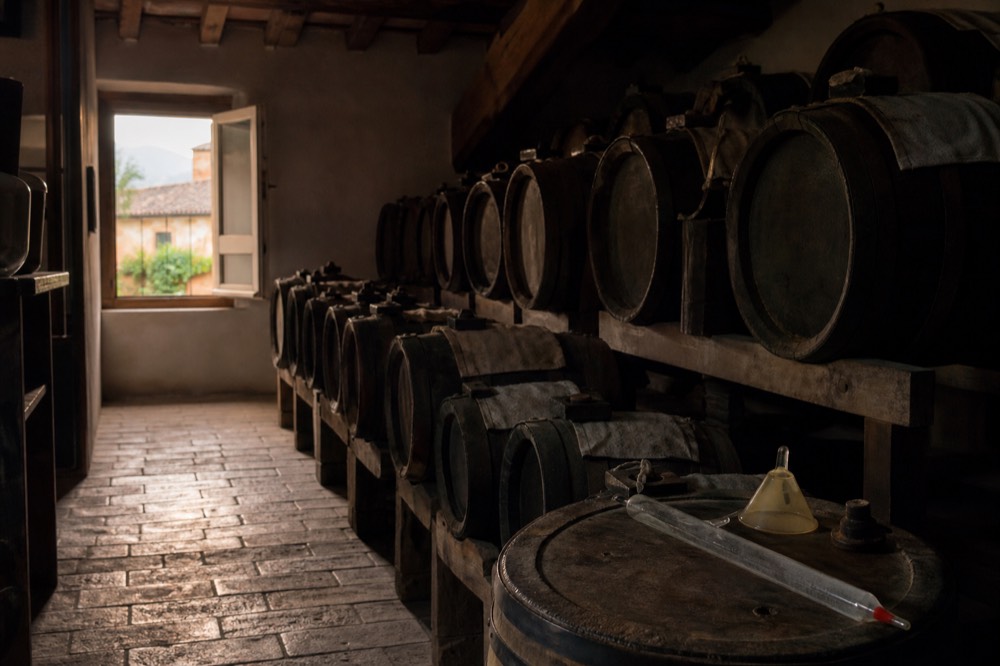
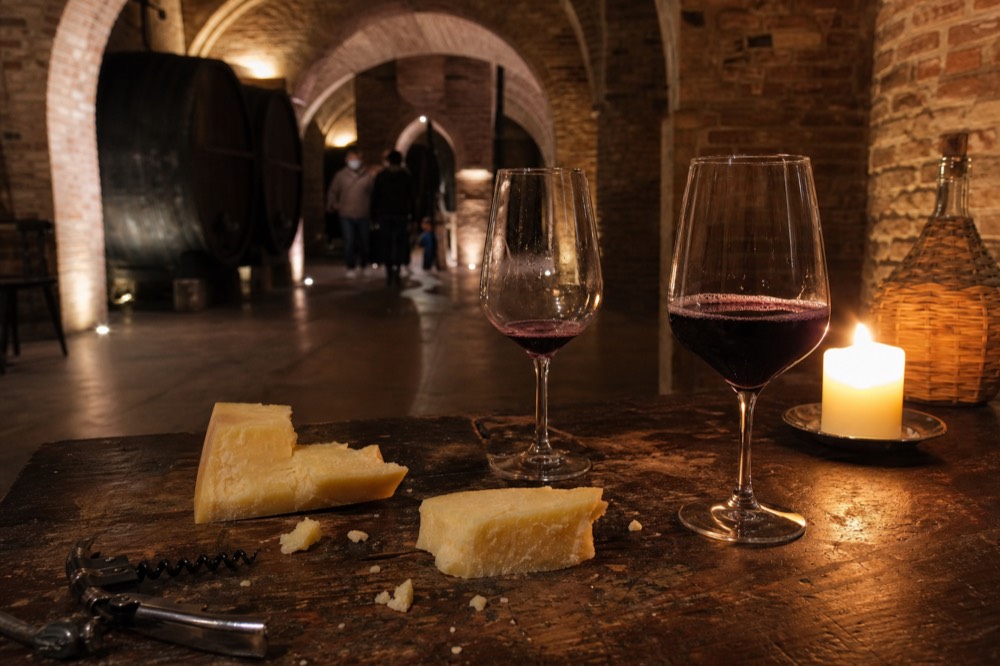
Start with the vinegar, because it is the one thing that genuinely cannot be had elsewhere. Aceto Balsamico Tradizionale di Modena DOP is cooked grape must, nothing else, aged a minimum of 12 years, or 25 for the Extra Vecchio grade, through a graded battery of small barrels. The rules are strict enough that grapes, ageing and bottling must all happen inside the province. That is why the barrel lofts around Modena, and not the supermarket shelf, are the only place to taste it properly, and why the consortium's own FAQ notes that many acetaie take booked visits with the tasting included.
Parmigiano Reggiano works the same way. The Consorzio del Parmigiano Reggiano defines a production zone across five provinces, and cheesemaking happens in the morning, which is why a dairy visit is a morning activity. A Modena-province dairy such as 4 Madonne at Lesignana runs daily reserved visits of about an hour at €22 per adult, tasting included, and its own site notes that afternoon tours cover the make on video instead of live. That single detail, the morning window, shapes every good Modena itinerary.
Lambrusco is the least understood of the three. The Consorzio Tutela Lambrusco lists six DOC denominations, and every one of them permits secco, semisecco, amabile and dolce styles. The dry secco style is what gets poured alongside Modena food, but the idea that Lambrusco is simply "the sweet one" is a leftover from cheap export bottlings decades ago (see Modena Famous Food). Drunk in Modena, next to tortellini in brodo or gnocco fritto, it is a different drink entirely.
And then there is the restaurant. Osteria Francescana won The World's 50 Best in 2016 and again in 2018, and now sits in the Best of the Best group, whose members are no longer eligible for the annual list (see Francescana Worth It). Getting a table is its own project: reservations open on published dates roughly six months ahead, and a no-show costs €300 per person. Most visitors will not eat there, and that is fine, because the city's everyday eating, from the market counters to the old osterie, is the real argument for going. Our guide to booking Osteria Francescana covers the mechanics if you want to try.
How Many Days Do You Need In Modena?
One full day is enough for the city plus one producer visit. Two days lets you add a dairy in the morning and a Lambrusco cellar in the hills. Three days is the ceiling for most travellers, and beyond that you are better off moving on to Bologna or Parma. Modena rewards depth over duration: three well-chosen bookings beat five days of wandering, because the wandering part is genuinely short.
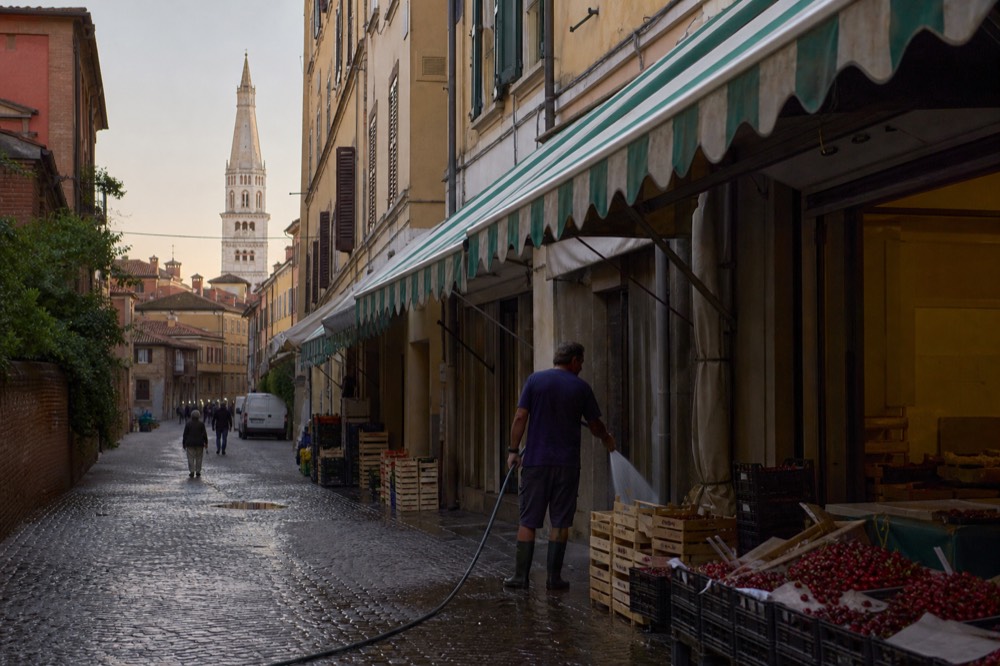
The scaling works like this. A half day covers the centre: Piazza Grande, the cathedral, the Ghirlandina, and a loop through Mercato Albinelli, whose stalls open Monday to Saturday 07:00-15:00 and close on Sunday. That is the whole monument-and-stroll itinerary, done comfortably. Add one booked experience in the afternoon, a balsamic tasting inside the city, and you have a complete and satisfying day.
A full day adds the province. Mornings belong to a Parmigiano Reggiano dairy, because that is when the cheese is made. Afternoons can go to an acetaia or a Lambrusco cellar in the Castelvetro hills, both reachable by public transport or a short drive. The Modena day trip from Bologna guide lays out this exact shape for people basing themselves in the bigger city.
Here is how the time budgets break down in practice:
| Time you have | What fits | What to book ahead |
|---|---|---|
| 30 minutes | Piazza Grande and the cathedral facade, between trains | Nothing |
| Half a day | The centre plus Mercato Albinelli, a market lunch | A market-adjacent table if eating at a stall restaurant |
| One day | The centre, plus one producer visit in the afternoon | One tasting, ideally in the city or a short ride out |
| Two days | Dairy in the morning, acetaia or cellar in the afternoon, unhurried dinners | Two or three producer bookings, spread across both days |
| Three days | All of the above plus Spilamberto's balsamic museum or the Ferrari museums | Everything above, plus any special-event dates |
The one mistake to avoid is treating Modena as a spontaneous destination. The dairy visits, the good acetaie and the best pasta classes all run on reservations, and the things you can do without one, the market, the squares, the museums, are the parts that fill the gaps rather than the reason to come. Check the next available dates for whatever producer experiences interest you before you lock in your train times, because the morning dairy window in particular dictates the shape of the day.
For travellers with only one slot to fill, the private tasting at a city acetaia is the booking that answers this whole question in a single afternoon, and it can be arranged around whatever else your day holds.
What Does A Trip To Modena Actually Cost?
Modena is cheaper than the big three Italian cities on lodging and eating, but the experiences are the real line item. A dairy visit runs about €22 per adult at a Modena-province caseificio. A museum entry is a few euro. The variable costs are the booked tastings and tours, which span from short cellar visits to full-day combinations, and dinner, which can be €15 at a market counter or several times that at a serious osteria.
The fixed costs are predictable. The Ferrari museums, if the motor side of the Motor Valley appeals, list single adult tickets at €27 from October to April and €32 from May to September, with a combined two-museum pass at €38 and €42 for the same seasons. The balsamic museum in Spilamberto publishes its hours, Tuesday to Sunday with a shorter Wednesday morning, and guided visits at fixed times through the day, though it does not publish an entry price on its own site.
The honest way to budget is by tier of experience:
| Spend tier | What it buys | Who it suits |
|---|---|---|
| Market-counter day | Stalls, a stall-restaurant lunch, the centre on foot | Travellers passing through between Bologna and Parma |
| One-booking day | A dairy or acetaia visit plus market eating | First-time visitors with a single free day |
| Two-booking day | Dairy morning plus a tasting or cellar afternoon | Food-motivated visitors, the core Modena audience |
| Full combination day | Dairy, acetaia, cellar and lunch with transport included | Visitors who want the province without driving |
| Splurge | A tasting-menu dinner, or the full Francescana attempt | Special-occasion travellers who plan months ahead |
Two costs deserve a warning. First, the famous table: Osteria Francescana places a €300 per person authorisation hold on your card four days before the booking, and late cancellations and no-shows are charged at that rate (see Francescana Cost Per Person). Second, the spontaneous instinct: turning up in Modena on a Sunday in September and hoping to walk into an acetaia will fail on two counts, because many are appointment-only and the market stalls shut on Sundays. The Modena food tour prices guide breaks the tour tiers down in more detail if you are weighing a guided day against self-driving.
Is Modena Better Than Bologna Or Parma?
Modena is not better than Bologna or Parma, and they are not better than Modena, because the three cities answer different questions. Bologna is the biggest and the best base, with the widest eating and the busiest life. Parma is the most elegant and the closest to prosciutto and its own cheese culture. Modena is the smallest and the most focused, and it is the only one of the three where traditional balsamic vinegar can legally be made.
The practical comparison looks like this:
| Modena | Bologna | Parma | |
|---|---|---|---|
| Size and feel | Compact provincial capital | Busy university city | Relaxed mid-size city |
| Signature products | Traditional balsamic DOP, Parmigiano zone, Lambrusco hills, Ferrari | Tortellini, mortadella, the food-market scene | Parmigiano heartland, prosciutto di Parma |
| Best as | A one or two-day food destination | A base for day trips across Emilia-Romagna | A slow food-and-culture stop |
| Bookings needed | High: most producer visits are reserved | Lower: the market and most eating is walk-in | Medium: dairies and prosciutto factories book ahead |
| Transport from the others | Short train ride from Bologna | Hub | Short train ride from Bologna |
The strongest argument for Modena is exclusivity. Aceto Balsamico Tradizionale di Modena DOP cannot be produced anywhere else on earth, by law, and the barrel lofts where it ages are scattered across the province rather than concentrated in the city. If that product interests you, Modena is not one option among three, it is the only option. The same logic applies to the Ferrari museums: Maranello sits a 27-to-31-minute bus ride from Modena's station on line 800, and the combination of cars and food in one day is something neither rival city can assemble.
The strongest argument against is atmosphere. Bologna has more streets to get lost in and more nightlife. If your trip is about wandering rather than tasting, base yourself there and day-trip in. Our Bologna or Modena comparison covers that trade-off in detail.
Do You Need A Car In Modena?
No, but a car widens the map. The city centre is entirely walkable, the market and the main sights sit within ten minutes of each other, and SETA buses reach the key producer towns: line 800 to Maranello in under half an hour, line 740 to Castelvetro in the Lambrusco hills, line 731 to Spilamberto for the balsamic museum. A car only becomes necessary if you want to string several small acetaie or family dairies together in one day.
The bus network is better than most visitors expect. Line 800 runs from Modena Autostazione to Maranello with service through the day and on Sundays, which makes the Ferrari-plus-food day possible without driving. Line 740 reaches Castelvetro, where several Lambrusco estates and the best-known acetaia in the hill town sit, in 41 to 47 minutes. Line 731 links Modena with Spilamberto, home of the Museo del Balsamico Tradizionale, whose guided visits run at fixed times on open days.
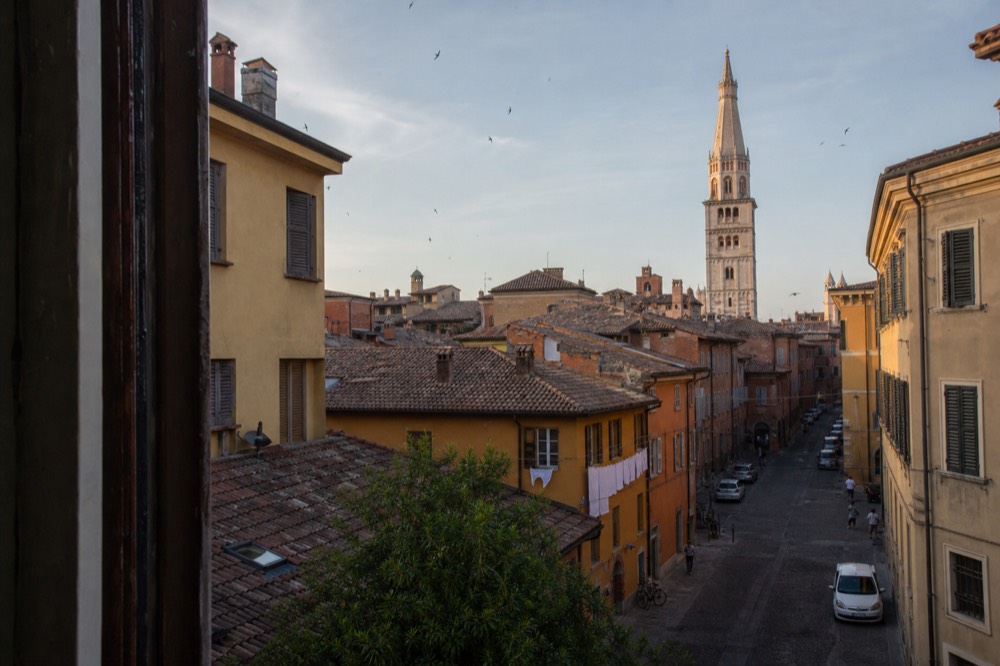
The market itself needs no transport at all. Mercato Albinelli has traded since 1931 a short walk from Piazza Grande, with entrances on Via Luigi Albinelli, Via Mondatora and Piazza XX Settembre, and its restaurants keep different hours from the stalls, opening seven days including Sunday. It is the cheapest good lunch in the centre and the best place to assemble a picnic of the three protected products in one stop.
One transport note that saves money and grief: the historic centre is a limited-traffic zone, and restaurants inside it, including the famous one, warn arriving guests not to drive or park there. Come by train, walk, and use buses or a booked transfer for the province. The small-group combination days that run from Modena railway station exist precisely to solve this, no car needed.
If that combination day sounds like your speed, check the current price before you plan the itinerary, since the full dairy-plus-Ferrari-plus-acetaia format with transport included is the one booking that replaces a rental car entirely.
When Is The Best Time To Visit Modena?
May, June, late September and early October are the best months. Spring and autumn give you producer visits in comfortable weather and the food calendar at its fullest. Late September is the sweet spot: the Castelvetro grape festival runs 19-27 September, Acetaie Aperte opens more than 30 acetaie on Sunday 27 September, and the market extends its hours for festival weekends. July and August are hot, and August is when some long-standing restaurants close for the month.
The late-September cluster deserves the emphasis. The Sagra dell'Uva e del Lambrusco Grasparossa in Castelvetro runs over nine days, and Acetaie Aperte, the open-doors day organised by both balsamic consortia, opens vinegar houses across the province that are otherwise appointment-only, though several still take bookings for it. If traditional balsamic is your reason for coming, that single Sunday is the highest-density tasting opportunity of the year.
Winter has its own case: fewer crowds, the museums open year-round, and the pasta dishes of the region, tortellini in brodo above all, taste best when it is cold. The market stalls extend their Saturday close to 19:00 in winter, and the published closures cluster on the public holidays, so a February visit trades festival energy for empty barrel lofts and unhurried tastings.
The timing that matters most, though, is not the month but the hour. Dairies make cheese in the morning, so a Modena itinerary is always built around an early start on dairy days, with afternoons for vinegar and wine. Get that sequencing right and even a single day feels complete.
The short answer to every version of this question is yes, with a booking attached. Modena rewards visitors who reserve a dairy morning, a balsamic tasting or a pasta class, and it underwhelms those who only walk the centre. The questions below cover the situations people actually ask about: day-tripping from Bologna, missing out on the famous table, and whether the city is too small to hold two days.
Common Questions About Visiting Modena
Is It Worth Going To Modena, Italy?
Yes, if food is your reason for travelling and you book ahead. The city centre takes half a day; the booked experiences around it, a Parmigiano dairy in the morning, a balsamic barrel loft, a Lambrusco cellar in the hills, are what justify the trip. Visitors who skip the bookings and only walk the centre often leave disappointed.
Is Modena Worth Visiting If I Cannot Get Into Osteria Francescana?
Yes. The restaurant is a small part of what the city offers. The everyday eating, from market counters to old osterie, plus the producer visits in the province, carry the trip on their own.
Can I See Modena As A Day Trip From Bologna?
Yes, and many people do. The train between the two cities is a short ride, the centre is compact, and one or two booked experiences fit comfortably in a day. Two days is better if you want both a dairy morning and a hill afternoon.
Do I Need To Book Producer Visits In Advance?
Mostly yes. Dairies run reserved visits timed around the morning make, acetaie are frequently appointment-only, and pasta classes have small group sizes. The things you can do spontaneously are the market, the squares and the museums.
Is Modena Too Small To Fill Two Days?
Not if the second day goes to the province. The city itself is a half-day, but the dairy mornings, the Castelvetro hills, Spilamberto's balsamic museum and Maranello's museums all sit within roughly half an hour of the centre.