How Are You Supposed To Drink Lambrusco In Modena?
How Lambrusco is actually served in Modena: the right temperature, the right glass, the secco style poured with food, and what each of the denominations is meant to accompany.
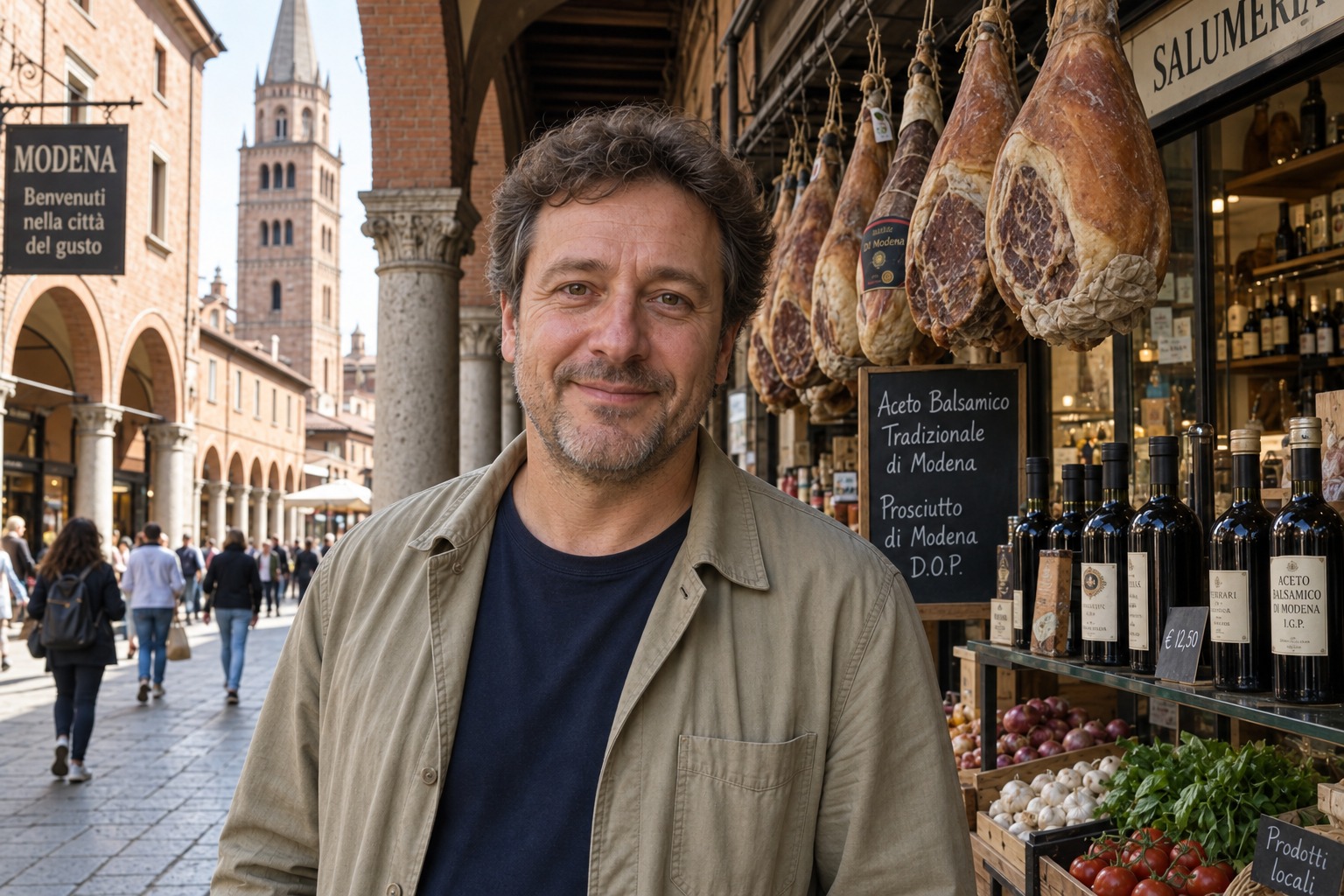 By Marco Montanari, Modena food tour guide and Emilian culinary specialist
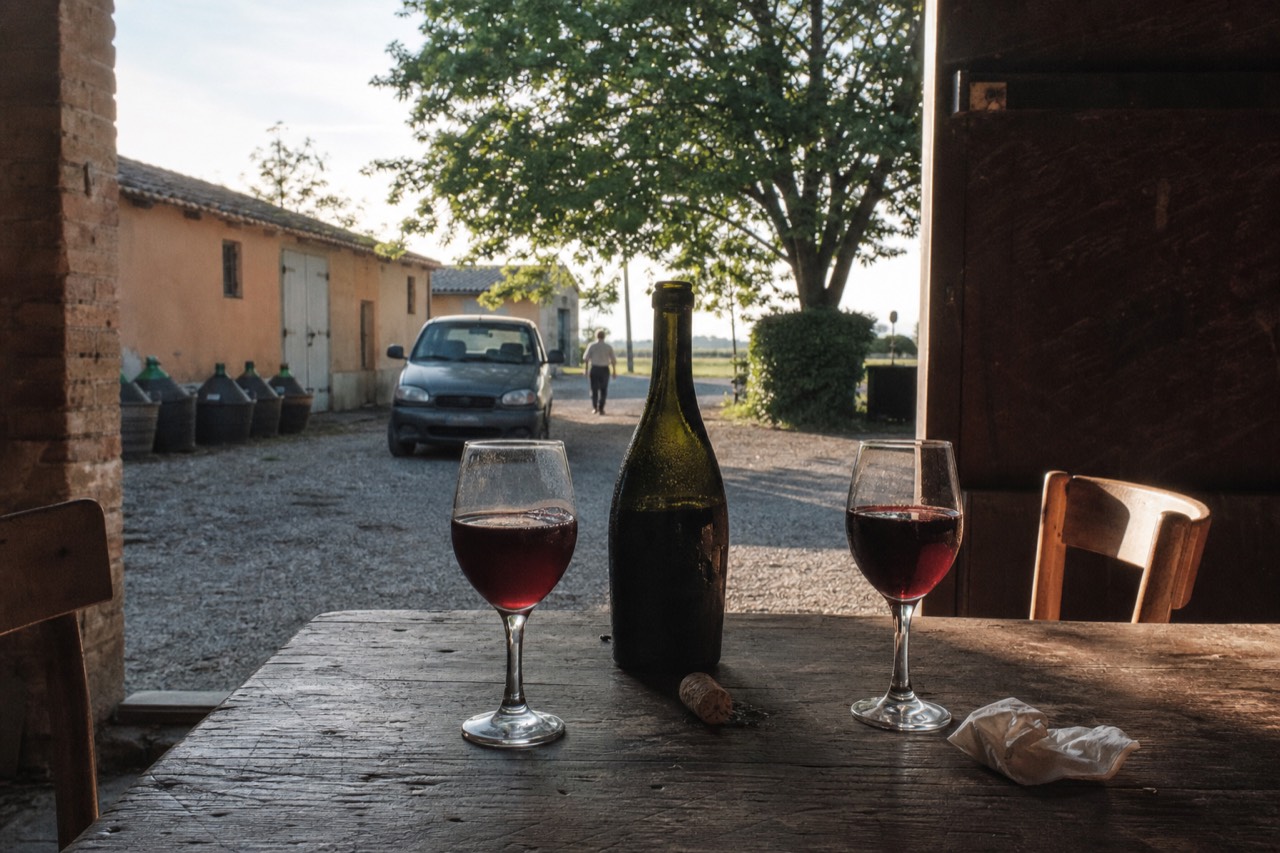
Lambrusco is the wine Modena drinks with lunch. It is frizzante, mostly red, made from grapes grown inside the province, and it exists for one job: cutting through the richest food in Italy. That job shapes everything about how it is served, from the temperature to the glass to the style chosen off the label. Get those three things right and the wine makes sense. Get them wrong, and it is just a fizzy red served too warm.
The wine is also more varied than its export reputation suggests. The Consorzio Tutela Lambrusco covers six DOC denominations, four of them in Modena province, and every one of them permits secco, semisecco, amabile and dolce versions. The dry, lightly sparkling secco style is what gets poured alongside Modenese food. That framing matters, because the blanket claim that Lambrusco is simply "dry, not sweet" is not supported: the denominations make the full range, and the choice of style is a decision the drinker makes.
This site, Food Tours in Modena, tracks how these wines are actually served in the province, and this guide walks through the practical answers: temperature, glassware, label styles, the denomination-by-denomination differences, and the food each one is meant to stand next to.
What Temperature Should Lambrusco Be Served At?
Serve Lambrusco cool, between roughly 8 and 12 degrees Celsius, which is warmer than a fridge straight out of the door and cooler than room temperature. The frizzante style is the point of the wine, and the bubbles hold better and feel finer at cellar temperature than at refrigerator temperature. In practice, Modenese tables pull the bottle out of the fridge twenty minutes before pouring.
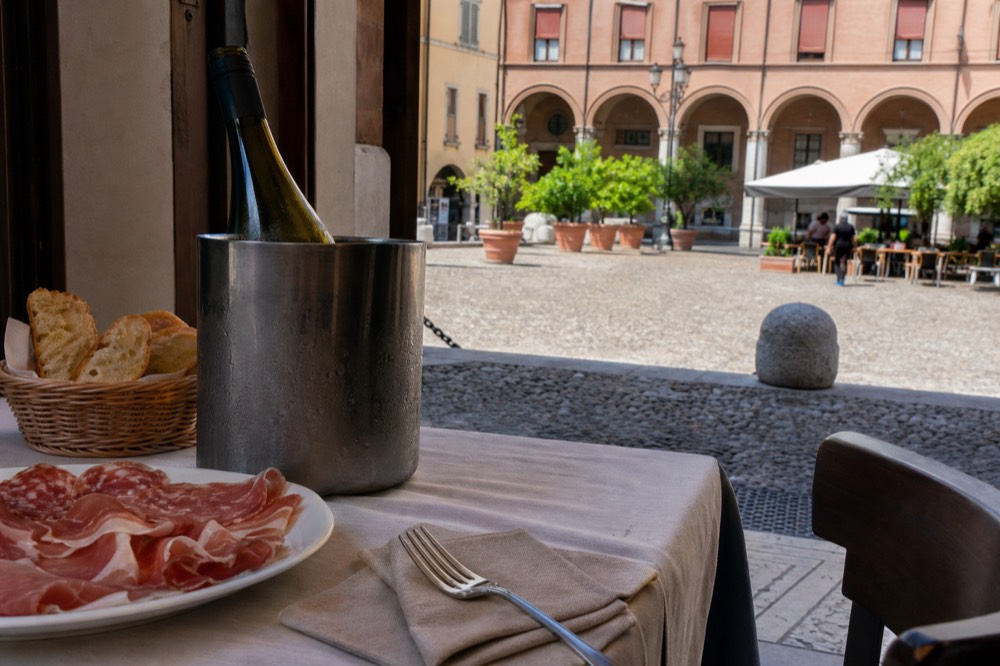
The reason is texture. Lambrusco is frizzante, which means lightly sparkling rather than fully spumante, and that is the style most producers bottle. A frizzante wine served too cold goes tight and silent: the mousse flattens, the fruit closes, and the wine tastes thinner than it is (see Lambrusco Wine Type). Served too warm, the same wine goes soft and the carbonation turns coarse on the tongue. The band between the two is where the wine was designed to sit.
The practical habit in the province is simple. The bottle lives in the fridge, comes out shortly before the meal, and is not iced at the table. An ice bucket is for white wine in August, not for Lambrusco at Sunday lunch. If you are pouring over a long meal, an unopened bottle stays cool in the cellar or a cool corner of the kitchen, and only the open one sits on the table.
| Style on the label | Serve at | Why |
|---|---|---|
| Secco frizzante | 8-12°C | The standard table pour; bubbles stay fine and the acidity carries the food |
| Semisecco frizzante | 8-12°C | A touch of residual sugar reads best with the same cooling |
| Amabile / dolce | 6-10°C | Slightly colder keeps the sweetness from feeling heavy |
| Spumante versions | 6-8°C | Higher pressure tolerates, and benefits from, more chill |
None of this needs equipment beyond a fridge and a clock. If you are tasting Lambrusco at a cantina in the province rather than at home, the producer pours it at their own preferred temperature, and that is worth noticing: it is usually a degree or two warmer than what a restaurant fridge produces, and it is the temperature the winemaker considers correct for their own wine. If a cellar tasting is on your list for a Modena trip, check the next available dates before you plan the day around it, since the small family estates run on booked slots.
Which Glass Should You Pour Lambrusco Into?
Use a stemmed glass with a tulip or slightly tapered bowl, the kind you would use for a still white wine. The taper collects the delicate frizzante bubbles and the aromatics at the nose, while the stem keeps your hand off the bowl and the wine at the temperature you chose. The traditional small, thick tumbler of old Emilian osterie is charming and increasingly rare, but it warms the wine fast.
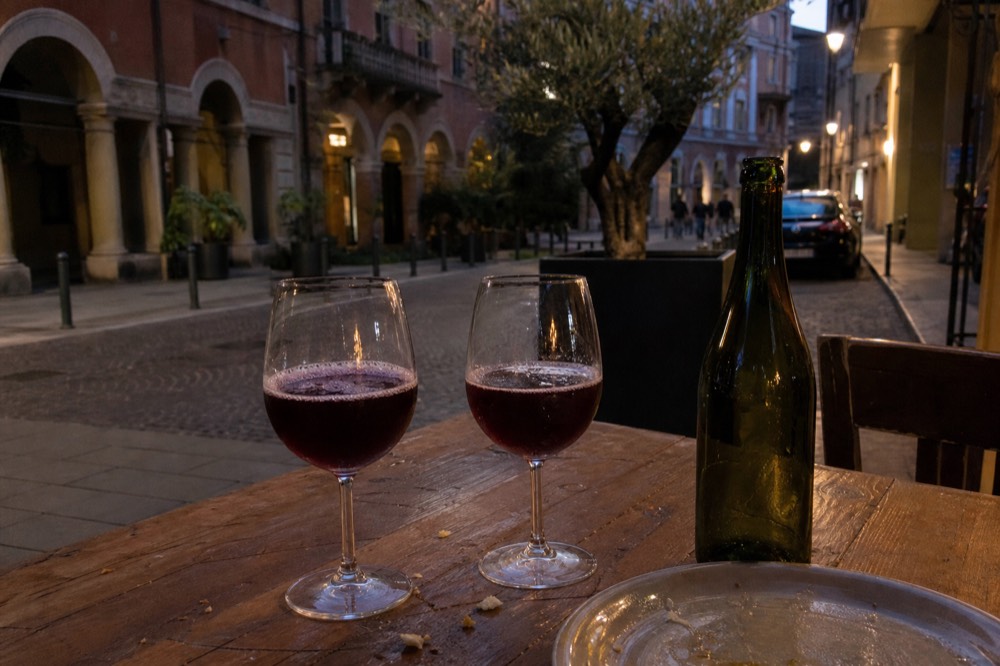
The glass question follows directly from the temperature question. A frizzante wine with relatively low pressure does not need a flute, which is built for high-pressure spumante and would strangle the aromatics of a red. A wide red-wine goblet, on the other hand, lets the gentle fizz dissipate before the wine reaches your mouth. The middle path, a medium tulip, is what most producers in the province hand you at a tasting.
There is a historical footnote worth knowing. For most of the twentieth century, Lambrusco in Emilia was drunk from small heavy tumblers, sometimes even the mass-market bottles were served in the squat glass, and part of that habit was deliberate: this was a wine for the middle of a meal, not for contemplation. The modern shift to stemmed glassware tracks the quality shift in the denominations themselves. Both habits still exist, and neither is wrong, but if you are served a good secco Sorbara in a tumbler on a warm day, drink it quickly.
Pouring matters too. Tilt the glass, pour down the side, and let the mousse settle rather than forcing a foam head. Frizzante wines foam easily, and a slow pour preserves the fine, persistent bead that separates a well-made bottle from a cheap one.
What Do Secco, Semisecco, Amabile And Dolce Mean On A Lambrusco Label?
Those four words are the sweetness scale, from driest to sweetest, and every one of the six Lambrusco DOC denominations permits all four. Secco is the dry style poured with savoury food in Modena; semisecco carries a little residual sugar; amabile is distinctly sweet-leaning; dolce is dessert territory. The label word, not the denomination, tells you what the bottle will taste like.
This is the single most useful thing to understand when standing in front of a shelf of Lambrusco. Two bottles of Lambrusco Grasparossa di Castelvetro DOC, same producer, same denomination, can be a bone-dry red or a sweet dessert pour, and the only difference visible is that one word. Visitors who first met Lambrusco abroad, in the sweeter amabile versions that dominated exports in earlier decades, often expect a sweet wine. In its home province, the secco versions dominate the table.
The sanctioned framing, straight from the consortium's own material, is that Lambrusco is made across the full range and the dry style is the one that gets poured alongside Modena food (see Is Modena Worth It). Nobody in the province claims the wine is uniformly dry, because the denominations' rules do not say that. What locals do claim, and practise, is that a cut of cured pork, a plate of tagliatelle al ragù and a glass of secco Lambrusco is the correct combination.
If reading a label in a shop is one thing, tasting the styles side by side at the source is another, and the shortest version of that in the province pours the wine and the traditional vinegar in the same room.
How Do The Four Modena Denominations Differ When You Drink Them?
The four Modena-province denominations, Sorbara, Grasparossa di Castelvetro, Salamino di Santa Croce and Modena DOC, pour distinctly different glasses. Sorbara is pale, high-acid and violet-scented; Grasparossa is the darkest and most tannic; Salamino sits in the middle with raspberry fruit; Modena DOC is the broadest church, covering whites, rosati and novelli alongside Lambrusco.
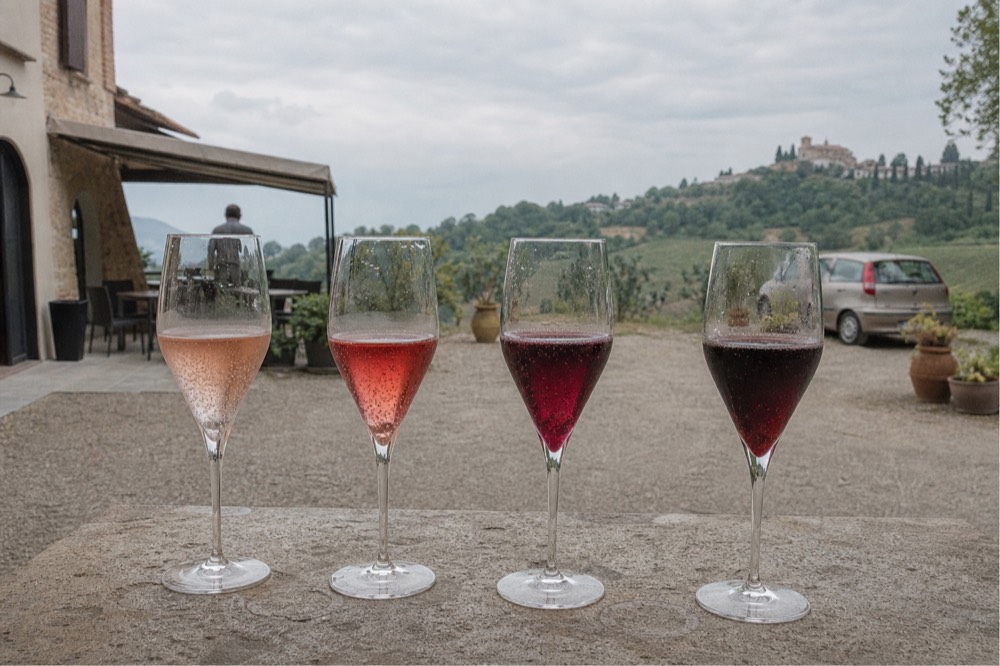
Sorbara, grown around the northern plain of the province, is the aperitivo wine of the four. Its pale colour, sometimes almost onion-skin, and its high acidity make it the lightest glass at the table, and it is the one most often poured with the first course or with plain salumi. Grasparossa di Castelvetro, from the hills south of the city, is the opposite pole: the deepest colour, the most pronounced body and tannin, and the wine that stands up best to the heaviest dishes on the Modenese table. Salamino di Santa Croce is the versatile middle, deep ruby with raspberry and cherry, medium-bodied and drunk through a whole meal.
Modena DOC is the denomination that covers the central band of the province and takes in more than Lambrusco: white, rosato and novello frizzanti and spumanti all sit under it. It is the denomination you are most likely to meet as a house wine in the city, and it is where the everyday drinking of the province mostly happens.
| Denomination | Where it is grown | In the glass | The moment for it |
|---|---|---|---|
| Lambrusco di Sorbara DOC | Northern plain of Modena province | Pale, violet and red fruit, high acid, light body | Aperitivo, salumi, first courses, summer drinking |
| Lambrusco Grasparossa di Castelvetro DOC | Hills and high plain around Castelvetro | Darkest of the four, most body and tannin | Rich mains, boiled and roasted meats, aged cheese |
| Lambrusco Salamino di Santa Croce DOC | Western Modena province | Deep ruby, raspberry and cherry, medium body | The whole meal, the safe order |
| Modena DOC | Central band of the province | Broad range: reds, whites, rosati, novelli | The house pour, everyday lunch |
Tasting the four side by side is the fastest way to internalise the differences, and that is exactly the format the better cantina visits use: three or four styles poured next to each other so the contrast is obvious. A sommelier-led cellar visit in the province will usually build the tasting around this denominational logic rather than around a single wine. If that appeals, check the live price before you commit an afternoon to it, since formats and group sizes vary a good deal between estates.
What Food Is Lambrusco Supposed To Cut Through?
Lambrusco exists to stand next to the fatty, rich food of Modena: cured pork, gnocco fritto, tagliatelle al ragù, tortellini in brodo, boiled meats and aged cheese. The wine's acidity and fine fizz scrub the palate between bites, which is why the secco style is the default at the Modenese table. The pairing logic is not decoration, it is the reason the wine is made the way it is.
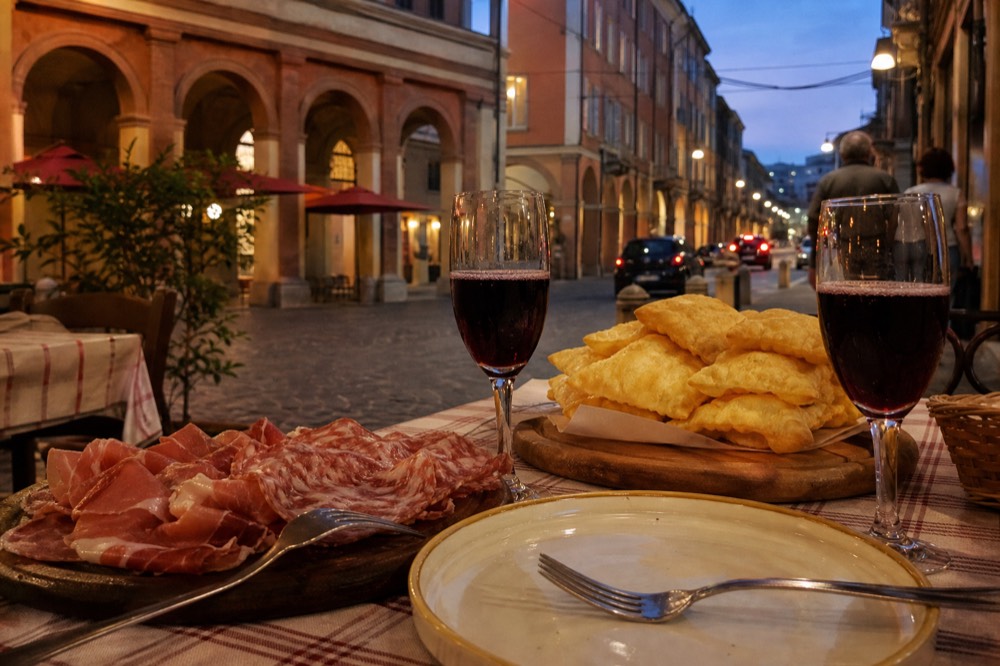
Start with gnocco fritto, the fried pillow of dough that Modena eats with salumi. It is pure hot fat and salt, and a dry, lightly sparkling red is the correct answer to it: the bubbles and the acid reset the mouth so the next piece tastes as good as the first (see Lambrusco vs Prosecco). The same logic runs through the whole repertoire. Tagliatelle al ragù, the slow pork-and-beef sauce of the province, needs the acid. Tortellini in brodo, the capolavoro of the Modenese kitchen, is traditionally accompanied by Lambrusco rather than by any still wine.
The cheese course is where the pairing gets specific. Parmigiano Reggiano, made under rules that require a minimum 12 months of ageing and commonly 24 to 36, has the salt crystals and the savoury depth to meet Grasparossa head on, and a few drops of traditional balsamic on a shard of the cheese with a glass of Lambrusco beside it is the classic three-part Modenese tasting. The vinegar in that trio must be the real thing, Aceto Balsamico Tradizionale di Modena DOP, whose 12-year minimum ageing and numbered seal are set out by its own disciplinare, and not the everyday IGP condiment, which is a different product with different rules.
| Food | The Lambrusco to pour | Why it works |
|---|---|---|
| Gnocco fritto and salumi | Secco Sorbara | Acid and fizz reset the palate after hot fat and salt |
| Tagliatelle al ragù | Secco Salamino or Modena DOC | Medium body matches the sauce without fighting it |
| Tortellini in brodo | Secco Sorbara or Salamino | The broth is rich; the wine keeps it from cloying |
| Boiled meats (bollito) | Secco Grasparossa | Tannin and body stand up to the richest plate of the meal |
| Parmigiano Reggiano 24-36 months | Secco Grasparossa, with a drop of DOP balsamic | Salt, crystal crunch, sweet-sour vinegar and dry fizz in one bite |
If you want to eat your way through those pairings rather than read about them, the city food walks that work through the old centre and the market stops at exactly this kind of combination, and our guide to what to eat in Modena lays out the dishes in the order you will meet them. The Lambrusco tastings in Modena guide covers the cantina side, including the estates you can visit without a car.
Where Should You Drink Lambrusco Around Modena?
The three best settings are a cantina in the hills around Castelvetro, a sagra in September, and a trattoria in the city with the wine as the house pour. Castelvetro is the heartland of Grasparossa and reachable by public bus; the September sagra season puts the wine at the centre of village life; and the city's osterie pour it by the carafe at lunch.
The hill town of Castelvetro di Modena, about 40 to 47 minutes from Modena by bus on SETA line 740, concentrates several of the province's best-known Lambrusco houses, including its oldest commercial producer, founded in 1860 (see Days in Modena). A tasting there is not a museum piece: you stand in the working cellar, you meet the family, and the wines are poured in the denominations we walked through above. One estate in the hills, Opera 02 at Ca Montanari, makes both the wine and the vinegar, so a single short tasting covers Grasparossa and a traditional acetaia in the same room, which is the most efficient introduction to the two products that define the province.
If you would rather stay among the vines the whole afternoon, a small family estate in the Grasparossa hills runs a visit that covers the vineyard as well as the cellar before the wines are poured, which is the fuller picture of how the denomination is made.
September is the month that ties it all together. The Sagra dell'Uva e del Lambrusco Grasparossa fills Castelvetro from 19 to 27 September 2026, and on Sunday 27 September the Acetaie Aperte event opens more than 30 vinegar houses across the territory for visits and tastings, so a well-timed weekend can take in the wine festival, the vinegar houses and the harvest season in one trip. Book any producer visit for that weekend well ahead: several acetaie take bookings only, and the small estates fill first.
For the city version, the walking food tours that start on Piazza Grande and work through the market and the salumerie pour Lambrusco at the counter alongside the gnocco fritto, which is the pairing in its natural habitat (see Best Food Tour City). See the next available dates if you are planning around a weekend, since the small-group formats fill ahead of the high season.
Lambrusco is served cool in a stemmed glass, in the dry secco style, and beside the rich food of Modena. The questions below cover the specifics: the serving temperature, the glassware, the sweetness words on the label, the cheese pairing, and how to reach the cantinas of the hills without a car. Each answer restates the practical rule as it is applied in the province itself.
Common Questions About Drinking Lambrusco
How Are You Supposed To Drink Lambrusco?
Cool, between roughly 8 and 12 degrees Celsius, in a stemmed tulip glass, and in the dry secco style when it accompanies food. Pour slowly down the side of the glass to keep the fine frizzante bead, and serve it beside the rich dishes of Modena: salumi, gnocco fritto, tagliatelle al ragù, tortellini in brodo and aged Parmigiano Reggiano.
Should Lambrusco Be Chilled?
Yes, but not refrigerator-cold. Around 8 to 12 degrees Celsius is the serving band: take the bottle out of the fridge about twenty minutes before pouring. Too much chill flattens the frizzante bubbles and closes the fruit; too little and the fizz turns coarse.
Is Lambrusco A Sweet Wine?
Not inherently. All six Lambrusco DOC denominations permit secco, semisecco, amabile and dolce versions, so the sweetness is a choice stated on the label. The sweet reputation comes from the amabile exports of past decades. In Modena the dry secco style is what gets poured with food.
What Glass Do You Use For Lambrusco?
A stemmed tulip or slightly tapered white-wine glass. It gathers the gentle frizzante mousse and the aromatics at the nose while keeping your hand from warming the wine. A flute is too tight for a red; a wide goblet lets the low-pressure fizz dissipate.
Which Lambrusco Goes With Parmigiano Reggiano?
A secco Grasparossa di Castelvetro. Its body and tannin stand up to the salt and the tyrosine crystals of a 24 to 36 month wheel, and the classic Modenese tasting adds a drop of Aceto Balsamico Tradizionale di Modena DOP on the cheese alongside the glass.
Can You Visit A Lambrusco Cantina Without A Car?
Yes. Castelvetro, the heartland of Grasparossa, is reachable from Modena Autostazione on SETA line 740 in roughly 41 to 47 minutes, and several estates there run booked tastings. Some tours also arrange pickup or meet at Modena railway station.