Things To Do In Modena For Food Lovers
Modena puts three protected food products within reach of one small city: Parmigiano Reggiano, Aceto Balsamico Tradizionale di Modena DOP and Lambrusco. This guide ranks the essential food experiences, tells you which need a booking days ahead and which you can walk into, and how to string them into a day or a weekend.
Short answer
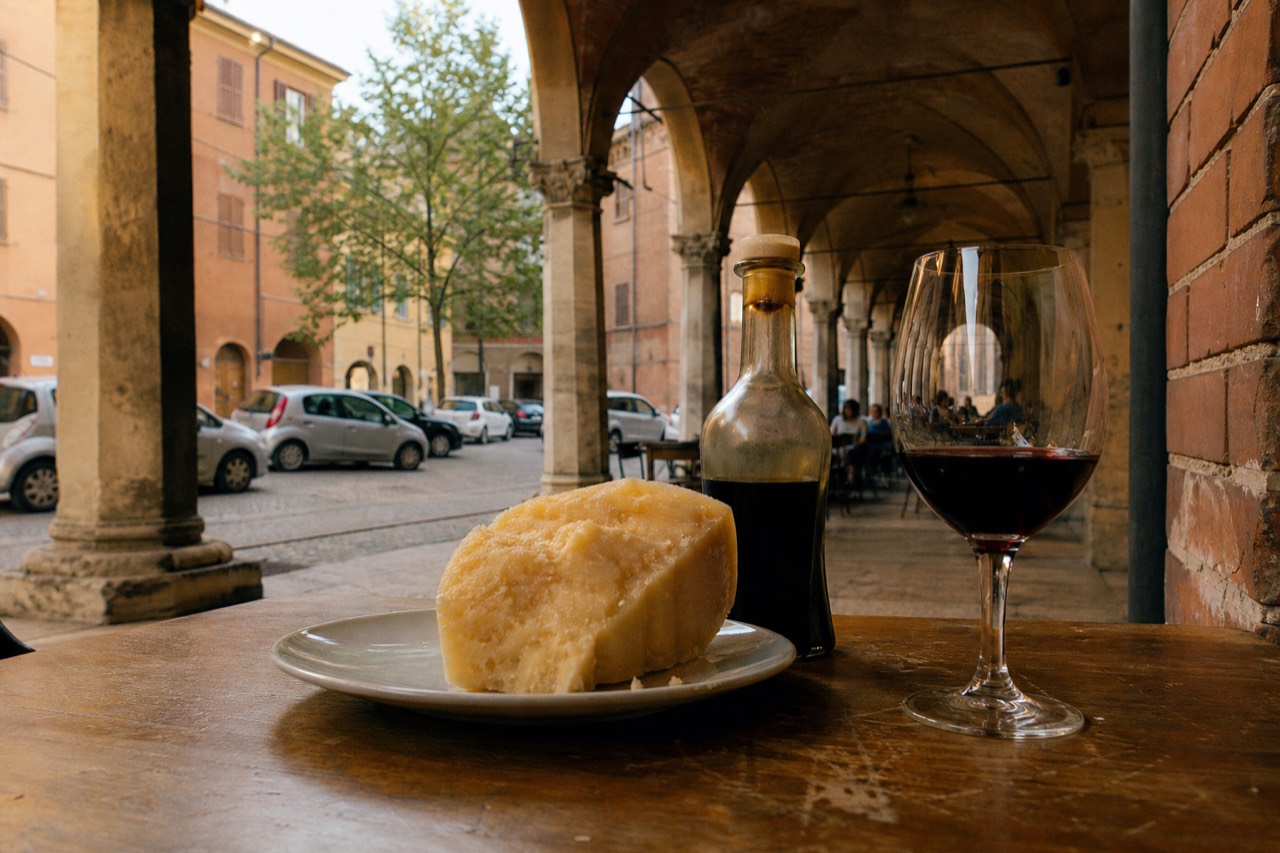
The must-do food experiences in Modena are visiting a traditional balsamic acetaia, touring a Parmigiano Reggiano dairy, tasting Lambrusco in its home hills, eating your way through Mercato Albinelli, and taking a cooking class. Some activities need booking weeks ahead, but the market and many salumerie are walk-in. Plan at least two full days to cover the three protected products.
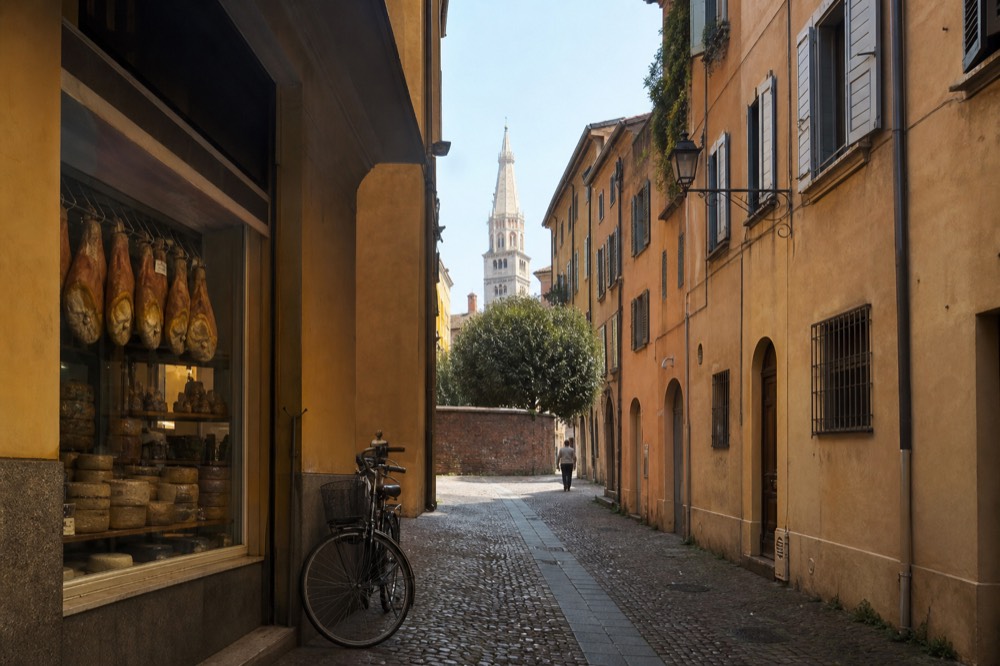
Modena does not do food tourism the way most cities do. It is not a place where you stumble onto a good meal by accident. The three protected products that define the province, Parmigiano Reggiano, Aceto Balsamico Tradizionale and Lambrusco, are made in small production sites that are often family-run, and most require a reservation days or weeks ahead. The city itself is compact and walkable, but the real food story stretches into the countryside, and the best experiences are the ones where you meet the people who make the food.
This guide is a food-first ranking of what to do in Food Tours in Modena. It tells you which experiences you can walk into without a booking, which ones fill up weeks in advance, and how to plan a day or a weekend around the province's edible icons.
What Are The Absolute Must-Do Food Experiences In Modena?
The core experiences that give Modena its reputation are visiting a traditional balsamic acetaia, touring a Parmigiano Reggiano dairy, tasting Lambrusco in the hills, eating through Mercato Albinelli, and taking a hands-on cooking class. The market and salumerie are walk-in, but the acetaie, dairies and wineries nearly always need a reservation. Aim to cover the three protected products over two full days.
Modena is the only province in Italy that is home to both the DOP and the IGP for balsamic vinegar, and the production zone for Parmigiano Reggiano covers a large slice of the province. The city's covered market has been trading since 1931, and the surrounding hills are dotted with Lambrusco vineyards. The trick is knowing which of these you can drop into spontaneously and which ones need a firm booking before you arrive.
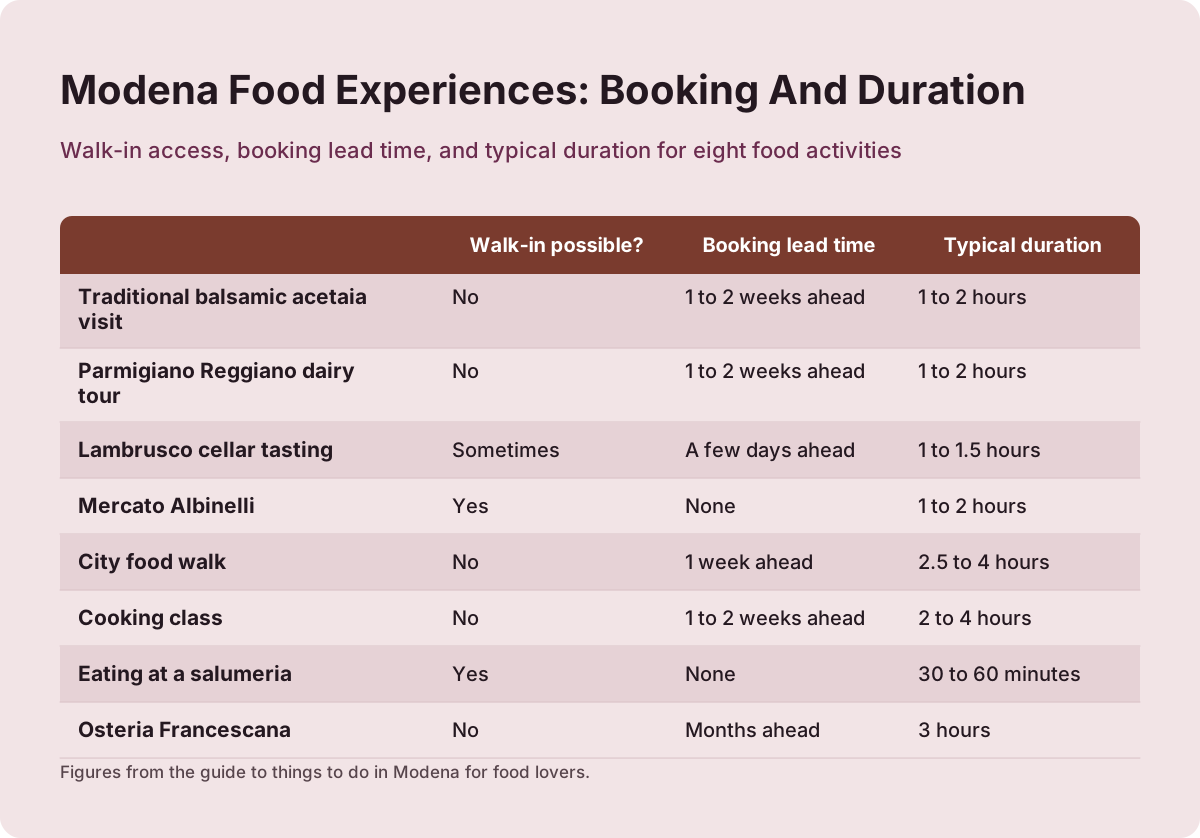
| Food experience | Walk-in possible? | Booking lead time | Typical duration | Notes |
|---|---|---|---|---|
| Traditional balsamic acetaia visit | No | 1–2 weeks ahead | 1–2 hours | Most acetaie are small, family-run, and open by appointment only |
| Parmigiano Reggiano dairy tour | No | 1–2 weeks ahead | 1–2 hours | Cheesemaking happens in the morning; afternoon visits show the process on video |
| Lambrusco cellar tasting | Sometimes | A few days ahead | 1–1.5 hours | Larger houses may take same-day bookings, but smaller estates need notice |
| Mercato Albinelli | Yes | None | 1–2 hours | Stalls close at 15:00; restaurants stay open for lunch and dinner, including Sunday |
| City food walk | No | 1 week ahead | 2.5–4 hours | Small-group tours combine market visits, salumerie stops, and sometimes an acetaia |
| Cooking class | No | 1–2 weeks ahead | 2–4 hours | Home-based classes are private and book out; larger schools may have more availability |
| Eating at a salumeria | Yes | None | 30–60 minutes | Just walk in, order a tagliere, and eat at the counter or a small table |
| Osteria Francescana | No | Months ahead | 3 hours | Reservations open on set dates, roughly six months in advance, and sell out within minutes |
The one thing that surprises many visitors is how few of the truly memorable food experiences in Modena happen inside a restaurant. The best meal of the trip is often the one you eat standing at a market counter, or the tasting lunch that follows a dairy tour, or the tagliere a producer puts together at the end of a cellar visit. The city's restaurants are excellent, but the producer visits are the reason you come.
Which Food Tour Gives You The Best Introduction To Modena?
A guided food walk that covers the historic centre, the market, and at least one working acetaia is the most efficient way to taste Modena in a single morning. The best of these tours get you inside a barrel loft rather than just handing you a tasting spoon at a shop counter, and they include the Modenese breakfast of fried gnocco and coffee that most visitors miss entirely.
A well-run food tour solves the biggest problem a first-time visitor faces: the best food is hidden in places you would not find on your own. The covered market alone has 49 stalls and six restaurants, and a local guide knows which salumeria is cutting the best culatello that day, which formaggeria has just opened a 36-month wheel, and which counter pours the freshest Lambrusco by the glass.
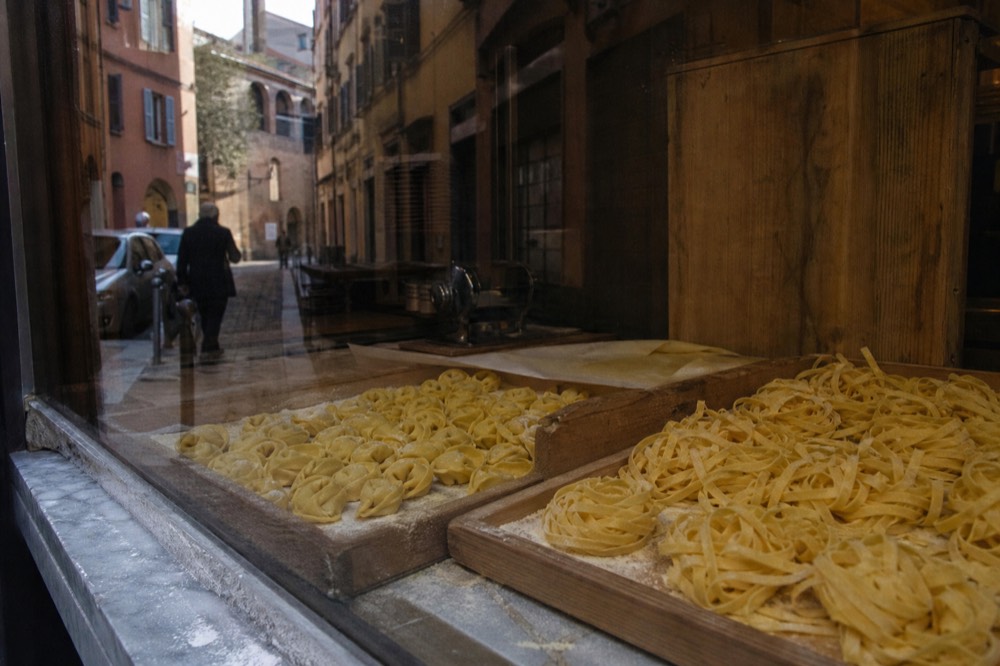
The difference between a good food walk and a great one is the acetaia visit. Many tours stop at a shop that sells balsamic vinegar and call it a tasting. The ones worth booking take you into a working acetaia, where you climb the stairs to the attic barrel loft, breathe the vinegar-scented air, and taste the product straight from the aging battery. The walk that pairs Mercato Albinelli with a proper acetaia visit is the one that gives you the full story in a single morning.
The food walk also teaches you how to plan the rest of your trip. After three hours with a guide, you will know which salumeria to return to for a full lunch, which stall sells the best Parmigiano to take home, and how to order a proper tagliere without looking at the menu. That local knowledge makes the next two days of independent eating far more rewarding.
How To Visit A Traditional Balsamic Vinegar Acetaia
Visiting a family acetaia is the single most important food experience in Modena, and it is the one that most needs a reservation. The cellar or attic where the barrels sit, called a batteria, is a working production space, not a museum, and the visit is usually led by the owner or a family member. The tasting at the end is the moment you understand why a 100ml bottle of the DOP costs what it does.
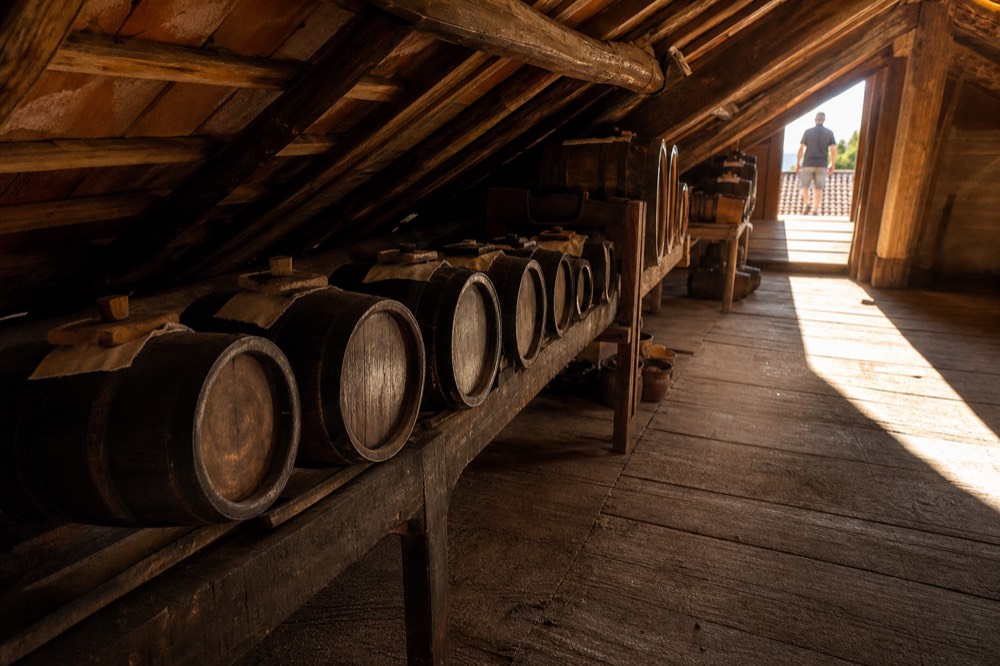
The acetaia visit is not a wine tasting. It is a slow, sensory walk through a room of small barrels made from different woods, each one holding a slightly different age of vinegar. The barrels are never emptied, only refilled year after year through a process of decanting down the battery, and the oldest barrel in the room may have been started by a great-grandparent. The smell is sweet, sharp, and woody, and the tasting is measured in drops, not sips.
You need to know what you are booking. The Consorzio Tutela Aceto Balsamico Tradizionale di Modena represents the DOP, the product made from cooked grape must aged for a minimum of 12 years, with nothing else added. The IGP, Aceto Balsamico di Modena, is a different product that blends cooked must with wine vinegar and ages for a minimum of 60 days. Both are genuine, both are made in Modena, but the production rules, the price, and the taste are worlds apart. A good acetaia visit will let you taste both side by side, and the difference is immediate.
| Feature | Aceto Balsamico Tradizionale DOP | Aceto Balsamico di Modena IGP |
|---|---|---|
| Base ingredient | Cooked grape must only | Cooked and/or concentrated must with wine vinegar added |
| Minimum ageing | 12 years (Affinato) or 25 years (Extra Vecchio) | 60 days in wood |
| Bottle | Mandatory Giugiaro shape, commonly 100ml | Any size from 0.1L to 5L, various materials |
| Production zone | Modena province only | Modena and Reggio Emilia provinces |
| Use | Drops on Parmigiano, risotto, or plain | Everyday cooking, dressings, marinades |
The 2026 Acetaie Aperte event, when over 30 acetaie open their doors on Sunday 27 September, is the one day of the year when you can visit multiple producers without an individual appointment. If your trip falls on that date, it is the single best food day in the province. Otherwise, pick an acetaia from the consortium's interactive map, email or call a week or two ahead, and confirm the visit time and the tasting format. Our full guide to balsamic vinegar tours in Modena compares every acetaia on the roster and how to choose between them.
The Gambigliani Zoccoli acetaia near Nonantola Abbey, about 8 km from the city, runs the most-reviewed balsamic experience in the province. The full morning includes a walk through the historic villa and the barrel loft, followed by a sit-down Emilian lunch dressed with the family's vinegar. The shorter version skips the lunch and ends with a guided tasting paired with local products. Both are bookable through the operator's live listing.
If you prefer to combine an acetaia visit with a full food walk rather than driving out to the countryside, the city food tours that include a working acetaia are the smartest choice. They remove the transport headache and give you the market and the acetaia in one continuous morning.
What It Is Like To Tour A Parmigiano Reggiano Dairy
A Parmigiano Reggiano dairy tour is a morning experience by design. The cheesemaking happens in the morning, and the best tours time the visit so you can watch the copper vats at work. Afternoon tours replace the live production with a video, but the ageing rooms, the tasting, and the craftsmanship explanation are the same. The dairy is a working factory, and the noise, steam, and smell of warm milk are part of it.
The dairy tour is the most structured of the three producer visits. You arrive, put on a hairnet and a lab coat, and walk onto the production floor. The morning begins with the milk arriving from the stables, the copper vats heating, the curd breaking, and the cheesemaker lifting the fresh mass out of the whey. The cheese is shaped into a wheel, stamped with a unique traceability code, and sent to the brine bath. The whole process takes about two hours, and the tour guide explains each step over the noise of the machinery.
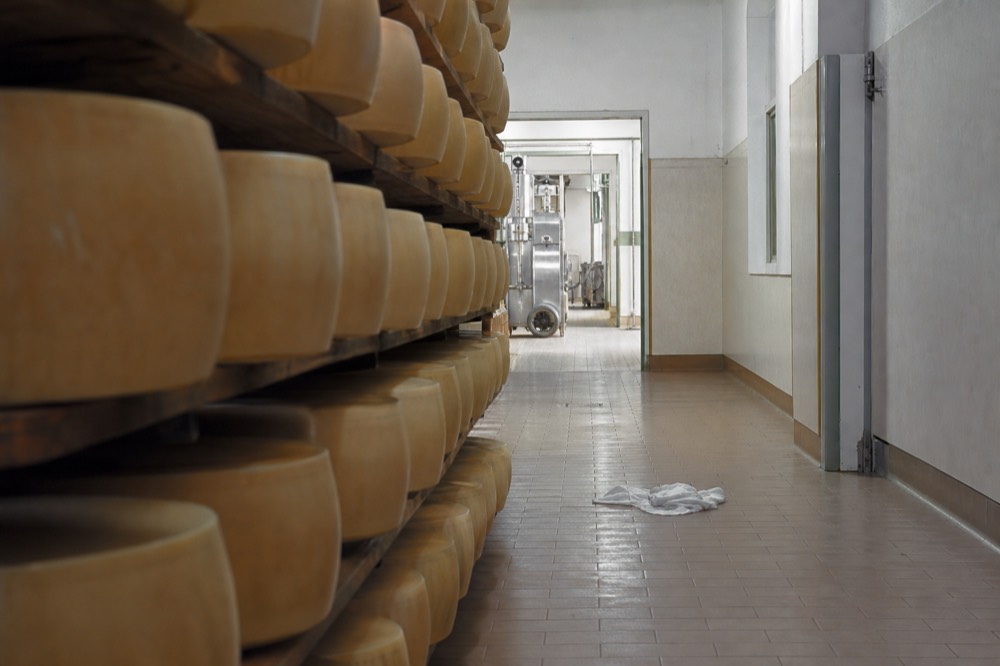
The second half of the visit is the ageing room. Rows of wheels, each one weighing about 40 kg, sit on wooden shelves stretching back into the dark. The guide taps a wheel with a hammer to show how the sound changes with age, and explains the inspection process that every wheel must pass at 12 months before it earns the fire-branded mark of the Consorzio del Parmigiano Reggiano. The tasting that follows usually includes three or four ages, from 12 months to 36 months, and the difference in texture, crunch, and flavour is the whole point of the visit.
| Ageing | Texture | Flavour | Tyrosine crystals | Common use |
|---|---|---|---|---|
| 12 months | Soft, elastic | Milky, mild, slightly sweet | Few, small | Table cheese, salads |
| 24 months | Firm, crumbly | Nutty, more savoury | Noticeable crunch | Grated over pasta, risotto |
| 36 months | Hard, granular | Intense, complex, long finish | Abundant, large | Eaten alone with a drop of balsamic |
The 4 Madonne dairy in Lesignana, about 15 minutes from Modena, runs daily guided tours by reservation. The visit costs EUR 22 per adult and includes a tasting of four ages plus ricotta, tosone, and Parmigiano cream on bread with balsamic, honey, and wine. It is the most accessible dairy for visitors without a car, and the nearest train stations are Modena, about 8 km away, and Quattro Ville, about 4 km from the dairy, with a taxi arrangement available. Our guide to Parmigiano Reggiano tours in Modena covers the full range of dairy visits across the province.
The dairy tour on the roster includes transport from central Modena, so you do not need to figure out the bus or taxi yourself. The guide walks you through the copper vats, the salting room, and the ageing shelves, and the tasting flight at the end compares the same cheese at different ages, which is the best way to understand why Parmigiano Reggiano is not just a grating cheese.
Tasting Lambrusco Where The Grapes Grow
Lambrusco is Modena's everyday wine, and the best place to taste it is in the hills where the grapes are grown. The wine is made across the full sweetness range, from bone-dry secco to sweet dolce, but the dry style is the one poured alongside Modenese food. A cellar visit takes about an hour and a half, and the tasting almost always includes a plate of local salumi and Parmigiano.
The Consorzio Tutela Lambrusco represents six DOC denominations, four of them in Modena province. Grasparossa di Castelvetro, from the hills south of the city, is the most structured and tannic, the one that stands up to rich pasta and grilled meat. Sorbara, from the plain north of Modena, is pale, high in acidity, and smells of violets and red berries (see Spotting Quality Balsamic). Salamino di Santa Croce, the most versatile, is deep ruby with raspberry and cherry notes, and it works from aperitivo through dessert. Modena DOC covers a central band and includes white, red, and rosato styles alongside the Lambrusco.
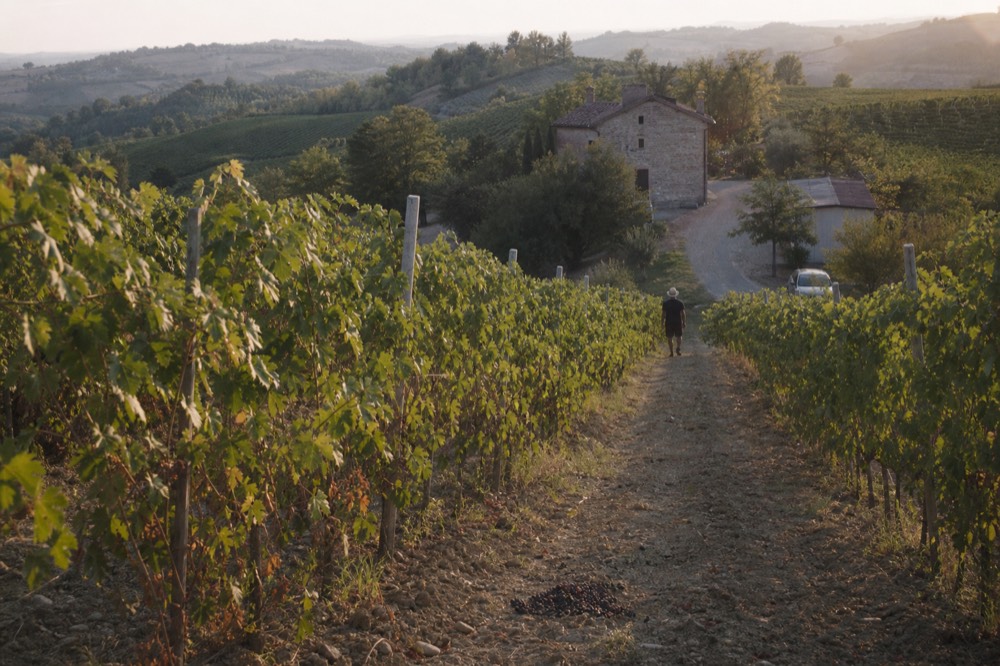
A cellar visit typically starts with a walk through the vineyard, then moves into the production room where the wine undergoes its second fermentation in pressurised tanks, and ends with a tasting of three or four wines poured side by side. The side-by-side comparison is the key: you taste the Sorbara next to the Grasparossa, and the difference in colour, body, and tannin is immediate. The tasting platter usually includes a chunk of Parmigiano, a few slices of salame, and a piece of crescentina, the local fried bread.
| DOC (Modena province) | Colour | Body | Key flavours | Best with |
|---|---|---|---|---|
| Sorbara | Pale ruby | Light | Violet, red berries, high acidity | Salumi, fried gnocco |
| Grasparossa di Castelvetro | Deep ruby | Full | Dark cherry, plum, firm tannins | Tortellini in brodo, grilled meats |
| Salamino di Santa Croce | Ruby | Medium | Raspberry, cherry, soft tannins | Tagliatelle al ragù, pizza |
| Modena DOC | Varies | Light to medium | Red fruit, floral, fresh | Aperitivo, light pasta |
The Sagra dell'Uva e del Lambrusco Grasparossa runs in Castelvetro from 19 to 27 September 2026, and it is the best time to taste the wine in the village square with the producers themselves. Outside of festival season, book a tasting at Cleto Chiarli, the oldest commercial Lambrusco house in Modena, founded in 1860, or at Fattoria Moretto, a small organic estate in the same hills. Both are bookable through the operator's live listing.
The sommelier-led walk at Nonantola covers a working cellar and a wine museum, and the tasting pours three Lambrusco styles side by side so the differences are obvious. It is the most structured way to understand the wine in a single visit, and the guide explains how the same grape, the same province, and the same method produce such different wines depending on the soil and the hillside.
Eating Your Way Through Mercato Albinelli
Mercato Albinelli is the beating heart of Modena's food scene, a covered market that has been trading every morning since 1931. The stalls open Monday to Saturday from 07:00 to 15:00, and the restaurants stay open for lunch and dinner seven days a week, including Sunday when the stalls are closed. You do not need a booking. You just walk in, grab a plate, and eat standing at a counter.
The market is a short walk from Piazza Grande, at Via Luigi Albinelli 13, with additional entrances on Via Mondatora and Piazza XX Settembre. The central fountain, with its bronze sculpture of a girl carrying a basket of fruit by Giuseppe Graziosi, is the meeting point. The market has 49 stalls and six bars and restaurants, and the best way to eat here is to do a lap, see what looks good, and then go back to the counter that called to you.
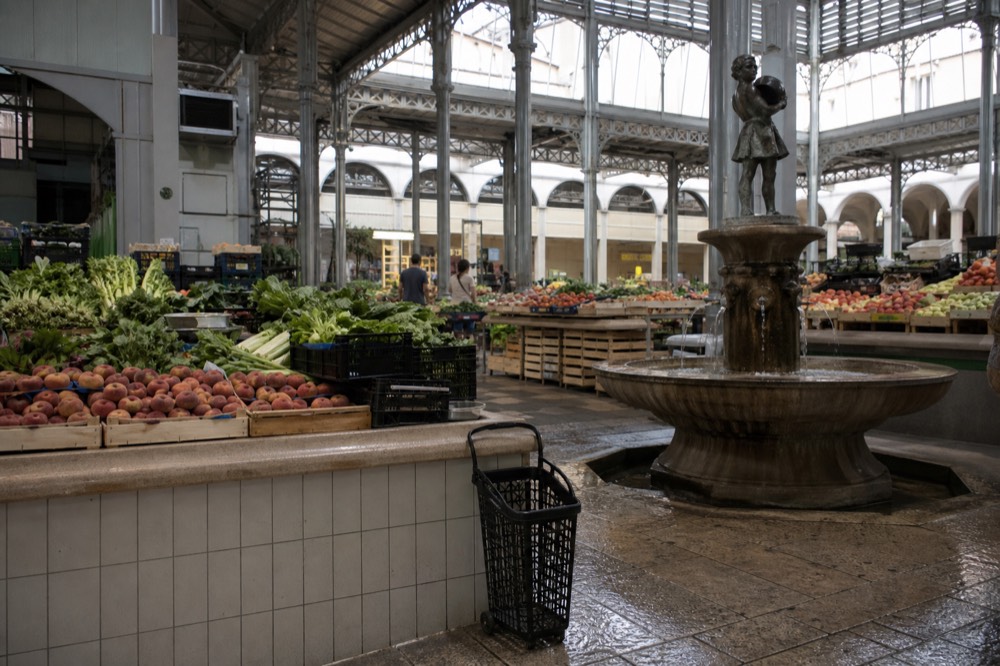
The Antica Salumeria della Galleria is the stall that has been here longest, and it is where you order a tagliere of local salumi and a glass of Lambrusco. The Formaggeria Martinelli is the cheese counter, and the owner will cut you a chunk of Parmigiano from the wheel you point at. The Pescheria Laritonda Gianluca sells fresh seafood, which surprises visitors who think of Modena as a meat-only city, but the Adriatic is only an hour away. The Balsamico e Cucina Monari Federzoni stall is the place to taste the two vinegars side by side and buy a bottle to take home.
| Stall | What to eat | Style |
|---|---|---|
| Antica Salumeria della Galleria | Tagliere of culatello, pancetta, salame | Stand at the counter or grab a small table |
| Formaggeria Martinelli | Parmigiano Reggiano cut from the wheel, ricotta fresca | Buy a wedge and eat it on the spot |
| Pescheria Laritonda Gianluca | Fritto misto di pesce, insalata di mare | Eat at the counter or take away |
| Balsamico e Cucina Monari Federzoni | Tasting of DOP and IGP balsamic, tigelle with balsamic drizzle | Standing tasting at the stall |
| MozzaBella | Gnocco fritto with salumi, taglieri from 10 to 18 EUR | Sit-down restaurant inside the market |
The market is inside the ZTL, the limited traffic zone, so if you are driving, park outside the historic centre and walk. The market's own website, mercatoalbinelli.it, publishes the full calendar of closures and special Sunday openings, including the Festivalfilosofia weekend in September and the three extra Sundays in December. The Albinelli Box, a discount coupon booklet for stalls and restaurants, is a current offering and worth picking up if you plan to eat your way through the market.
Taking A Cooking Class In Modena
A hands-on pasta class in a Modenese home kitchen is the experience that turns a visitor into a cook. The classes are small, usually two to four hours, and you learn to roll sfoglia, the thin sheet of egg pasta that is the foundation of tortellini, tagliatelle, and tortelloni. The class ends with the meal you cooked, eaten at the family table with local wine.
The cooking class landscape in Modena is split between home-based classes, where you cook in a local's own kitchen, and school-based classes in a professional laboratory (see Cooking Class Costs). The home-based ones are the most intimate, usually capped at three to eight guests, and the host walks you through the pasta dough from flour and eggs to the final shape. The Cesarine network, a national collection of home cooks, runs several classes in Modena, including a private tortellini lesson and a longer class that includes a market visit first.
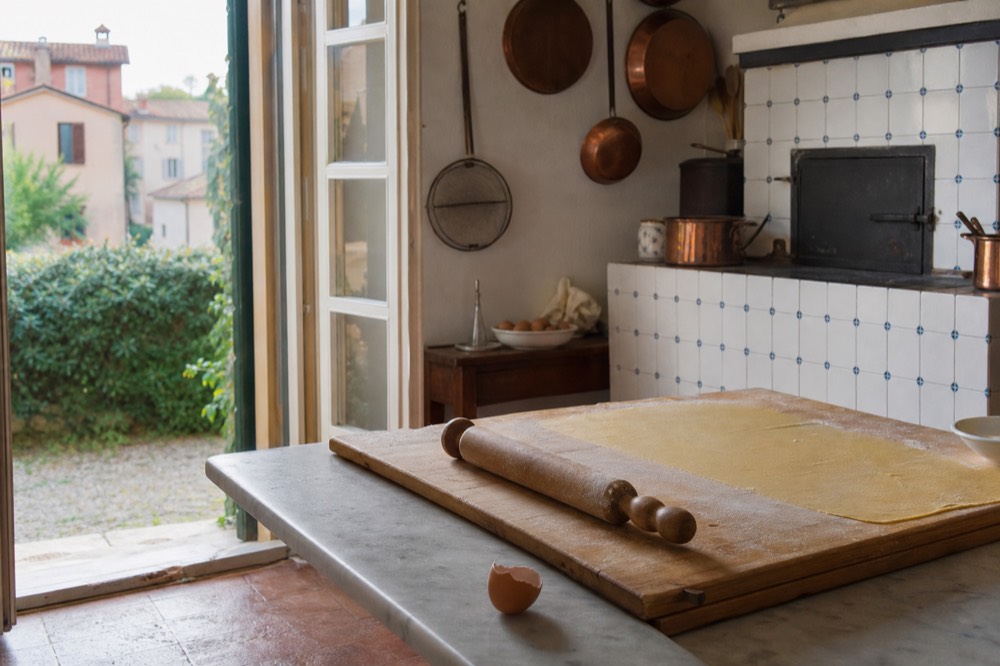
The school-based classes are larger and more structured. InPasta, in Castelvetro di Modena, runs a three-hour class in a working fresh pasta laboratory for EUR 90 per person, covering tagliatelle and tortelloni, with an aperitif and tasting included. Emilia Storytellers Tours pairs a pasta class at an agriturismo with a guided visit to a fourth-generation family acetaia, tasting vinegars aged 15 and 30-plus years, for EUR 150 per person. The class sizes are small enough that you get individual attention, and the pasta you roll is the pasta you eat.
| Class format | Duration | Typical group size | What you make | What you eat |
|---|---|---|---|---|
| Home kitchen (Cesarine) | 2–3 hours | 3–8 guests | Two pasta shapes, tiramisu | The meal you cooked, plus wine |
| Market visit + cooking | 4 hours | Small group | Fresh pasta, guided market shopping | Lunch with the host |
| Laboratory (InPasta) | 3–3.5 hours | Small group | Tagliatelle, tortelloni | Aperitif and tasting of your pasta |
| Combined pasta + acetaia | 4–5 hours | 4–50 guests | Fresh pasta, acetaia tour and tasting | Lunch at the agriturismo |
The class that includes a market visit first is the most immersive. You shop for the ingredients with your host, then return to her kitchen to roll the pasta and make the sauce. The market visit teaches you how to select the right flour, the right eggs, and the right Parmigiano, and the skills transfer to your own kitchen at home. Our guide to cooking classes in Modena covers the full range of formats, from home kitchens to professional laboratories.
The hands-on class on Via Emilia Est is a classic two-pasta format: tagliatelle and ricotta tortelloni, rolled by hand, cooked, and eaten with local wine. The host, Maria Luisa Nicolini, runs the class in her home kitchen, and the meal at the end includes the pasta you made, dressed with a simple sauce and a generous grating of Parmigiano. It is the most direct way to understand why fresh pasta in Modena tastes different from the dried version at home.
How To Get A Table At Osteria Francescana
Getting a reservation at Osteria Francescana is a project in itself. Bookings for a given month open on a set date at 10:00 Italian time, roughly six months in advance, and the slots sell out within minutes. The restaurant is small, parties of two to ten, and the meal takes about three hours. A credit card hold of EUR 300 per person is placed four days before the booking, and free cancellation is available up to 96 hours ahead.
The restaurant is at Via Stella 22, inside the ZTL, and the restaurant itself warns you can be fined for driving or parking there. The nearest metered parking is on viale Vittorio Veneto. The booking calendar is published on the restaurant's website, and the release dates for the next few months are listed there. March 2027 opened on 1 September 2026, April 2027 opens on 1 October 2026, and so on. If you miss the release, you join the waiting list, and cancellations do happen, but you need to be flexible on the date.
The restaurant was voted The World's Best Restaurant in 2016 and in 2018, and now sits in The World's 50 Best "Best of the Best" group, whose members are no longer eligible for the annual list. The chef, Massimo Bottura, also runs Franceschetta58, a more casual bistro that serves a shorter menu, and Il Cavallino in Maranello, the original Ferrari company canteen, which earned a Michelin star in November 2025 under Bottura's collaboration (see Bottura's Restaurants). If you cannot get a table at Francescana, Franceschetta58 is the next best thing, and it is far easier to book. It is open Monday to Saturday for lunch and dinner.
The meal at Francescana runs about three hours, and the dress code is smart casual. Allergies and dietary restrictions are accommodated with one week's notice. The restaurant does not publish a menu online, and the experience is a tasting menu that changes with the seasons. The booking mechanics are the same for everyone, and no tour or third party can get you a table. The only way in is through the restaurant's own website, at the exact moment the reservations open. Our guide to booking Osteria Francescana walks through the whole process step by step, including the release calendar and the waiting list.
How Many Days Do You Need For Modena's Food Scene?
Two full days is the minimum to cover the three protected products and the market at a comfortable pace. Three days lets you add a cooking class and a more relaxed exploration of the city's restaurants and salumerie. A single day is possible if you book a combination tour that covers the dairy, the acetaia, and a Lambrusco tasting, but it will be a long day and you will miss the market and the city's slower food moments.
Modena's food experiences are spread across the city and the countryside, and the driving time between stops adds up. A producer visit outside the city, like a dairy in Lesignana or an acetaia in Nonantola, takes a half-day including transport. The market is a morning activity, and a cooking class takes an afternoon. The city food walk fits into a morning, and the Lambrusco hills are a half-day trip. The key is to cluster activities by geography: a morning dairy visit paired with an afternoon acetaia in the same direction, or a city food walk followed by the market and a cooking class.
| Day | Morning | Afternoon | Evening |
|---|---|---|---|
| Day 1 | Parmigiano Reggiano dairy tour (book ahead) | Traditional balsamic acetaia visit (book ahead) | Dinner at a salumeria or trattoria in the city centre |
| Day 2 | Guided food walk through the market and historic centre | Lambrusco cellar tasting in Castelvetro or Nonantola | Cooking class, or a relaxed dinner at Franceschetta58 |
| Day 3 (if you have it) | Spilamberto Balsamic Museum and a walk in the hills | Free time to return to the market or a favourite stall | A final meal at a restaurant you researched |
The combination tours that cover the dairy, the acetaia, and the Ferrari Museum in a single day are the most efficient way to see a lot in a short time, but they are long days, often 8 to 10 hours, and the pace is brisk (see Ferrari and Food Day). The lower-priced option is the self-drive version of the same full-day itinerary: you travel in your own car between the stops and no transport is included. The higher-priced version is chauffeured, which removes the driving but costs more. Check the live listing for the current price and availability before you decide.
Common Questions About Things To Do In Modena
What Are The Absolute Must-Do Food Experiences In Modena?
The three protected products are the core: a traditional balsamic acetaia visit, a Parmigiano Reggiano dairy tour, and a Lambrusco tasting. Add Mercato Albinelli and a cooking class for the full picture. The acetaia and dairy visits need bookings one to two weeks ahead; the market and the city's salumerie are walk-in.
How Many Days Do You Need In Modena For Food?
Two full days covers the three protected products and the market at a comfortable pace. Three days lets you add a cooking class and a more relaxed exploration of the city's restaurants. A single day is possible with a combination tour, but you will miss the slower food moments.
Can You Visit A Balsamic Acetaia Without A Booking?
Most acetaie are small, family-run, and open by appointment only. The Acetaie Aperte event on Sunday 27 September 2026 is the one day a year when over 30 acetaie open without individual appointments. Otherwise, book a week or two ahead.
Is Mercato Albinelli Open On Sunday?
The market stalls are closed on Sunday. The restaurants inside the market are open seven days a week for lunch and dinner, including Sunday. The market publishes a calendar of special Sunday openings for events like Festivalfilosofia and the run-up to Christmas.
How Hard Is It To Get A Reservation At Osteria Francescana?
Reservations open on set dates, roughly six months in advance, at 10:00 Italian time, and sell out within minutes. The booking calendar is on the restaurant's own website. If you miss the release, join the waiting list and be flexible on the date.
What Is The Best Food Tour In Modena?
The best food tours combine a walk through the historic centre and Mercato Albinelli with a visit to a working acetaia. The ones that get you inside a barrel loft rather than a shop counter are the most memorable. Check the live listing for the current availability.