Cooking Classes In Modena: What You Actually Learn, And What It Costs
Modena's cooking classes split into three real formats: home kitchens through the Cesarine network, a working pasta laboratory at Castelvetro, and full-day school courses in the city. Here is what each one teaches, what it costs, and how to tell a genuine Modena class from a Bologna class wearing a Modena label.
Short answer
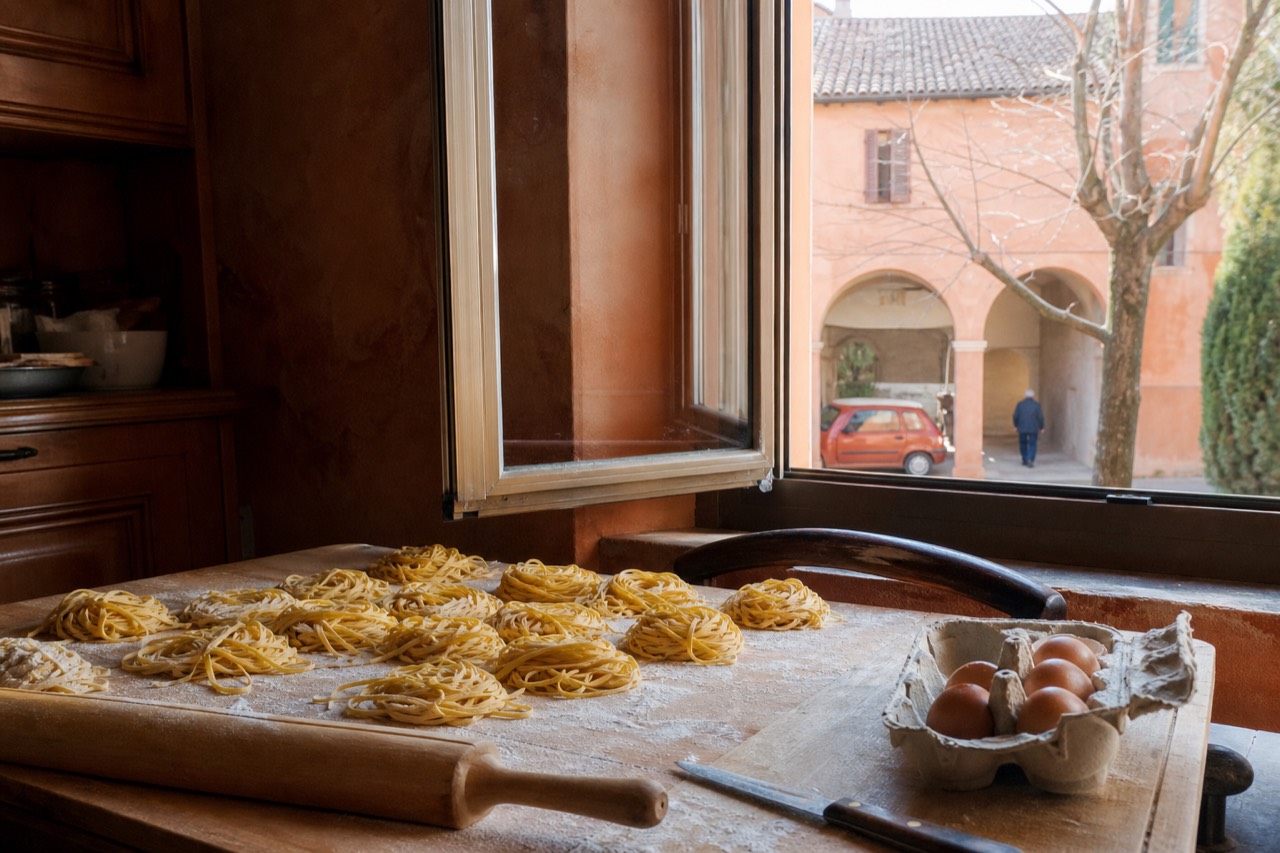
A hands-on pasta class in Modena runs from about €90 per person at a Castelvetro laboratory to €135 for a private two-hour tortellini class in a local home kitchen. Most classes last two to four hours, cap groups between three and eight guests, and end with you eating what you rolled.
Modena is one of the few Italian cities where a visitor can spend a morning learning tortellini from someone whose grandmother rolled them on the same table, and the same afternoon stand in a barrel loft where traditional balsamic has aged since before that grandmother was born. The cooking class scene here is small but real, and it divides cleanly into three formats: private classes in home kitchens, a working pasta laboratory in the Castelvetro hills, and longer structured courses run by a local gastronomic school (see Cooking Class Costs). What it does not divide into is the generic "pasta making in Emilia-Romagna" class that a first page of search results suggests, because a good share of those depart from Bologna and never set foot in Modena at all. This is the site where Food Tours in Modena tracks the experiences that actually run in the province, and this guide walks through the classes that genuinely do, what each format teaches, what the verified prices are, and how the logistics work if you arrive without a car.
What Can You Actually Learn In A Modena Cooking Class?
The core of almost every Modena class is fresh egg pasta: tagliatelle, tortelloni and, in the most local versions, tortellini in brodo. Around that core, classes add tigelle or crescentine, the small flat breads of the Modena hills, plus tiramisu, and they end with everyone sitting down to eat what was made, usually with Lambrusco poured alongside.
The canon is narrower and deeper than in the big tourist cities. A Modenese sfoglina, the traditional hand-rolling pasta maker, works with a mattarello, the long thin rolling pin, not a machine, and the dough is just eggs and flour. The shapes that matter locally are tagliatelle, the flat ribbon; tortelloni, the larger stuffed pasta usually filled with ricotta and greens; and tortellini, the tiny meat-filled version served in capon broth that Modena and Bologna have argued over for centuries (see Tortellini and Broth). Tortellini in brodo is the Sunday dish of the province, and it is the one most classes treat as their finishing school move because folding it small enough takes practice. You will not find a Modena class teaching Roman pasta shapes or Tuscan ribollita, because the teachers here cook what their own families eat.
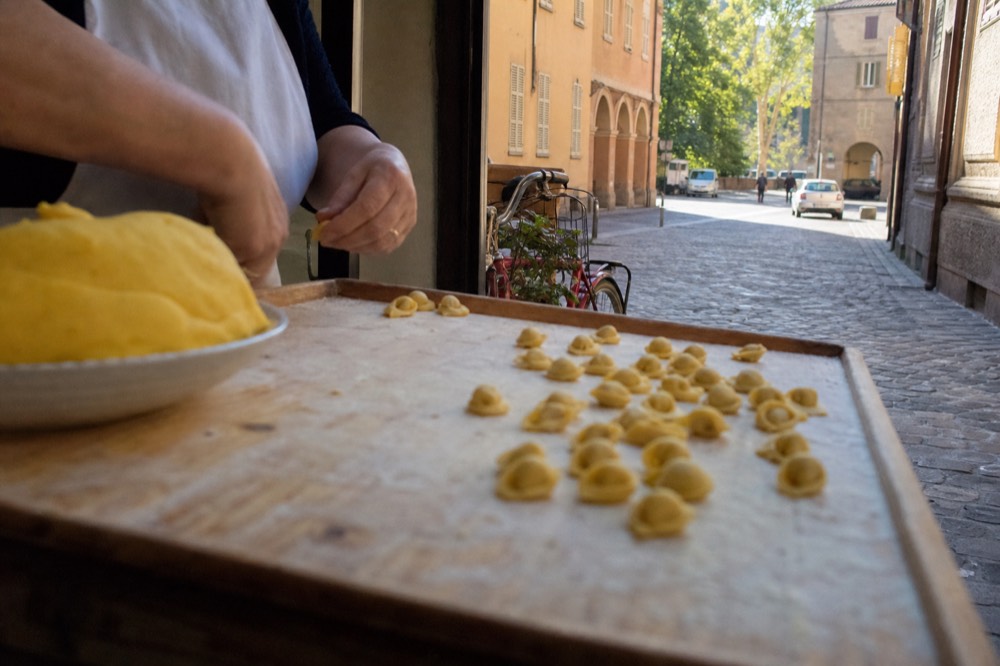
Beyond pasta, two things recur. Tigelle and crescentine, the pocket breads and fried doughs of the hills, appear in several formats because they are the everyday carbohydrate that visitors almost never meet in a restaurant. And the meal at the end is not an afterthought: in the home-kitchen formats the table is the family's own, and the wine poured is usually Lambrusco from the province, poured the way it is drunk here, cold and lightly sparkling. If you want the background on why that wine suits the food, our guide to Lambrusco tastings in Modena covers the styles.
| Shape or dish | What it is | Where a class teaches it |
|---|---|---|
| Tagliatelle | Flat egg-pasta ribbons rolled by hand with a mattarello | Nearly every class; the beginner benchmark |
| Tortelloni | Larger stuffed pasta, typically ricotta and spinach filling | The standard second shape in most formats |
| Tortellini in brodo | Tiny meat-filled pasta served in capon broth | The most local classes; the advanced fold |
| Tigelle | Small round flatbreads from the Modena hills, split and filled | Hill classes and some home formats |
| Crescentine / gnocco fritto | Fried dough served with cured meats | Home-kitchen and hill formats |
| Tiramisu | The familiar layered dessert | The Cesarine formats; the closing course |
One honest caveat: a two-hour class teaches you the fold, not the fluency. Sfogline who roll at competition speed learned across decades. But the dough recipe, the hand positions and the shape logic all transfer, and they are the parts you cannot absorb from a video.
Which Classes Genuinely Run In Modena?
The verified Modena options are a two-hour private tortellini class in a Cesarine host's home, a three-hour pasta-plus-tiramisu class in another Modenese home, a market-then-kitchen class through the same network, a beginner class at a working pasta laboratory in Castelvetro di Modena, and a combined pasta-and-acetaia day in the same hill town. Longer courses run from a gastronomic school on Via Piave in central Modena.
The distinction matters more than it sounds. Modena's classes are small by design. The Cesarine network, a national organisation of home cooks, lists Modena classes with maximum group sizes between three and eight guests, and the hosts cook in their own houses, with the exact address given after booking. The InPasta laboratory at Castelvetro runs its class inside a working fresh-pasta shop, twenty to twenty-five minutes by car from the centre of Modena, which means you watch production happening around you while you learn. The school courses at Modena con Gusto, run with ISCOM Modena on Via Piave 125, are evening and multi-session formats aimed as much at residents as visitors, taught by a maestra sfoglina. Classes labelled simply "Emilia-Romagna pasta experience" that meet in Bologna are a different product in a different city.
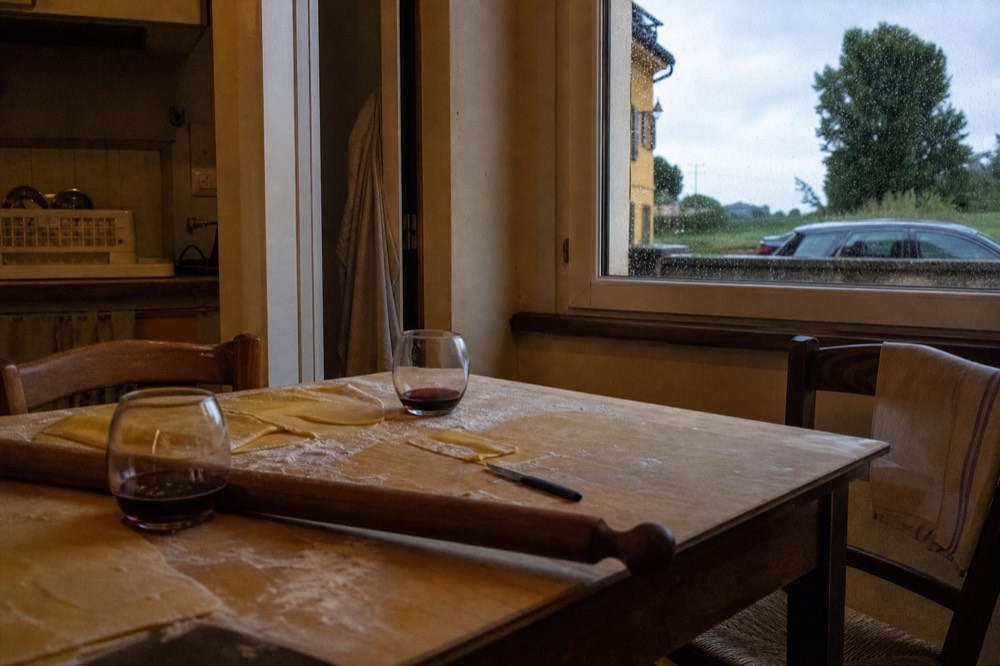
The three options above cover the spread. The tortelloni and tagliatelle class is a home kitchen on Via Emilia Est with a named host, Maria Luisa Nicolini, and it is the most representative single format: hands-on, small, and ending with the meal. The private Cesarine class is the same idea compressed for couples and families. The market-tour version adds the shopping leg first, which is the longest format and the one that teaches you what to buy as well as how to roll it.
| Format | Where it runs | Typical length | Group size |
|---|---|---|---|
| Private home class (Cesarine) | Host's own house in Modena | 2-3 hours | 3-8 maximum |
| Home class with named host | Via Emilia Est, Modena | Half day with lunch | Small group |
| Market tour plus class | Mercato Albinelli, then host's kitchen | The longest format | Small group |
| Working pasta laboratory | Castelvetro di Modena | 3-3.5 hours | Beginner-friendly groups |
| Pasta plus acetaia day | Castelvetro di Modena | 4-5 hours | Minimum 4 guests |
| School evening course | Via Piave 125, Modena | 8 or 16 hours | Course cohort |
A note on the label problem. Some listings say Modena in the title and Bologna in the meeting point. Read the meeting point first, always. If it says Piazza Maggiore or a Bologna hotel, the class is a Bologna class, however the title reads. The genuine Modena classes name a Modena address or send it after booking.
How Much Does A Modena Cooking Class Cost?
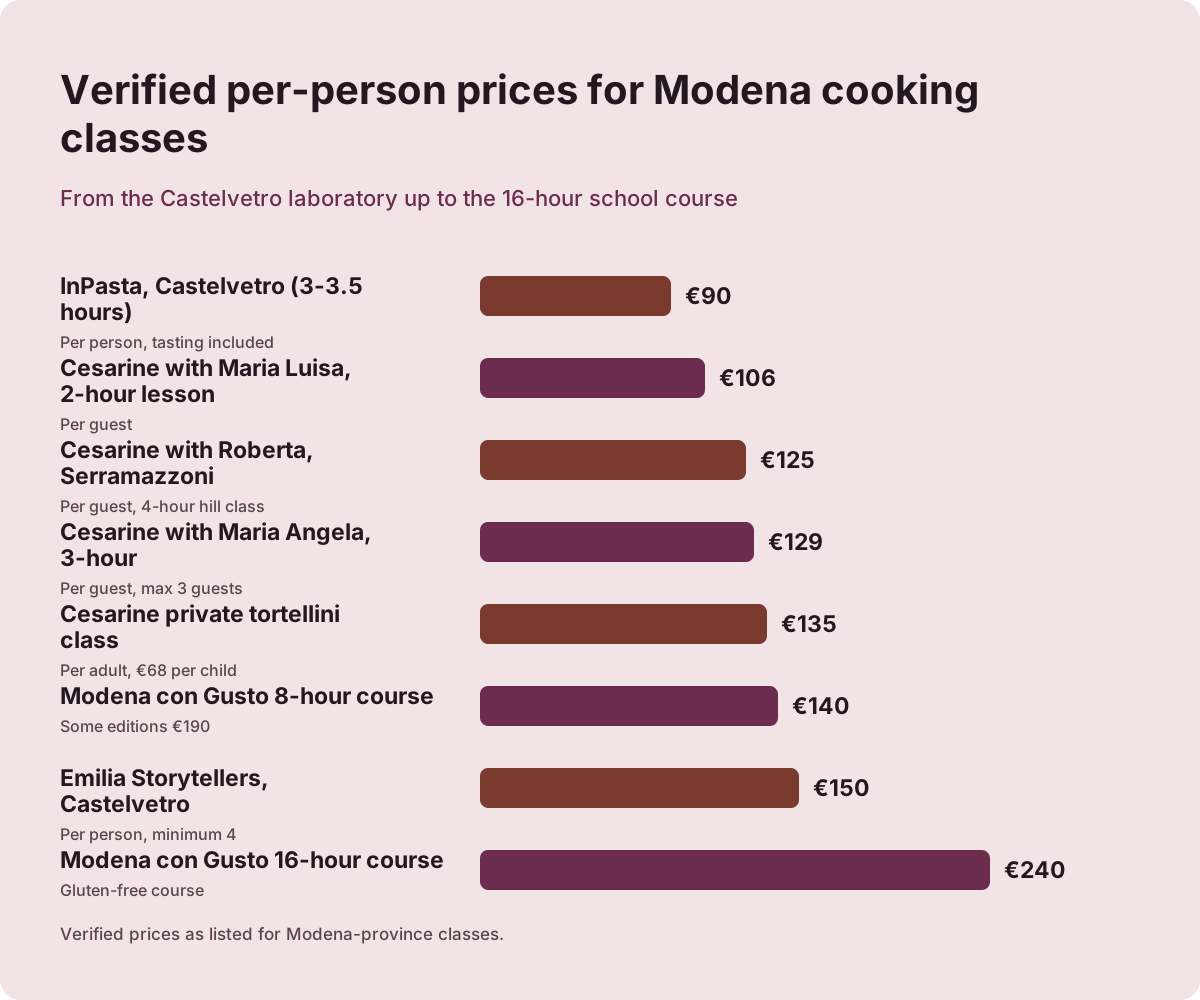
Verified prices for Modena-province classes run from €90 per person at the Castelvetro pasta laboratory up to €135 for the two-hour private tortellini class in a Cesarine home, with €106, €125 and €129 formats in between. The combined pasta-and-acetaia day costs €150 per person, and school courses run €140 to €240. Children's rates exist in some formats, at €68 in the tortellini class.
The per-person spread is narrower than in Florence or Rome because almost nothing here is a volume product. The home formats are priced by the host through the Cesarine network, and the two verified listings from the same host, Maria Luisa, show €135 for the private version and €106 for the lesson format, which is the clearest illustration of what privacy costs: about €29 for the same two hours without other guests. The hill formats price lower because the kitchen is a laboratory, not a private home, and the group can be larger.
| Class | Format | Verified price |
|---|---|---|
| InPasta, Castelvetro | 3-3.5 hour hands-on, tagliatelle and tortelloni, tasting included | €90 per person |
| Cesarine with Maria Luisa | 2-hour tortellini lesson | €106 per guest |
| Cesarine with Maria Angela | 3-hour, two pasta recipes plus tiramisu, max 3 guests | €129 per guest |
| Cesarine with Maria Luisa | 2-hour private tortellini class, max 8, wine included | €135 per adult, €68 per child |
| Cesarine with Roberta, Serramazzoni | 4-hour tortelloni and crescentine on the hills | €125 per guest |
| Emilia Storytellers, Castelvetro | 4-5 hour pasta class plus acetaia visit and tasting | €150 per person, minimum 4 |
| Modena con Gusto, Via Piave 125 | 8-hour evening fresh-pasta course with a maestra sfoglina | €140, some editions €190 |
| Modena con Gusto, Via Piave 125 | 16-hour gluten-free course including fresh and stuffed pasta | €240 |
Two practical notes on those numbers. The InPasta price includes an aperitif and the tasting, so it is closer to all-inclusive than it looks. And the booking-platform listings for the home classes, including the ones in our roster, carry their own live prices, which move with season and demand; check the current price on the listing before you plan the day around a figure.
How Do Home-Kitchen Classes With A Local Actually Work?
You book, the host sends the exact home address, you arrive and cook in the family's own kitchen, and you eat at the family's own table. There is no demonstration kitchen and no studio: the Cesarine formats and the Via Emilia Est class are literally someone's house, which is why group sizes stay small and why the meal at the end feels like lunch rather than a tasting.
The mechanics are simple and worth knowing in advance. Bookings go through the listing, and the address follows by message, which surprises some visitors who expect a storefront. Sessions open with the dough, because egg pasta dough needs to rest before rolling, then move to the mattarello work, then to cutting and folding the shapes, then to the table. Wine is included in the verified formats. Dietary needs should be flagged at booking, not on arrival, because a home kitchen plans its shopping around the booking count. The host leads every step, and you do the rolling yourself.
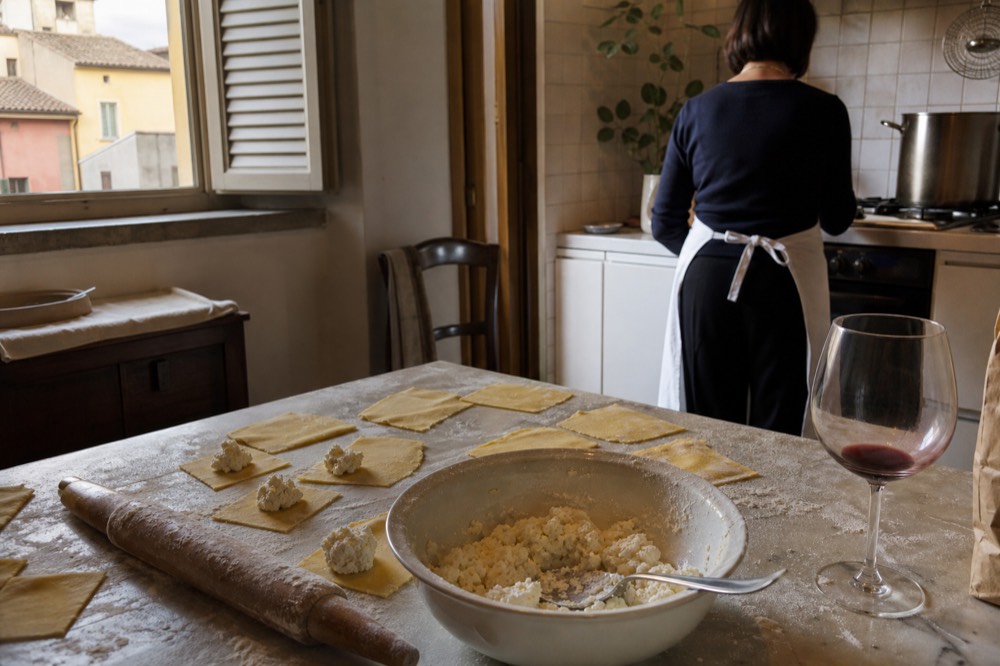
The Via Emilia Est class hosted by Maria Luisa Nicolini is the format at its most representative: tagliatelle and ricotta tortelloni, rolled and filled by hand, then eaten with local wine. It suits travellers who want one solid half-day rather than a sampler, and because it is a home kitchen rather than a school, the pace follows the group rather than a timetable. If the date you want is gone, see the next available dates on the listing before assuming the class is full for your whole trip.
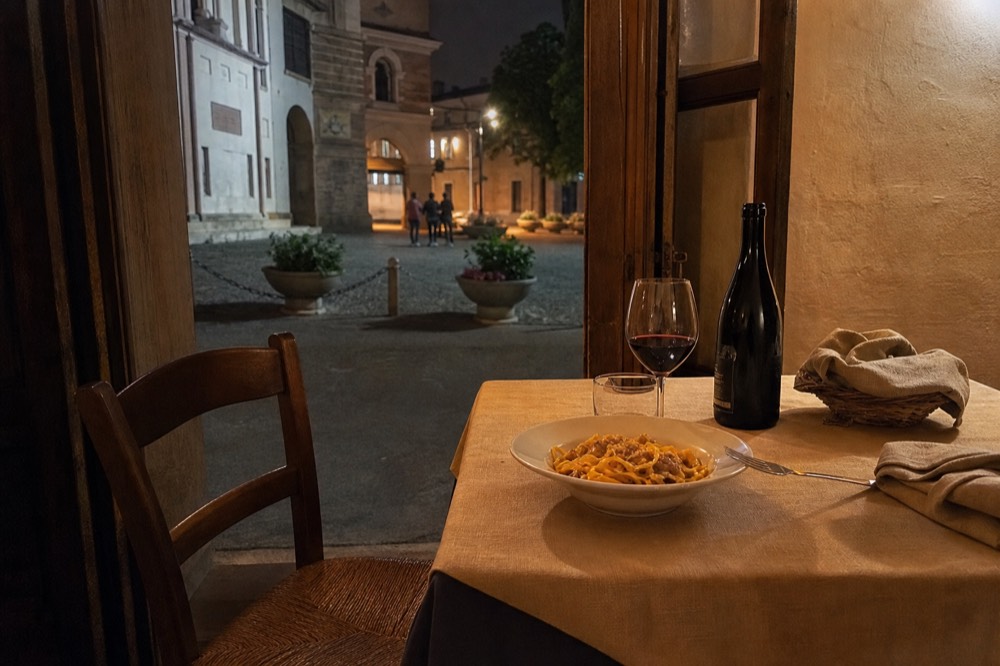
One thing the home format teaches that no studio can: how a Modenese household actually eats. The portions, the order of courses, the way the Lambrusco is poured, all of it is household practice rather than restaurant choreography. For the restaurant side of the same tradition, our guide to what to eat in Modena maps the dishes onto the menus you will meet in town.
What Is The Difference Between A Cesarine Class And A Pasta Laboratory?
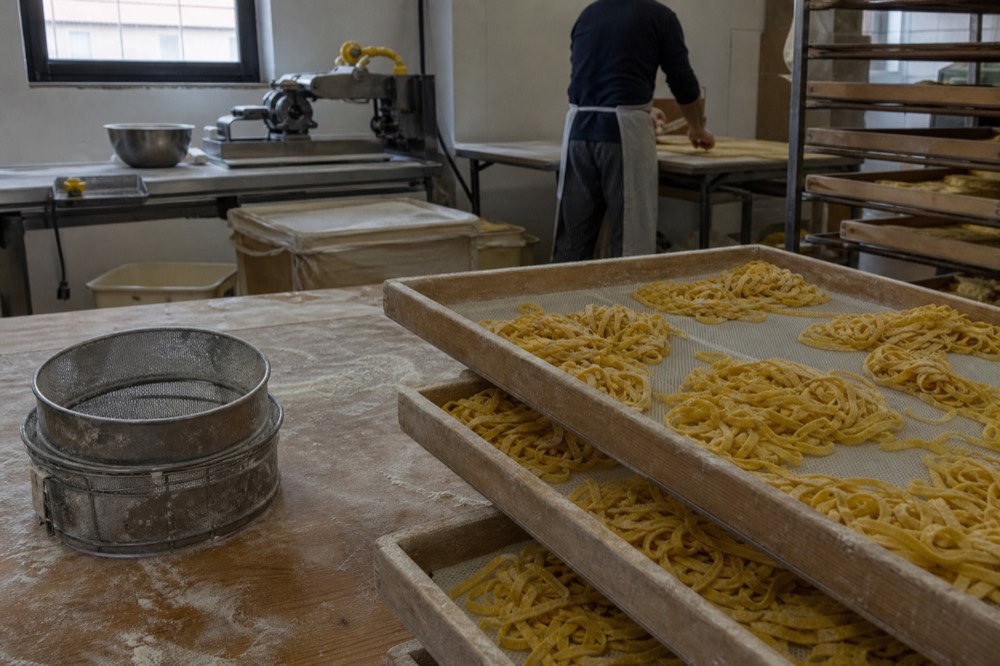
A Cesarine class is a private home: your host's kitchen, her table, a group of three to eight, and a menu shaped by her family's cooking. A laboratory class, like InPasta at Castelvetro, happens inside a working fresh-pasta production shop, with an aperitif and tasting built in, and the group can run larger. The home format is more intimate; the laboratory is more instructive about pasta as a craft.
Neither is better; they answer different questions. If your goal is the texture of Modenese domestic life, the home class wins, because you cannot manufacture someone's grandmother's kitchen table. If your goal is technique, and you want to see how a shop that produces pasta every single day organises dough, resting, rolling and filling, the laboratory is the honest teacher. The Castelvetro laboratory also runs in English or Italian, which matters if your Italian is thin and the home host's English is untested.
| Cesarine home class | Castelvetro laboratory class | |
|---|---|---|
| Setting | Host's own house | Working fresh-pasta shop |
| Group size | 3-8 maximum | Larger beginner groups |
| Languages | Depends on the host | English or Italian |
| Menu | The host's family recipes | Tagliatelle and tortelloni, set structure |
| Extras | Wine with the meal | Aperitif and tasting included |
| Getting there | City address, sent after booking | 20-25 minutes by car from Modena |
The private Cesarine format, two pasta shapes plus tiramisu in a Modenese home, is the one most couples book, and it caps at three guests in the verified listing, which makes it close to one-to-one. Check the live price before committing, because private formats move more than group ones.
For travellers who want the shopping leg as well as the cooking leg, the market-plus-class format starts at the stalls and ends at the host's table, which is the longest of the three and the best fit for anyone who cooks seriously at home and wants to reproduce the dish, not just eat it.
Can You Take A Cooking Class In Modena Without A Car?
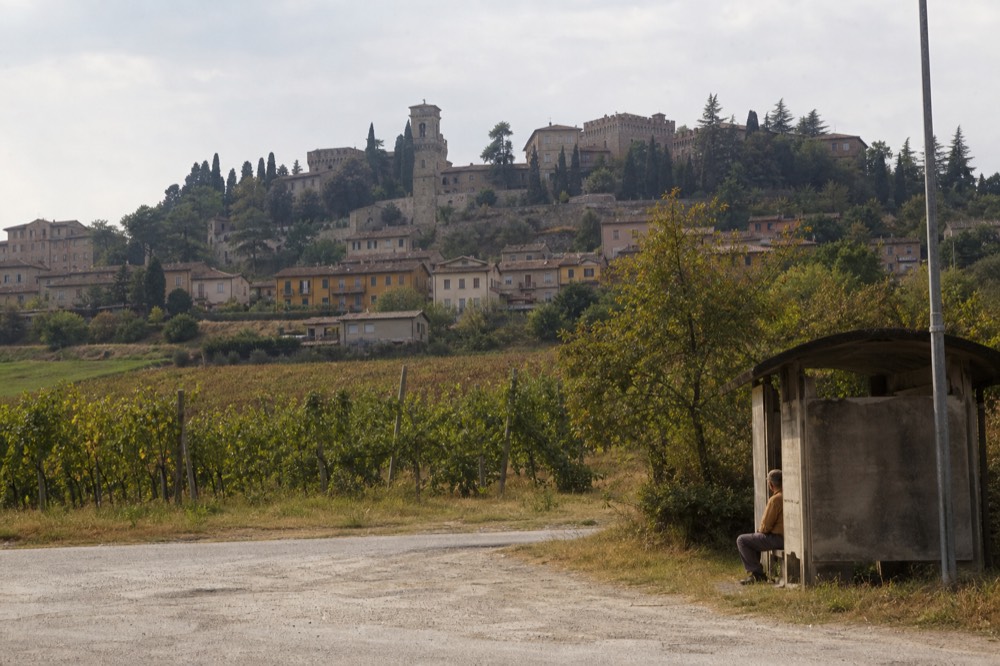
Yes, but the format chooses itself. Every class inside the Modena city boundary, the home kitchens and the Via Piave school courses, is walkable or a short taxi ride from the centre. The Castelvetro formats need a car or a taxi, twenty to twenty-five minutes from the centre, or the SETA 740 bus, which reaches Castelvetro in 41 to 47 minutes. The hill class at Serramazzoni needs a car.
The bus detail is worth having. SETA line 740 runs from Modena's Autostazione to Castelvetro, and it also serves Levizzano, so the laboratory town is genuinely reachable by public transport, just not quickly: allow the best part of an hour each way plus the walk from the stop. Line 500 reaches Lesignana, where the 4 Madonne Parmigiano dairy sits, in 9 to 11 minutes, which matters if you are pairing a dairy visit with a city class on the same day. The dairy's own page lists its rail distances as about 8 km from Modena and 4 km from Quattro Ville, and it arranges taxis through a local agreement rather than claiming a bus. Pick your class and your transport together, not separately.
| Class location | Distance from central Modena | Without a car |
|---|---|---|
| Home kitchens, Via Emilia Est | Inside the city | Walk or short taxi |
| Modena con Gusto, Via Piave 125 | Inside the city | Walk or short taxi |
| InPasta, Castelvetro | 20-25 minutes by car | SETA line 740, 41-47 minutes, or taxi |
| Emilia Storytellers, Castelvetro | Hill town | Car, or line 740 plus a walk |
| Cesarine hill class, Serramazzoni | Apennine foothills | Car needed |
If you are staying in Bologna instead, the calculus changes. The direct train between the two cities is a short ride, and a morning class in Modena plus an afternoon back in Bologna is a workable day, but the Castelvetro formats become awkward without a rental car. Our Modena day trip from Bologna guide lays out the full sequence, including where the market and the classes slot into a single day.
When Should You Book, And What Should You Ask First?
Book home-kitchen classes as far ahead as your dates allow, because a kitchen with a three to eight guest cap sells out on weekends first, and the host shops for the exact headcount. Ask three things before paying: the exact meeting arrangement, since home addresses arrive only after booking; whether your dietary needs can be handled; and what the class includes at the table.
Late September is Modena's high season for food travellers, and the class calendar collides with it. The Sagra dell'Uva e del Lambrusco Grasparossa runs at Castelvetro from 19 to 27 September 2026, Acetaie Aperte opens over 30 acetaie across the province on Sunday 27 September 2026, and the Gusti.a.Mo producer event runs in Modena on 28 and 29 September. That ten-day window puts visitors exactly where the hill classes are, so a Castelvetro class that week should be locked in well before the Italian summer holidays end. Dietary needs should be flagged at booking rather than on arrival, because a home kitchen plans its shopping around the booking count.
| Question to ask | Why it matters |
|---|---|
| Where exactly do we meet? | Home kitchens send the address only after booking |
| Can you handle our allergy or intolerance? | Home hosts shop to the booking count; flag it early |
| Is wine and the full meal included? | Formats differ: aperitif, tasting and wine vary |
| What shapes will we make? | Tagliatelle and tortelloni are standard; tortellini in brodo is not |
| What is the maximum group size? | Anything above eight is not a home format |
| Is the class in English? | Laboratory classes confirm it; home hosts vary |
The gluten-free question deserves a straight answer. The verified sixteen-hour gluten-free course at Modena con Gusto, running with a named chef, is a resident-scale commitment rather than a visitor class, and no verified source states gluten-free handling for the Cesarine or laboratory formats (see Free Things In Modena). Italy recognises coeliac disease in national law and the Italian coeliac association runs a formal trained-venue network with a public directory, per celiachia.it, but a home pasta class built on wheat flour is not where that network applies. Ask before booking rather than hoping.
The market-plus-kitchen format below is the one that rewards early booking most, because it depends on the market being open: Mercato Albinelli's stalls run Monday to Saturday and close on Sunday, while its restaurants open seven days, per the market's own site at mercatoalbinelli.it. A Sunday booking for a market-first class does not work.
How Do You Fit A Class Into A Wider Food Day In Modena?
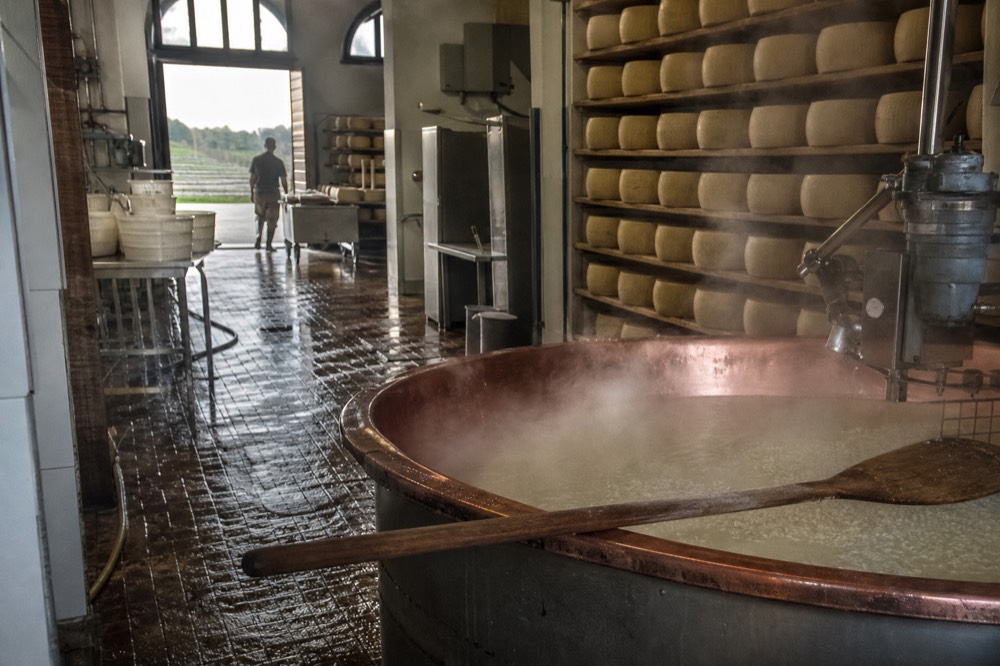
The cleanest pairing is a morning Parmigiano Reggiano dairy visit, since cheesemaking happens in the morning and afternoon tours cover that stage on video instead, followed by an afternoon or evening pasta class inside the city. The dairy at Lesignana runs daily visits by reservation at €22 per adult, and line 500 reaches Lesignana in 9 to 11 minutes, so cheese and pasta fit inside one date without a car.
The order matters. Dairies make cheese in the morning, and the verified dairy pages are explicit that afternoon visitors see that stage on video, so the dairy takes the early slot. The home classes sit happily in the late afternoon, since they end with the evening meal, which is exactly how the day should close. A class that ends with you eating your own tagliatelle at a family table is the natural last act of a food day in this city.
| Time of day | Best fit | Why |
|---|---|---|
| Morning | Parmigiano dairy visit | Cheesemaking happens in the morning; afternoon is video only |
| Late morning | Mercato Albinelli shopping leg | Stalls open 7:00-15:00, Monday to Saturday |
| Afternoon | Balsamic acetaia or free time | Acetaia visits run by booking through the day |
| Late afternoon into evening | Home cooking class | Ends with the meal, the natural close of the day |
For the wider picture, including the balsamic and Lambrusco stops that pair with a class day, our things to do in Modena for food lovers guide sequences the whole province. And if you are weighing Modena against its neighbours first, the comparison in is it better to visit Parma or Modena settles the food-class question quickly: Parma teaches its own traditions, but the home-kitchen pasta class format, small and host-led, is Modena's signature version of it (see Bottura's Signature Dish).
The cheese that ends up grated over your tagliatelle has its own rules, and the Consorzio's own pages explain the rind marks and the 12-month minimum ageing at parmigianoreggiano.com. Knowing why the wheel carries its markings is a good conversation to bring to the table at the end of a class, because your host will have opinions.
A Modena cooking class costs between €90 and €150 per person for the visitor formats, lasts two to five hours, and caps groups between three and eight in the home kitchens. City formats need no car; the Castelvetro hill formats need one or the SETA 740 bus. The questions below cover the details, from shapes to booking windows.
Common Questions About Cooking Classes In Modena
How Much Does A Cooking Class In Modena Cost?
Verified Modena-province classes run from €90 per person at the Castelvetro pasta laboratory to €135 for a two-hour private tortellini class in a Cesarine home, with €106, €125 and €129 formats in between. The combined pasta-and-acetaia day is €150 per person, and school courses run €140 to €240. Listing prices for the bookable formats move with season, so check the live price before planning.
How Long Does A Modena Cooking Class Last?
Most formats run two to four hours. The private tortellini class is two hours, the standard home and laboratory classes are three to three and a half, the hill class is four, and the pasta-plus-acetaia day runs four to five. The market-plus-kitchen format is the longest single booking, and school courses run eight or sixteen hours across sessions.
Do I Need A Car For A Cooking Class In Modena?
Not for city formats: the home kitchens and the Via Piave school courses sit inside Modena. The Castelvetro formats need a car or taxi, twenty to twenty-five minutes from the centre, or SETA line 740, which takes 41 to 47 minutes from the Autostazione. The Serramazzoni hill class needs a car.
What Pasta Shapes Will I Learn In Modena?
Tagliatelle and tortelloni are the standard pair, rolled by hand with a mattarello. Tortellini in brodo, the tiny meat-filled pasta in capon broth, appears in the most local classes and is the advanced fold. Many formats add tigelle or crescentine, and the Cesarine versions usually finish with tiramisu.
Are Modena Cooking Classes Suitable For Beginners?
Yes. The Castelvetro laboratory class is explicitly beginner-friendly, and the home formats assume no prior skill, since the host leads every step from dough to table. What a class asks of you is attention and hands, not experience.
When Should I Book A Modena Cooking Class?
As early as your dates allow, especially for weekends and for late September, when the Castelvetro grape festival, the province-wide acetaie open day on Sunday 27 September 2026 and the Modena producer event all pull food travellers into the same small classrooms. Home kitchens cap at three to eight guests and the host shops to the headcount, so late bookings are the ones that fail.