What Is Massimo Bottura's Signature Dish In Modena?
Massimo Bottura's signature dishes at Osteria Francescana are built on Parmigiano Reggiano DOP and Modena's protected products. Here is what they are, why they matter, and where to taste the same ingredients.
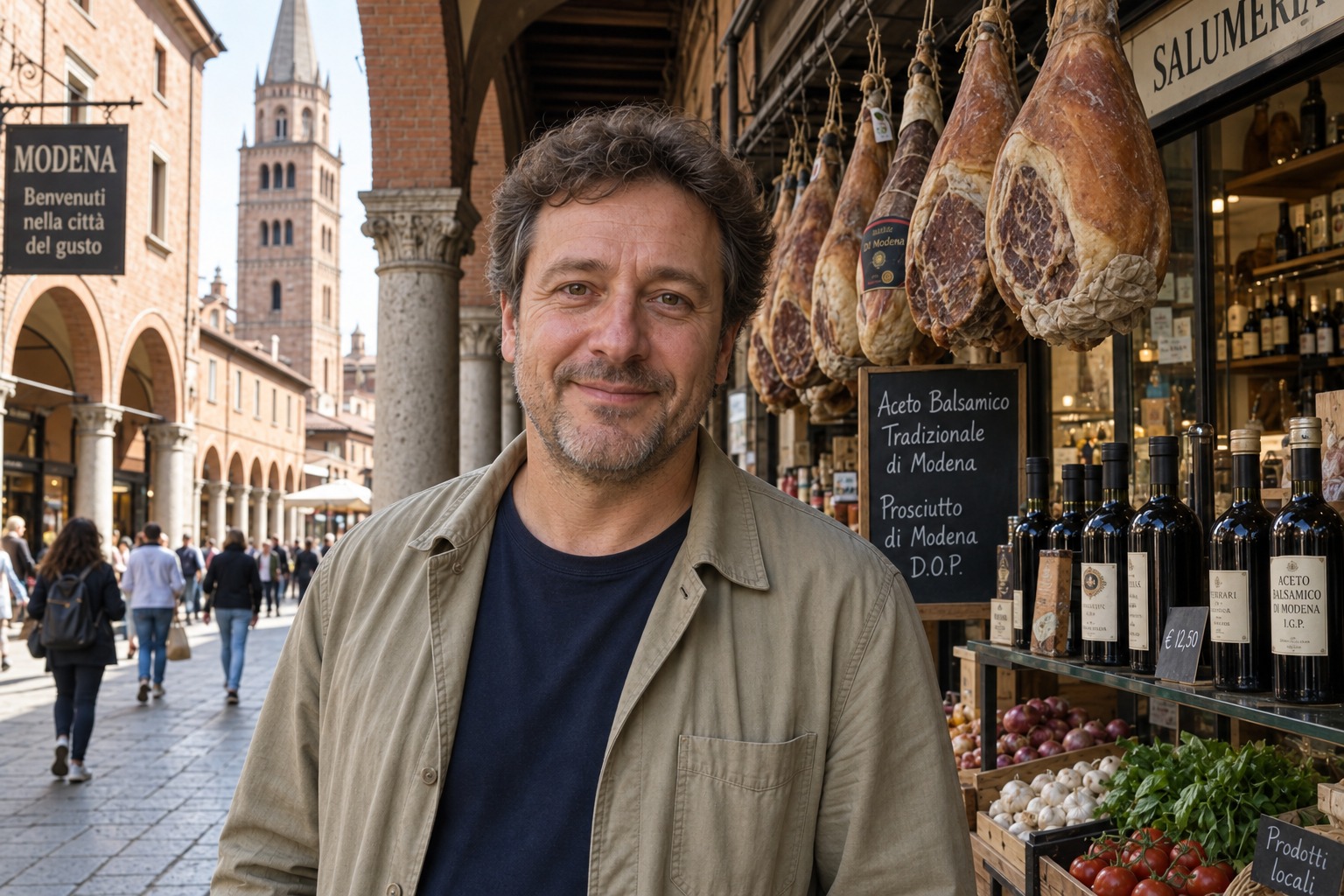 By Marco Montanari, Modena food tour guide and Emilian culinary specialist
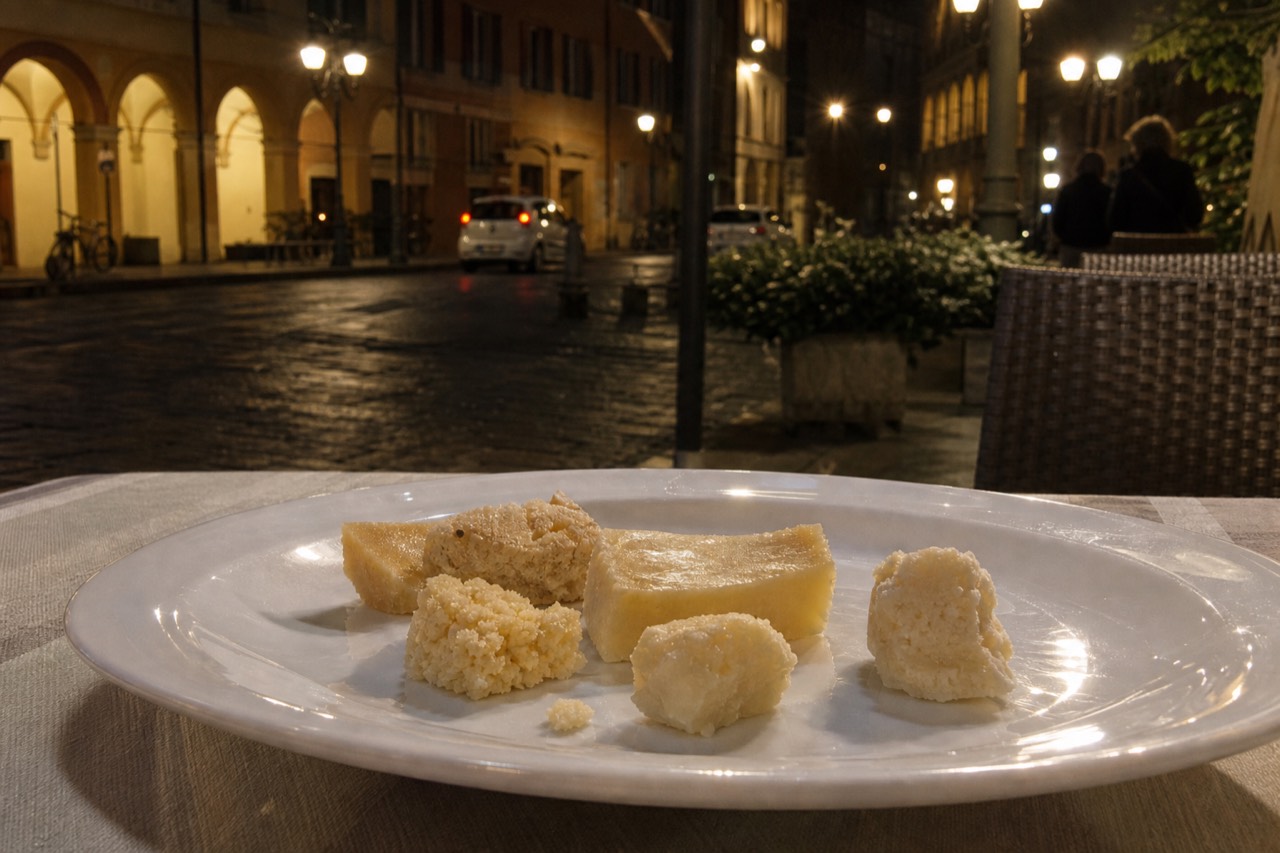
Massimo Bottura built an international reputation on a simple provocation: take the food his grandmother cooked in Modena and think about it hard enough to make it new (see Modena Reservations). The dishes that made him famous are not experiments in foam for its own sake. They are arguments about Emilia, and the two strongest of those arguments are a cheese plate and a dessert. Both lean on products whose names are legally protected, which is exactly why a site like Food Tours in Modena keeps writing about them: you can taste the raw material of Bottura's cooking in the dairies, acetaie and market counters of his province, without a reservation six months out.
What Is Massimo Bottura's Signature Dish In Modena?
The dish most people name is "Five Ages of Parmigiano Reggiano," a single course that presents the same DOP cheese at five different ages in five different textures and temperatures, from a crisp to a cream to a warm soufflé. The close second is "Oops! I Dropped the Lemon Tart," a deconstructed tart served deliberately broken. Together they frame Bottura's whole project: tradition, examined and rebuilt.
Neither dish hides its raw material. The cheese course is entirely Parmigiano Reggiano DOP, the wheel-aged cheese whose production zone covers the provinces of Parma, Reggio Emilia, Modena, Bologna left of the Reno and Mantova right of the Po, as the Consorzio's own territory pages set out (see Parma or Modena). The lemon tart is a story dish: legend inside the kitchen holds that a tart was dropped on the pass just before service, and Bottura decided the accident was the point, plating it shattered and naming it after the mishap. Guests who order it are not getting a mistake. They are getting a joke told with total precision, a dessert engineered to collapse exactly the way the original did.
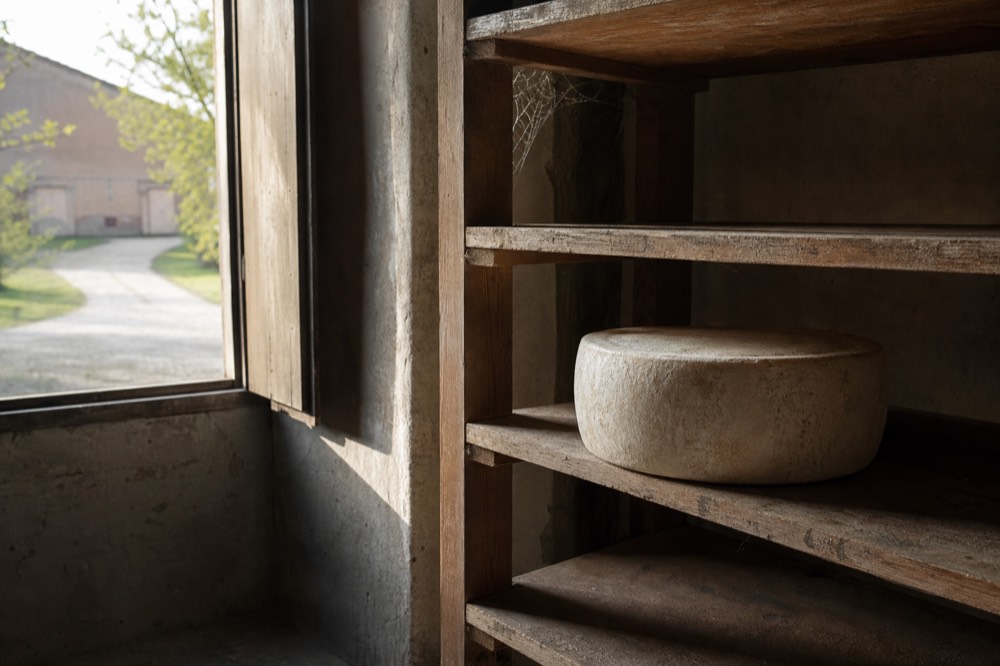
What makes the five-age plate interesting to a food traveller is that it is a tasting flight in disguise. Parmigiano Reggiano has a minimum ageing of 12 months and no maximum, with 24 to 36 months the commonest age on sale, and the cheese changes character as the months stack up: young wheels are milky and elastic, older ones are granular, sharp and flecked with the white tyrosine crystals that grow in number and size with age (see Parmigiano vs Parmesan). Bottura's dish simply takes that spectrum, which a dairy guide would walk you through in words, and puts it on one plate in forms your eye reads as five different foods. It is a tour of the ageing shelves compressed into a course.
If that framing appeals to you, the same logic is available to non-fine-dining budgets across the province, and the three experiences below are the ones that follow it most directly.
Why Parmigiano Reggiano Sits At The Centre Of The Dish
Bottura's cheese signature works because Parmigiano Reggiano is not a flat ingredient but a moving target: it is legally the same product at 12 months and at 36, yet tastes, smells and behaves differently at each stage. The dish makes that drift visible. It also honours a cheese with no additives, no preservatives and an edible rind, nothing to hide behind.
The rules behind the wheel are unusually strict and unusually public. Every wheel carries a casein plate in its first hours with a unique alphanumeric traceability code, the letters CFPR and a Datamatrix mark, so any wedge can be traced back to the day and the dairy that made it. The dotted lettering around the rind is the origin mark; the oval fire brand reading "Consorzio Tutela Parmigiano-Reggiano" is applied only at 12 months, and only to wheels that pass a hammer-tested inspection. Wheels that fail have their marks milled off and lose the right to the name. You can read the full marking system on the Consorzio's guide to its marks, and it is worth reading before any dairy visit, because you will see those rinds in person.
There is a second, quieter reason the cheese course became the signature. Parmigiano Reggiano is naturally lactose-free at every age, since lactose converts to lactic acid within the first 48 hours of making, and it is made of only milk, salt and rennet. That makes it one of the few luxury ingredients a kitchen can serve almost universally. A dish that is one ingredient, five ways, is also a dish that is honest about what that ingredient is.
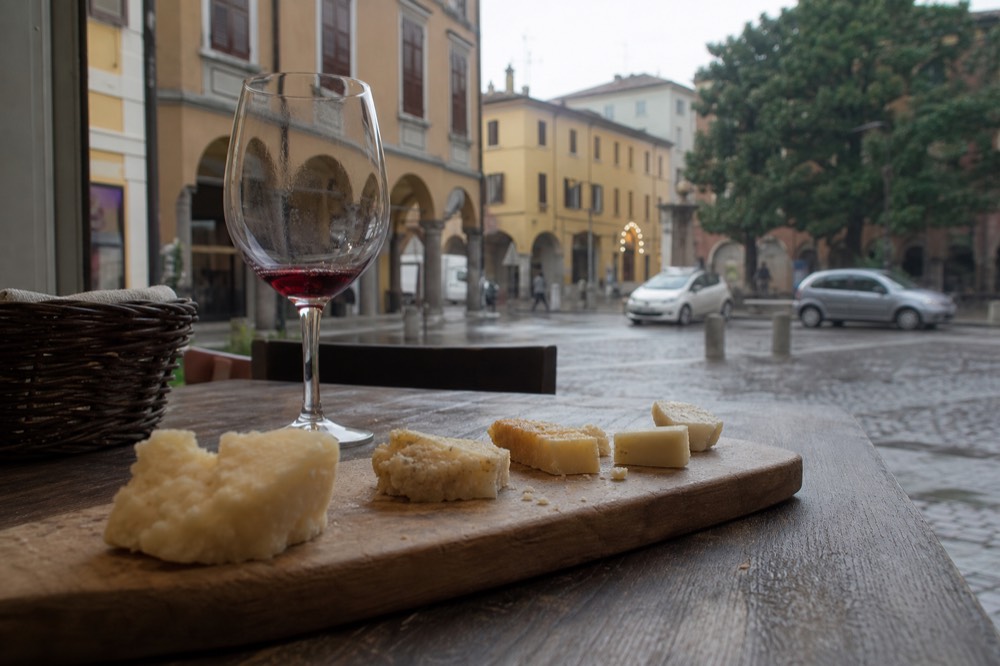
For travellers, the practical version of the five-age idea is a dairy tasting. A dairy visit is a booked arrangement rather than a walk-in; one Modena dairy we verified, 4 Madonne Caseificio dell'Emilia at Lesignana, runs a roughly one-hour guided visit daily by reservation, with a standard tasting of four different ages plus ricotta, tosone and cheese spread on bread, with balsamic, honey, wine and water. Cheesemaking happens in the morning there, and afternoon tours cover that stage on video instead of live, which is worth knowing when you pick a time slot. If a full day appeals more than a single stop, check the current price on the combined dairy-and-acetaia experience before you plan it, since day formats vary with transport and group size.
| Element of the cheese | What the rules say | Why it matters at the table |
|---|---|---|
| Minimum ageing | 12 months, no maximum | The age spectrum is the whole idea of the five-age dish |
| Traceability | Casein plate with unique code, CFPR letters, Datamatrix | Any wedge traces to its day and dairy |
| Selection mark | Fire brand applied at 12 months after hammer testing | Only inspected wheels keep the name |
| Ingredients | Milk, salt, rennet only; no additives or preservatives | The rind is edible and the cheese is naturally lactose-free |
| Texture markers | White tyrosine crystals grow with age | Crunch is a sign of age, not a defect |
The Lemon Tart That Became A Signature
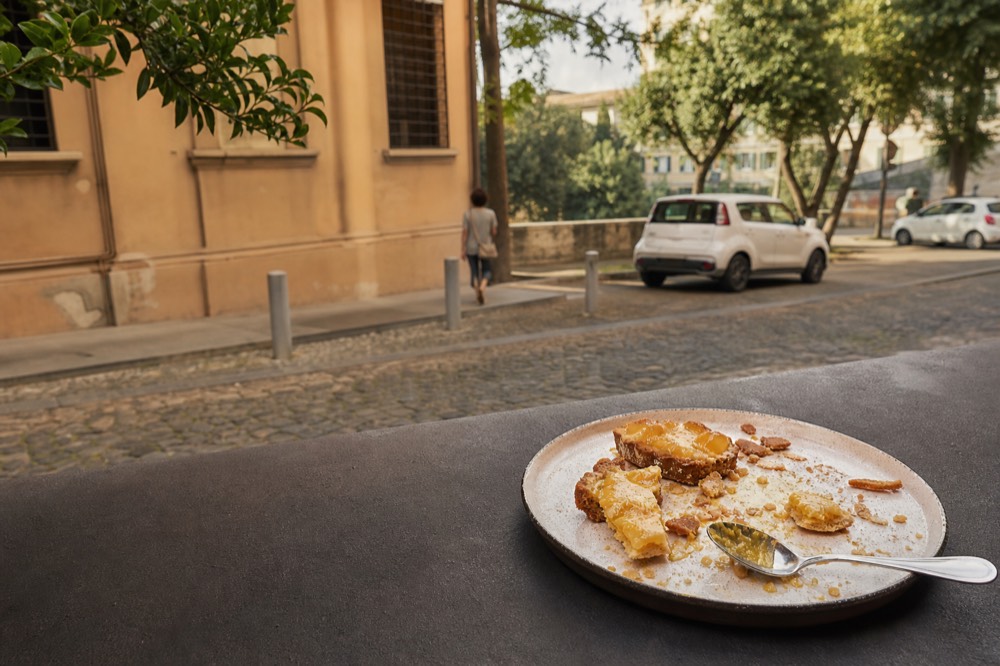
"Oops! I Dropped the Lemon Tart" is Bottura's other signature: a lemon tart plated as if it had been dropped, its shell shattered and its filling smeared, rebuilt in the kitchen with full control so that the accident looks real. It reframes a mistake as a composition, and it is the dish most photographed at Osteria Francescana.
The story behind it is kitchen folklore now: a tart fell, the room froze, and Bottura decided to serve the wreckage. Whatever the exact sequence was, the plate that exists today is not wreckage at all. It is a precisely engineered collapse, the sablé shell broken into deliberate shards, the cream and curd arranged so the eye reads chaos while the palate gets balance. That tension, between an Emilian grandmother's tart and a chef's control, is the same tension that runs through the five-age cheese course. Bottura's cooking is at its most characteristic when it looks accidental and is anything but.
It is also a useful dish for understanding why his food travels well as an idea and badly as a copy. The tart depends on a specific Emilian pastry tradition, just as the cheese course depends on a specific protected wheel. Remove the local product and the plate stops meaning anything. This is why the Modena food scene around him, the dairies, the acetaie, the market counters, is not a sideshow to the restaurant (see Best Food Tour City). It is the argument the restaurant is making.
One protected product ties both signature dishes to the same landscape: Aceto Balsamico Tradizionale di Modena DOP, the cooked-must vinegar aged a minimum of 12 years in graded barrels, distinct from the IGP condiment sold in supermarkets. Traditional balsamic appears across Bottura's cooking and across Emilian cooking generally, usually in tiny doses, because a few drops carry a lot of structure. The distinction between the DOP and the IGP is the single most important thing to understand before you buy or taste: the DOP is cooked grape must alone, aged 12 or 25 years minimum, bottled only in the province in the mandatory Giugiaro bottle, while the IGP adds wine vinegar and matures from 60 days. You can read the DOP consortium's own FAQ on the ageing rules and the bottle seal before you taste, and the difference becomes obvious on the palate.
If you want to meet that product at the source, a cellar visit with a sit-down lunch is the format that suits it best, since traditional balsamic behaves more like a condiment-wine pairing than a shot.
Where To Eat Bottura's Food In And Around Modena
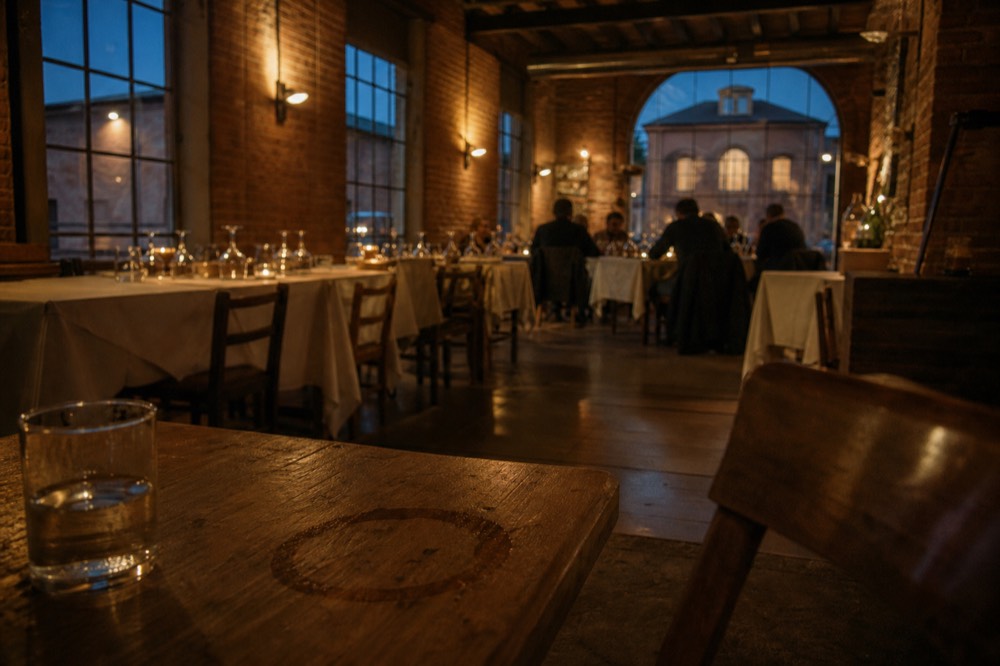
Bottura's flagship is Osteria Francescana at Via Stella 22 in Modena, voted The World's Best Restaurant in 2016 and 2018 and now in the Best of the Best group of The World's 50 Best, whose members no longer compete on the annual list. His other tables include Francescana at Maria Luigia and Il Cavallino in Maranello, the Ferrari canteen his team has run since 2021.
The restaurant sits inside Modena's limited-traffic zone, and its own booking FAQ warns that driving or parking there can earn you a fine, pointing instead at metered parking on viale Vittorio Veneto. Reservations open on a published calendar roughly six months ahead: March 2027 opened on 1 September 2026 at 10:00 Italian time, April 2027 on 1 October 2026, and so on, always through the restaurant's own site, with a waiting list once a month fills. A credit card is mandatory, a EUR 300 per person authorisation hold is placed four days before the booking, and cancellation is free up to 96 hours ahead, with EUR 300 per person applying to a late cancellation or a no-show. Parties run two to ten, guests start at age 12, and the meal takes about three hours. All of this is on the restaurant's own booking pages, which are the only authoritative source.
Il Cavallino is the easier reservation and, for many travellers, the more surprising one. It occupies Ferrari's original 1950 company canteen in Maranello and has run in collaboration with Bottura's Francescana Family since 2021, under chefs Riccardo Forapani and Virginia Cattaneo; it earned its Michelin star in November 2025, a fact confirmed on Ferrari's own page for the restaurant. It pairs naturally with a Ferrari museum stop: both museums open 9:30 to 18:00 year-round, extending to 19:00 from April to October, and a shuttle runs between them with a stop at Modena railway station (see Ferrari and Food Day).
| Venue | Where | What it is | Practical notes |
|---|---|---|---|
| Osteria Francescana | Via Stella 22, Modena | The flagship tasting menus | Own-site booking only, monthly release calendar, inside the ZTL |
| Francescana at Maria Luigia | Modena | Bottura's more casual sibling table | Solo diners from Francescana are directed here |
| Il Cavallino | Maranello | Ferrari's 1950 canteen, run with Bottura's team since 2021 | Earned its Michelin star in November 2025, pairs with the Ferrari museums |
| Franceschetta58 | Modena | Bottura-linked casual address | Opens Monday to Saturday, closed Sunday |
How To Taste The Same Products Without A Reservation
You do not need a six-month booking calendar to eat the ingredients behind Bottura's signatures. Parmigiano Reggiano dairies take booked visits in the morning, acetaie pour traditional balsamic in barrel lofts, and Mercato Albinelli's counters serve tortellini in brodo and porchetta sandwiches on a walk-in basis. The province is the tasting menu.
The market is the lowest-commitment stop. Mercato Albinelli has traded since 1931, with stalls open Monday to Saturday 7:00 to 15:00 and closed Sunday, while the restaurants inside open seven days, including Sunday when the stalls are shut. Named counters serve tortellini in brodo, porchetta sandwiches, tigelle and pizza slices, and the main entrance is at Via Luigi Albinelli 13, with further entrances from Via Mondatora and Piazza XX Settembre. If you are planning a week around tastings, read up on what to eat in Modena first so the market stops make sense, then decide which producer visits deserve a half-day.
Producer visits reward a little scheduling. Dairies make cheese in the morning, so a morning slot buys you the copper vats live; acetaie are less time-sensitive, since the barrels age with or without you. September is the richest month for the vinegar side of the province: Acetaie Aperte 2026 falls on Sunday 27 September 2026, with over 30 acetaie opening for guided visits and tastings, and Castelvetro's Sagra dell'Uva e del Lambrusco Grasparossa runs 19 to 27 September the same month. If a full day across a dairy and an acetaia sounds like your pace, see the next available dates on the combined format before locking in the rest of the week, since producer days book out fastest in that late-September window.
For readers weighing the restaurant itself against the wider province, our longer pieces on whether Osteria Francescana is worth it and on Bottura's restaurants in the city break the decision down by budget and by how far ahead you can plan. The honest summary: the restaurant is the compressed version of the province, and the province is the long version of the restaurant.
These three experiences are the ones that put the same protected products on your table with the least friction.
The short answers: the five-age Parmigiano Reggiano course and the dropped lemon tart are the two signature dishes, both built on protected Emilian products; the flagship restaurant books six months ahead through its own site only, while the same ingredients are tasteable at dairies, acetaie and market counters across the province without any reservation at all. The accordion below covers each of these points in detail.
Common Questions About Massimo Bottura's Signature Dish
What Is Massimo Bottura's Signature Dish?
The dish most often named is "Five Ages of Parmigiano Reggiano," a course presenting the same DOP cheese at five ages in five textures, from a crisp to a cream to a warm soufflé. The equally famous second signature is "Oops! I Dropped the Lemon Tart," a deconstructed tart plated as if it had been dropped, rebuilt with full control.
Can You Eat Bottura's Signature Dishes Without A Reservation At Osteria Francescana?
No. Osteria Francescana takes bookings only through its own website, on a monthly release calendar roughly six months ahead, and directs you to a waiting list once a month fills. Solo diners are directed to Francescana at Maria Luigia. Il Cavallino in Maranello is the easier reservation in the Bottura orbit.
Why Is Parmigiano Reggiano The Base Of The Cheese Signature?
Because the cheese is legally one product that changes dramatically with age: minimum ageing is 12 months with no maximum, and 24 to 36 months is the commonest age on sale. Serving it at several ages in several forms turns the ageing spectrum, which a dairy guide describes in words, into something you taste on one plate.
Can You Taste The Same Ingredients Outside Fine Dining Restaurants?
Yes, and it is the point of visiting the province. Dairies take booked morning visits with tastings of several ages, acetaie pour Aceto Balsamico Tradizionale di Modena DOP in their barrel lofts, and Mercato Albinelli's counters serve tortellini in brodo and porchetta sandwiches on a walk-in basis.
What Is The Difference Between The Balsamic In Bottura's Cooking And Supermarket Balsamic?
Aceto Balsamico Tradizionale di Modena DOP is cooked grape must alone, aged a minimum of 12 years in graded barrels and bottled only in the province in the mandatory Giugiaro bottle. Aceto Balsamico di Modena IGP adds wine vinegar, matures from 60 days and is the condiment sold in most supermarkets. Both are legitimate products, but they are different ones.
Is The Dropped Lemon Tart Really Served Broken?
Yes, deliberately. The shell is shattered into arranged shards and the filling is plated so the collapse looks accidental. The story is that a tart was dropped before service and Bottura decided the accident was the dish; the modern plate is engineered to reproduce that fall exactly.