Which Is Better, Parmigiano Reggiano Or Parmesan In Modena?
Parmigiano Reggiano and generic parmesan are not two brands competing on quality. One is a legally defined DOP cheese made in a fixed zone, the other is an imitation category. Here is what actually separates them.
 By Marco Montanari, Modena food tour guide and Emilian culinary specialist
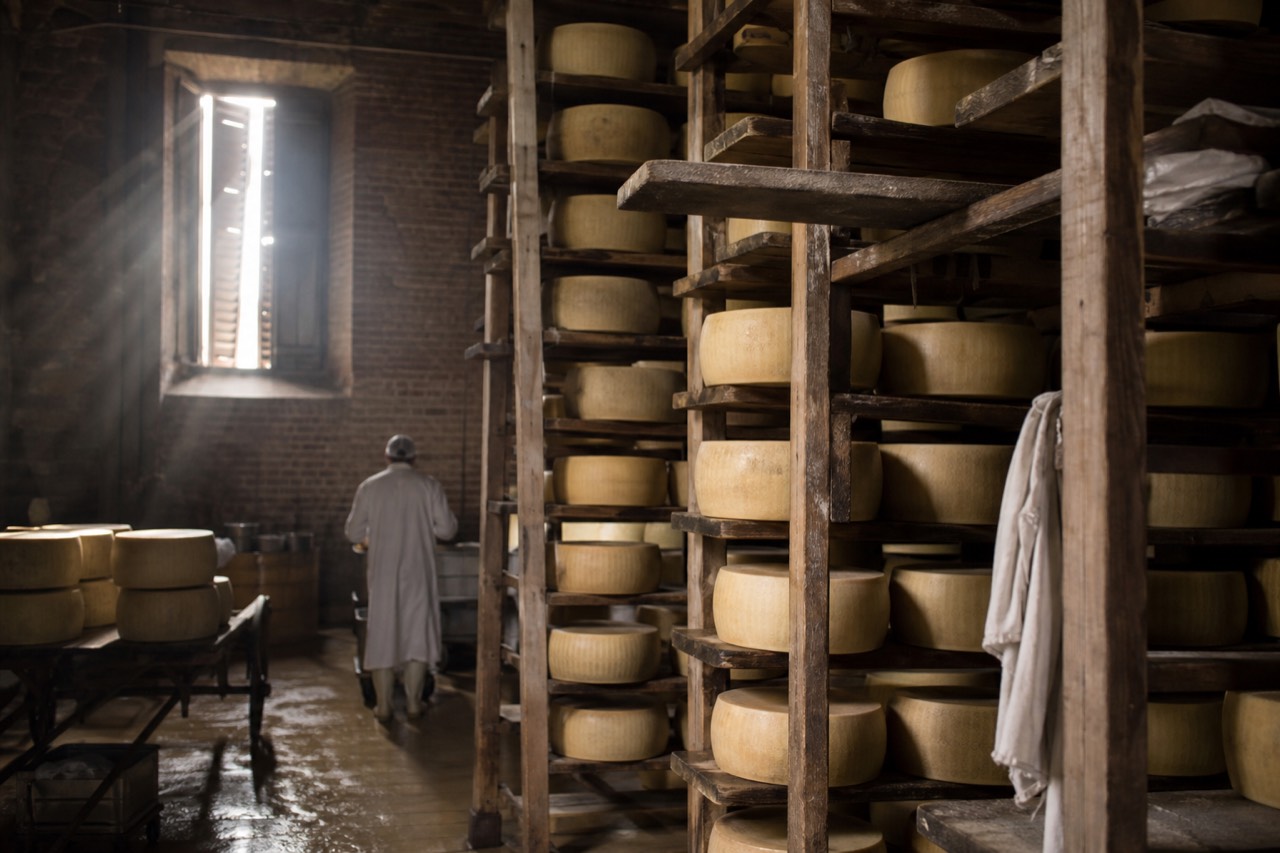
Modena sits inside the legally defined production zone of Parmigiano Reggiano DOP, one of only five provinces in the world where the cheese may legally be made (see Dairy Factory Tours). That single fact reframes the question. This is not a taste test between two rival brands, because only one of the two is a defined product at all.
Which Is Better, Parmigiano Reggiano Or Parmesan?
Parmigiano Reggiano is better on every measurable axis, because the comparison is a category error: Parmigiano Reggiano is a DOP cheese with binding rules on milk, territory, ageing and inspection, while "parmesan" is a generic word that imitators anywhere may legally print on a bag of pre-grated cheese. One is a regulated product, the other is a category of substitutes. Better is the wrong frame; different is the honest one.
The word "parmesan" exists in a strange legal space. Inside the European Union, the name Parmigiano Reggiano is protected, and cheese sold under that name must obey the full disciplinare. Outside the EU, and in parts of the retail world inside it, "parmesan" became a generic style word decades ago, which is why a green cylinder of grated cheese from a supermarket shelf can carry the name while bearing no relation to the original beyond a vague hardness and saltiness.
The rules that make the difference are not marketing. The production zone covers the provinces of Parma, Reggio Emilia, Modena, Bologna left of the river Reno, and Mantova right of the Po, and milk, cheesemaking, minimum ageing and packing must all happen inside it, as the Consorzio's own territory page sets out. A cheese made in Wisconsin or Argentina from different milk, aged for a shorter time and never inspected, can taste pleasant. It simply cannot be Parmigiano Reggiano, and nothing about the label's "parmesan" makes it equivalent.
If the question behind your question is "what should I buy and what should I eat in Modena," the answer is short: in Modena you are in the heart of the zone, the cheese is local, and the interesting move is not choosing between brands but seeing how the real one is made and tasting it at several ages side by side (see Best Balsamic Region).
What Does DOP Actually Require That Parmesan Does Not?
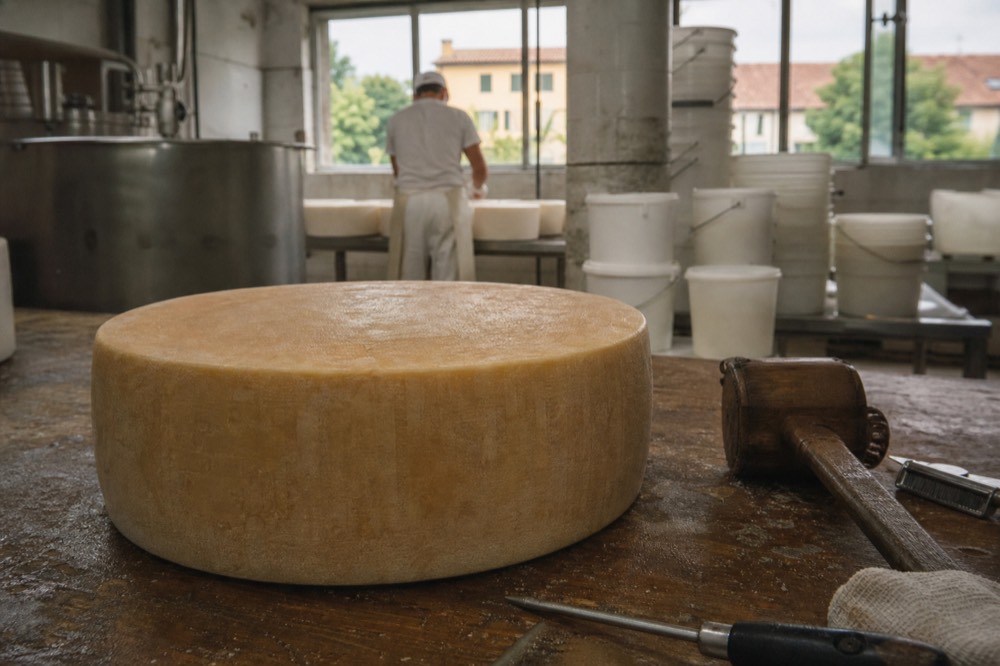
DOP status, Denominazione di Origine Protetta, means every stage is bound by a production rule that generic parmesan has no obligation to follow: milk from a defined zone, a minimum 12 months of ageing, a traceability plate applied in the wheel's first hours, and a hammer-tested inspection at 12 months that wheels can fail. Generic parmesan has none of these constraints, which is precisely why it can be cheaper.
Start with the ingredients. Parmigiano Reggiano is only milk, salt and rennet, with no additives or preservatives and no rind treatment, which is also why the rind is edible. A generic parmesan-style cheese may include additives, may use different cultures and different milk, and may be aged weeks instead of years.
Then the traceability. Every wheel gets a casein plate in its first hours carrying a unique alphanumeric code, the letters CFPR and a Datamatrix code, so a wheel can be traced back to the day and the dairy that made it. The dotted lettering around the rind is the origin mark. At 12 months, an inspector hammers and examines each wheel, and only those that pass receive the oval fire brand reading "Consorzio Tutela Parmigiano-Reggiano" plus the production year. Wheels that fail have their origin marks milled off the rind and lose all right to the DOP name. There is no equivalent inspection anywhere in the generic parmesan world, because there is nothing to inspect against.
| Requirement | Parmigiano Reggiano DOP | Generic parmesan |
|---|---|---|
| Defined production zone | Yes, five provinces only | No, made anywhere |
| Ingredients | Milk, salt, rennet only | Varies by producer, additives permitted |
| Minimum ageing | 12 months, no maximum | None mandated, often weeks |
| Per-wheel traceability | Casein plate with unique code | None |
| Independent inspection | Hammer test at 12 months, failures stripped of the name | None |
| Rind | Edible, untreated | Often treated or discarded |
The price gap between the two is not a marketing premium. It is the cost of the rules: longer ageing ties up stock, the zone limits milk supply, and inspection removes imperfect wheels from the DOP stream entirely.
How Do You Spot A Real Wheel In A Shop?
Look for three marks on the rind: the dotted "Parmigiano Reggiano" lettering struck all the way around, the oval fire brand with the consortium name and production year, and the casein plate or its code on the flat face. If any of these is missing, or the label just says "parmesan," it is not the DOP cheese, and pre-grated tubs cannot show you any of this.
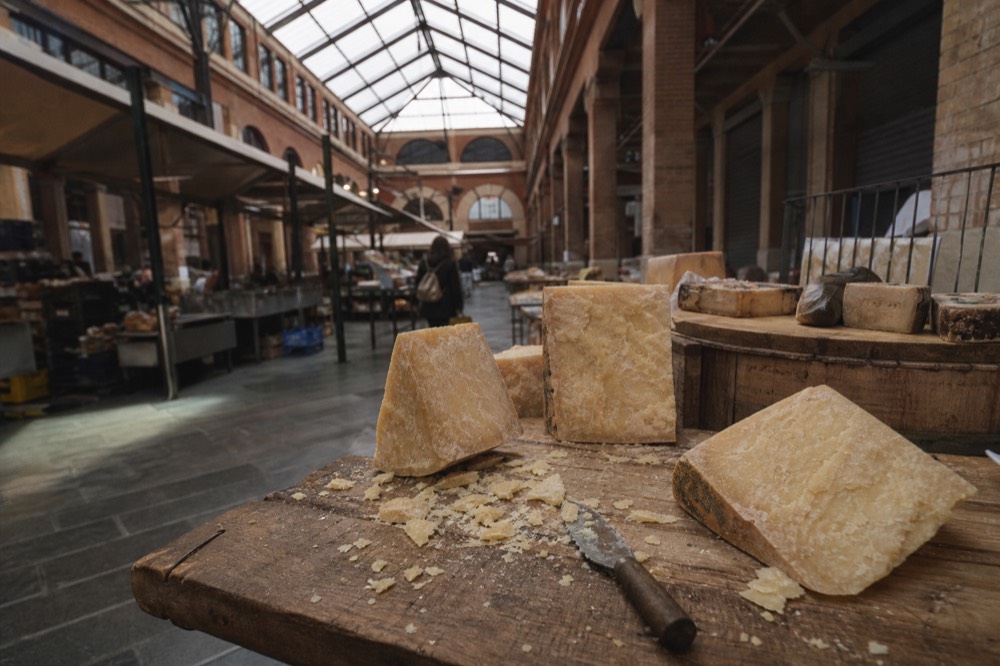
The dotted rind lettering is applied at the dairy on day one, so it is present even on young wheels. The fire brand is the prize mark: it only goes on at 12 months, after the inspection, so its presence tells you the wheel passed. A wedge cut from a branded wheel will carry part of that oval stamp and part of the pin-dot lettering, and a good cheesemonger cuts to show both.
Age claims deserve the same scepticism as names. The disciplinare sets a 12-month minimum and no maximum, and 24 to 36 months is the commonest age on sale. Words like "riserva" or "vecchio" on a parmesan-style bag mean nothing legally; on a genuine wheel, the age is written on the brand or the tag, and the white crunch of tyrosine crystals, which grow with age, is a physical cross-check you can see and feel in the paste.
| Mark on the wheel | What it is | When it appears | What it proves |
|---|---|---|---|
| Dotted lettering around the rind | Origin mark struck into the rind | Day one at the dairy | Made in the zone, in the DOP stream |
| Casein plate code | Unique alphanumeric traceability code | First hours of the wheel's life | The exact dairy and day of make |
| Oval fire brand | Consortium name plus production year | At 12 months, after inspection | The wheel passed the hammer test |
| Milled-off rind | Marks removed | At 12 months, on failure | The wheel lost the right to the name |
Does Age Settle The Question?
Age does not decide between Parmigiano Reggiano and parmesan, because generic parmesan rarely ages long enough to enter the comparison; age decides which Parmigiano Reggiano you want. The legal minimum is 12 months, 24 to 36 months is the commonest band on sale, and the paste changes texture and flavour across that range, from milky and elastic to granular, nutty and packed with tyrosine crystals.
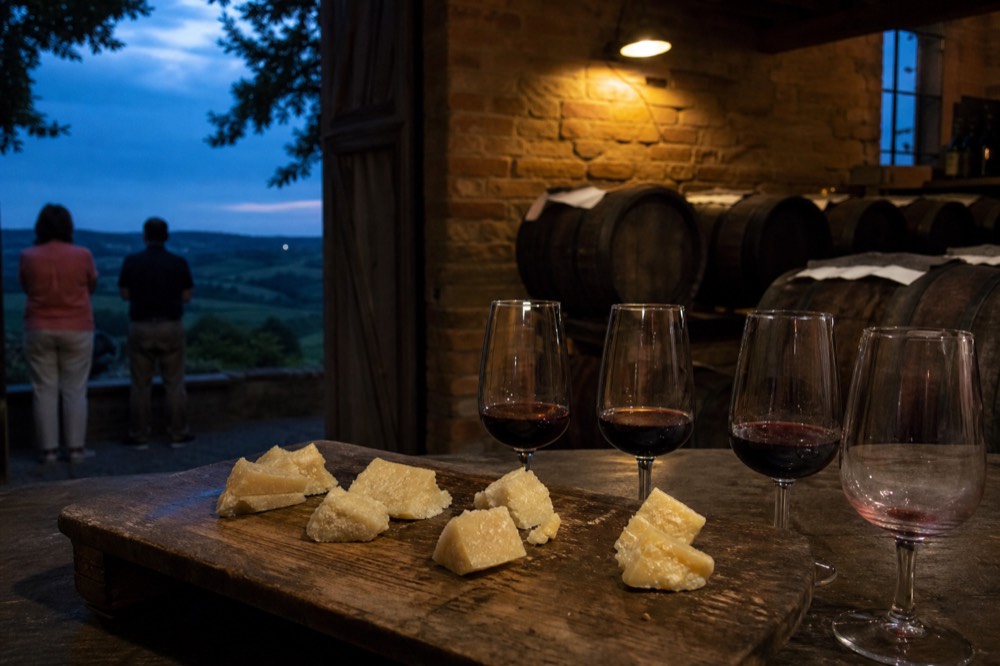
At 12 to 18 months a wheel is gentle: milky, slightly grassy, with a soft elasticity that suits eating in cubes or melting. Around 24 months the classic character arrives, brothy and nutty, with the first noticeable crunch. Past 36 months the cheese turns deeply savoury, almost like a broth concentrate, and the crystals multiply. None of these ages is "better" in the abstract; they suit different uses, and the honest way to find your own answer is a vertical tasting of several ages side by side.
Two facts about the cheese hold at every age. It is naturally lactose-free, because lactose converts to lactic acid within the first 48 hours of making, and the white spots are tyrosine crystals, not salt or mould, and they grow in number and size with age. Both are stated plainly in the Consorzio's FAQ, and both are things a pre-grated parmesan tub cannot promise you, since you cannot see the paste at all.
| Age band | Texture | Flavour profile | Best use |
|---|---|---|---|
| 12-18 months | Elastic, smoother | Milky, grassy, delicate | Table cheese, mild sauces |
| 24-30 months | Beginning to granulate | Nutty, brothy, balanced | The all-round default |
| 36 months and over | Grainy, crystal-heavy | Deep, savoury, concentrated | Eating plain, shaving over dishes |
Why Is Generic Parmesan So Much Cheaper?
Generic parmesan is cheaper because it skips every expensive step: milk can come from anywhere, ageing can be cut to weeks, additives can stabilise the product, and no inspection ever rejects a wheel. The DOP price reflects real costs, tied-up stock, a limited milk pool and a 12-month wait before a wheel can even be examined for sale.
There is also a mountain tier with its own rules. "Prodotto di Montagna" wheels come from dairies and stables in the mountain zone, with at least 60% mountain-sourced dry matter in the cows' feed, a minimum of 12 months of mountain ageing, and sale only from 20 months onward after an extra quality selection. One Modena-area producer, 4 Madonne Caseificio dell'Emilia, sells its 24-month mountain wheel at €25.50 per kg vacuum-packed, a price that reflects what careful selection and provenance add once the cheese is cut, packed and shipped (see Days in Modena).
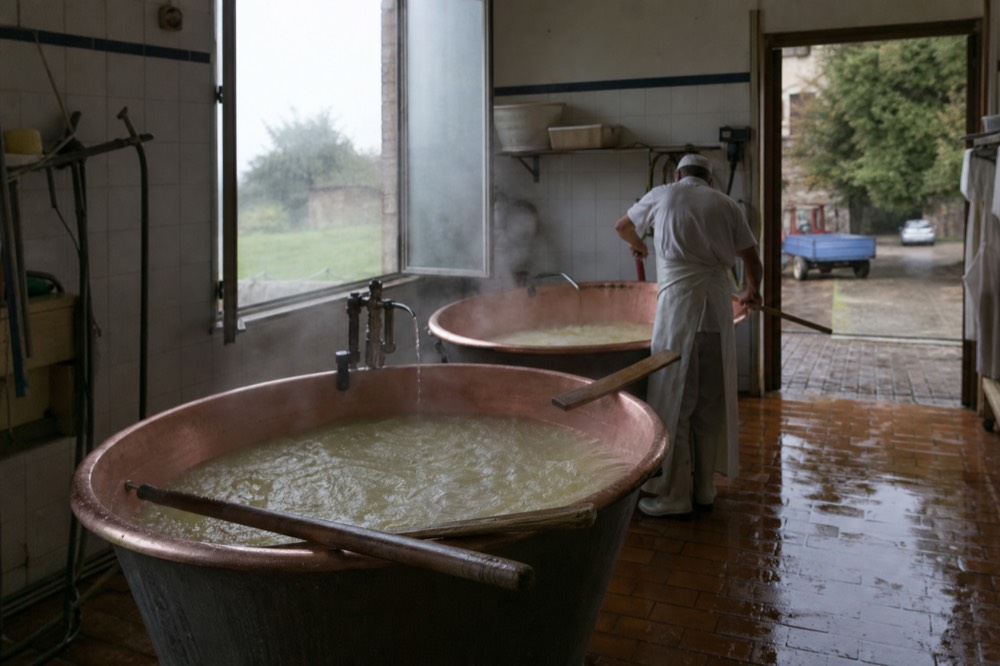
None of this means generic parmesan is a scam. It is a cheaper product built to a looser spec, and for a weeknight pasta it does a job. The failure is only in the framing: when a shelf puts a green tube of grated "parmesan" next to a wedge of DOP cheese at several times the price, the label implies a like-for-like choice that does not exist. If you want to see exactly where the money goes, a dairy visit makes the cost structure physical: the copper vats, the salting tanks, the ageing halls with wheels stacked to the ceiling for years before they earn a brand.
Can You Watch The Real Thing Being Made Near Modena?
Yes, and it is the one experience that settles the comparison better than any tasting: working dairies in Modena province take booked visitors, cheesemaking happens in the morning, and a standard visit runs about an hour with a tasting of several ages. One dairy near Lesignana, 4 Madonne Caseificio dell'Emilia, runs daily visits by reservation at €22 per adult, free for under-5s, with a tasting of four ages plus ricotta, tosone and pairings.
The timing matters more than most visitors expect. Production happens in the morning, and a real Modena-province dairy states it plainly: afternoon tours cover that stage on video instead of live, as 4 Madonne's visit page explains. So if watching curd being broken and lifted from the copper vat is the point of your visit, book a morning slot. The salting room and the ageing hall are open to visitors at any hour, and the ageing hall is where the fire-branded rinds make the DOP story visible row after row.
The Consorzio also runs its own booking page for tourist visits to dairies across the zone, which is the route in if you want to pick a specific caseificio rather than a tour operator's default. Check the current price and the next available dates before you plan the day, because morning slots at the most convenient dairies fill first, especially around weekends and holidays.
If you would rather not arrange the dairy yourself, a guided option with the transfer included removes the logistics: it pairs the vat room, salting room and ageing shelves with a tasting flight of the same cheese at different ages, which is exactly the side-by-side comparison this whole question asks for.
For a fuller day, some visitors combine the dairy with a traditional balsamic acetaia and a Lambrusco cellar in one loop, which is how Modena's three protected products tend to be eaten together anyway. The dry, secco style of Lambrusco is what gets poured alongside Modena food, and the six DOC denominations of the region are laid out by the Consorzio Tutela Lambrusco if you want the full picture. Our guide to Parmigiano Reggiano tours from Modena covers the options in detail, and the question what are the three types of parmesan cheese untangles a related naming confusion.
So Which Should You Put On Your Plate?
Put Parmigiano Reggiano on your plate whenever the cheese is the point: eaten in cubes, shaved over vegetables, or grated fresh at the table. Use generic parmesan only as a budget shortcut where its flavour is buried in a sauce. The quality gap is not an opinion, it is the direct output of the rules, the zone, the ageing and the inspection that only the DOP cheese undergoes.
In Modena the real thing is the local default rather than a luxury, which is the practical twist for visitors.
One practical note for cooking: because the DOP cheese is only milk, salt and rennet, with the rind edible and untreated, a spent rind is an ingredient in its own right, simmering in brodo or minestrone to release its savour. Nothing in a tub of grated substitute offers that. And when a recipe calls for "parmesan to taste", the quantity you need of the real cheese is smaller, because its flavour is more concentrated per gram than the milder generic product.
The site behind this article, Food Tours in Modena, exists because the region's protected products reward being understood rather than just consumed. Parmigiano Reggiano is the clearest case: once you have stood in an ageing hall and read a fire-branded rind, the question of which is better answers itself, and the only question left is which age you want in the wedge.
Check the live listing for current dates and prices before you commit to a dairy day, since morning slots and small-group formats change with the season.
The short answers below cover the six questions visitors ask most: whether the two cheeses are the same product, why the price gap exists, how to read a rind, which age to buy, and whether a dairy visit is possible from Modena. Each answer restates the rule or figure behind it, so you can quote the mechanism rather than the opinion.
Common Questions About Parmigiano Reggiano And Parmesan
Which Is Better, Parmigiano Reggiano Or Parmesan?
Parmigiano Reggiano, on every measurable axis, because the comparison is a category error. Parmigiano Reggiano is a DOP cheese bound by rules on milk, zone, ageing and inspection; "parmesan" is a generic word for imitations made outside those rules. The honest framing is not better versus worse but a regulated product versus a loose category of substitutes.
Is Parmesan The Same Cheese As Parmigiano Reggiano?
No. Inside the EU the name Parmigiano Reggiano is protected and only cheese made in the defined zone under the disciplinare may carry it. "Parmesan" elsewhere became a generic style word, so a product labelled parmesan may be made anywhere, from any milk, with additives and minimal ageing. Only the DOP cheese carries the casein plate, the dotted rind and the fire brand.
Why Does Parmigiano Reggiano Cost More Than Parmesan?
Because every step that defines it costs money: milk from a limited zone, a minimum of 12 months of ageing that ties up stock, no additives, and an inspection at 12 months that strips failing wheels of the name. There is no maximum ageing, and wheels of 24 to 36 months are the commonest age on sale. Generic parmesan skips all of these steps, which is the whole basis of its lower price.
How Can I Tell Real Parmigiano Reggiano From An Imitation?
Read the rind. A genuine wheel carries dotted "Parmigiano Reggiano" lettering struck around the rind, an oval fire brand with the consortium name and production year applied after the 12-month inspection, and a casein plate code on the face. A wedge cut from a real wheel shows parts of these marks. If a label only says "parmesan" with no consortium marks, it is not the DOP cheese.
What Age Of Parmigiano Reggiano Should I Buy?
The legal minimum is 12 months and there is no maximum; 24 to 36 months is the commonest band on sale. Younger wheels are milky and elastic, 24 months is the balanced all-rounder, and 36 months and over is deeply savoury and crystal-heavy. None is objectively best; taste several ages side by side and pick the profile you want.
Can I Visit A Parmigiano Reggiano Dairy From Modena?
Yes. Working dairies in the province take booked visitors, and cheesemaking happens in the morning, so book a morning slot if you want to see the vats live; afternoon visits cover that stage on video. One dairy near Lesignana runs daily visits by reservation at €22 per adult with a multi-age tasting, and guided tours with transfers included also run from Modena.