Where In Italy Is The Best Balsamic Vinegar? The Modena Answer
The honest geography of Italian balsamic vinegar: Modena and Reggio Emilia both hold a DOP, the IGP zone covers both provinces, and what actually separates them.
 By Marco Montanari, Modena food tour guide and Emilian culinary specialist
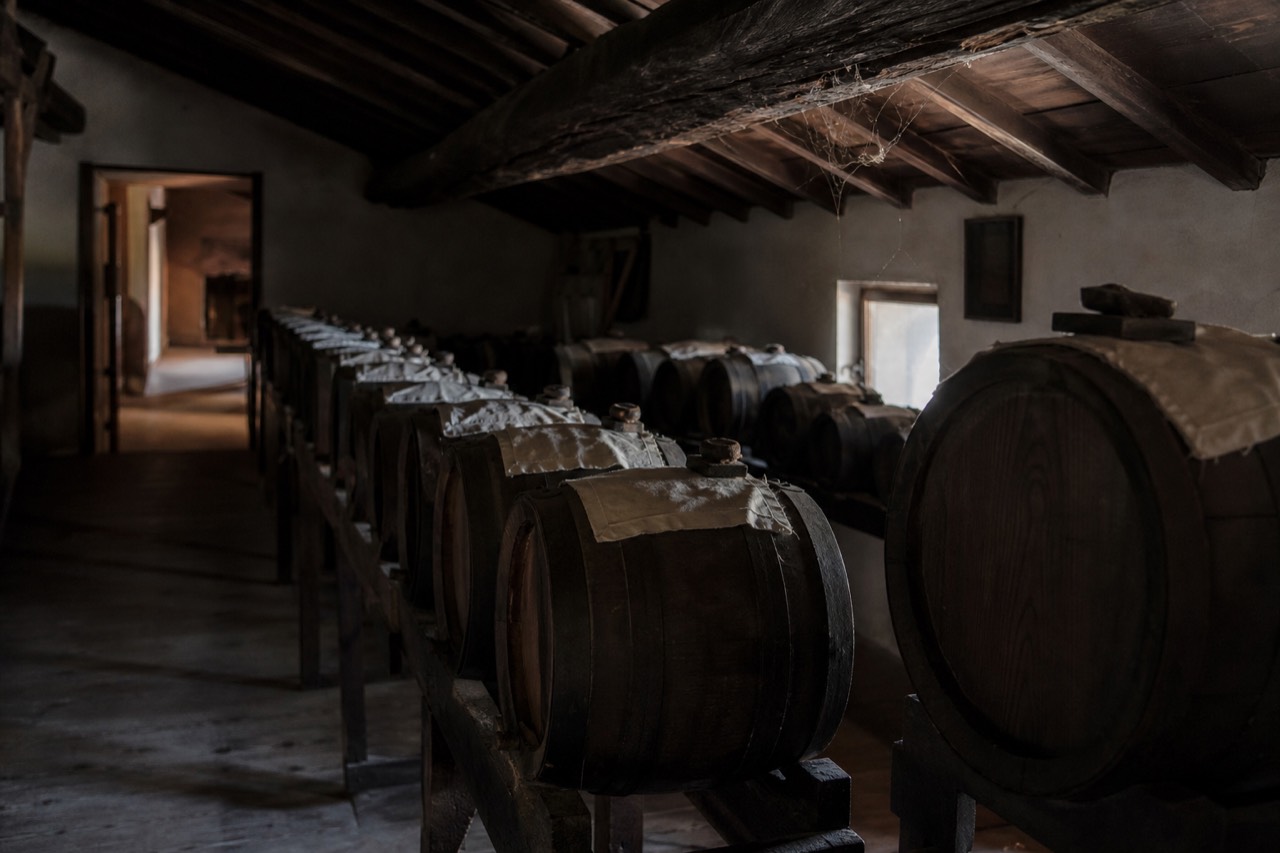
Ask an Italian where the country's best balsamic vinegar comes from and you will get a fight between two provinces, not a single answer. Modena and Reggio Emilia, neighbours in Emilia-Romagna, each hold their own protected denomination for the traditional product, and a much larger zone for the everyday IGP vinegar covers both (see Via Emilia). The geography is not a footnote. It is the whole explanation of why one bottle costs a few euros and the one beside it costs a hundred, and why the label on each matters more than the town on the shop sign.
This site is built around Modena, and Modena's case is strong, but the honest answer starts with the rules (see Modena's Famous Chef). Two different products share the word balsamico, they are protected by different EU denominations, and only one of them is the centuries-old barrel-aged must that the region is famous for. Understanding which is which, and where each may legally be made, is the difference between buying the real thing and buying a very good salad vinegar with Modena printed on it (see Balsamic vs Modena Balsamic).
Where In Italy Is The Best Balsamic Vinegar?
The best balsamic vinegar in Italy comes from a narrow and legally defined place: Aceto Balsamico Tradizionale di Modena DOP can only be made, aged and bottled inside the province of Modena, while Reggio Emilia holds its own equivalent DOP for its province. The everyday Aceto Balsamico di Modena IGP may be produced across both provinces. If "best" means the traditional barrel-aged product, the answer is Modena or Reggio Emilia, and nowhere else in Italy may legally claim it.
The word "best" does two jobs in that question, and they need separating. If you mean the traditional product, the one cooked from grape must and aged a minimum of twelve years through a graded battery of wooden barrels, then Italian and EU law have already answered the geography for you. The production rules for the Modena DOP state that grapes, ageing and bottling must all happen inside the province of Modena. Reggio Emilia's tradizionale DOP does the same for its own province. No other region, not even elsewhere in Emilia-Romagna, may make either one.
If instead you mean the vinegar most people actually buy, the squeeze bottle that dresses everyday salads, that is Aceto Balsamico di Modena IGP, and its zone is wider: the provinces of Modena and Reggio Emilia together. It is a real, regulated product with its own rulebook, not a fake, but it is a different thing from the tradizionale, and the two are constantly confused in shops and in travel writing alike.
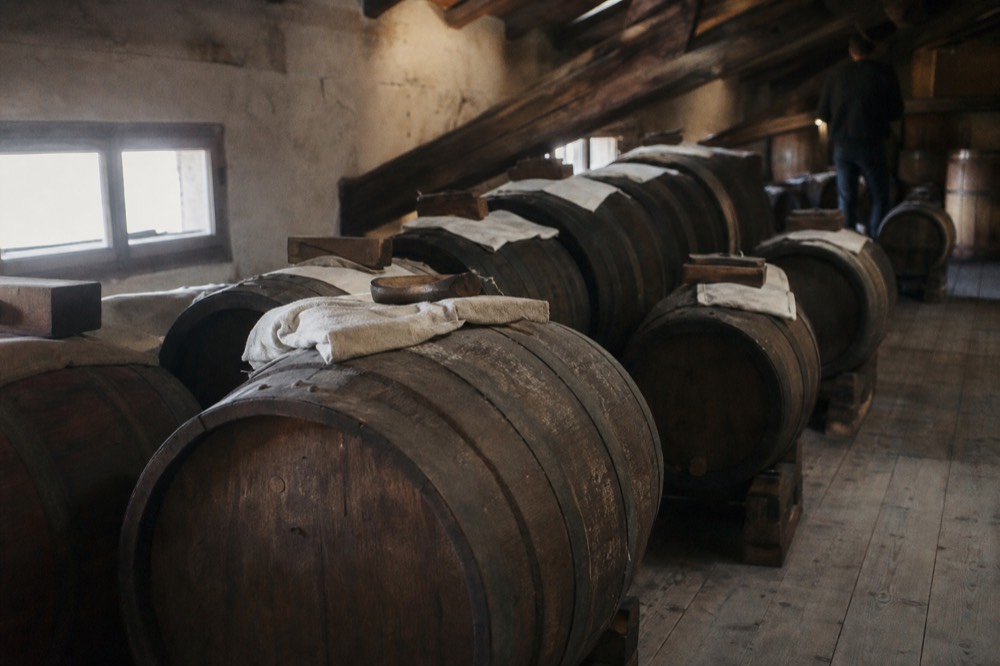
For visitors, the practical upshot is that Modena is the place where you can walk into working family acetaie, see the barrel lofts, and taste the traditional product in the building where it aged. The choice below covers three of the most distinctive cellar visits in the province, from a seven-generation family operation to a hill-town acetaia with century-old barrels.
Why Two Provinces Both Hold A DOP
Modena and Reggio Emilia each hold their own DOP for traditional balsamic vinegar because the product developed on both sides of the provincial line in noble and farmhouse attics over centuries, and both applied for protection separately. The result is two denominations, Aceto Balsamico Tradizionale di Modena DOP and its Reggio Emilia counterpart, with similar ageing minimums but different bottles, seals and consortium rules. Neither may borrow the other's name.
The split is historical, not a marketing accident. Barrel-aged cooked grape must was a domestic tradition across the Emilian countryside, made in small batteries of barrels kept in hot attics, and both provinces grew up making it. When the EU denominations were drawn up, each province protected its own version rather than sharing one. That is why a bottle of the tradizionale always names its province on the label, and why the two products look different on the shelf: Modena's comes only in the Giugiaro-designed bottle, a spherical flask in crystalline glass, while Reggio Emilia uses its own distinct shape.
What the two DOPs share is the discipline. The Modena rules set a minimum ageing of twelve years, with a single higher grade, Extra Vecchio, at a minimum of twenty-five. The must is cooked over direct flame in open vessels, nothing may be added except the bacterial culture, and the vinegar moves by successive decanting through numbered barrels of different woods. Every finished bottle carries a non-reusable numbered seal, with serial numbers beginning "A" for the twelve-year and "E" for Extra Vecchio. These are the checks that make the label mean something, and they only exist inside the two provinces.
| Product | Zone | Minimum ageing | Bottle rules | Who may make it |
|---|---|---|---|---|
| Aceto Balsamico Tradizionale di Modena DOP | Province of Modena only | 12 years; Extra Vecchio at 25 | Mandatory Giugiaro shape, 10cl, 20cl or 40cl, numbered seal | Producers inside Modena province, passing binding examination |
| Traditional DOP of Reggio Emilia | Province of Reggio Emilia only | Comparable long ageing in barrel batteries | Its own distinct registered bottle and seal | Producers inside Reggio province |
| Aceto Balsamico di Modena IGP | Provinces of Modena and Reggio Emilia | 60 days in wood; "Invecchiato" over 3 years; "Riserva" over 5 | Glass, wood, ceramic or terracotta, 0.1L to 5L, plus small sachets | Licensed producers across both provinces |
One detail worth knowing before you shop: the famous 100ml Giugiaro bottle is the size you will usually see, but the rules permit 10cl, 20cl and 40cl in that same shape. Any copy claiming 100ml is the only permitted size is simply wrong.
What Separates The DOP From The IGP
The DOP and the IGP are different products with different rules, not two quality tiers of one vinegar. The tradizionale DOP is cooked grape must alone, aged a minimum of twelve years in wooden barrels and bottled only in its home province. The IGP adds at least 10 percent wine vinegar to grape must and matures a minimum of sixty days in wood across both provinces. That single comparison explains the price gap.
The IGP production rules are strict in their own way. Grape must must be at least 20 percent of the mass sent for processing, a share of vinegar at least ten years old goes in, and up to 2 percent caramel may be added for colour stabilisation, with nothing else permitted. Longer wood ageing earns the words "Invecchiato" at over three years and "Riserva" at over five. That is a genuinely regulated product, and a good one for everyday use.
But it is not the tradizionale. The traditional DOP allows nothing but cooked must and time, and the consortium that protects it is blunt about the difference: the DOP comes from cooked must alone and ages twelve or twenty-five years minimum, while the IGP adds wine vinegar, and the DOP's rules are stricter on both origin and where each stage may happen. When a shop shelf shows two Modena vinegars at wildly different prices, this rulebook difference, not brand snobbery, is what you are looking at.
Spotting the real IGP takes three checks: the full name "Aceto Balsamico di Modena", the words "Indicazione Geografica Protetta" or "IGP", and the yellow-and-blue EU logo (see Spotting Quality Balsamic). A bottle showing only "balsamico" or only "Modena" is an imitation made outside the rules entirely.
| What to check | Traditional DOP of Modena | IGP of Modena |
|---|---|---|
| Ingredient base | Cooked grape must alone | Grape must plus at least 10% wine vinegar |
| Minimum ageing | 12 years; Extra Vecchio 25 | 60 days in wood |
| Permitted additives | Only the "madre" bacterial culture | Up to 2% caramel for colour |
| Where it can be made | Province of Modena only | Modena and Reggio Emilia provinces |
| Bottle | Mandatory Giugiaro shape with numbered seal | Many formats, 0.1L to 5L |
| Typical use | Drops on cheese, strawberries, or neat at the end of a meal | Everyday dressing and cooking |
The best way to internalise the difference is to taste both in the same sitting, which is exactly what a good acetaia visit does. The cellar tour at La Vecchia Dispensa in Castelvetro puts the very old reserves next to the young ones so the ageing curve is obvious in the glass, and it is one of the better-known places in the hills to do that comparison properly.
If that comparison sounds like the heart of your trip, it is worth locking a date early. The best-known acetaie in the Castelvetro hills fill their tasting slots well ahead in September, when the open-doors weekend and the grape harvest land in the same fortnight, so check the next available dates before you build the rest of your itinerary around them.
Can You Visit The Places Where It Is Made?
Yes, and in Modena province the visits are a core reason to come. Many acetaie, from family attics to larger historic houses, take booked guided visits, and the DOP consortium's own FAQ says the tasting on such a visit is free: you pick an acetaia from its interactive map and contact it directly. Once a year the consortia also run Acetaie Aperte, when more than thirty acetaie open their doors on a single Sunday.
The open-doors event in 2026 falls on Sunday 27 September, organised jointly by both consortia and dedicated to the Oro Nero di Modena in all its forms, with over thirty acetaie offering guided visits and tastings of both the IGP and the traditional DOP (see Is Modena Worth It). Several of the participating acetaie take bookings only, so if your trip lands on that weekend it pays to plan ahead. The event's own site carries the list of participating vinegar houses.
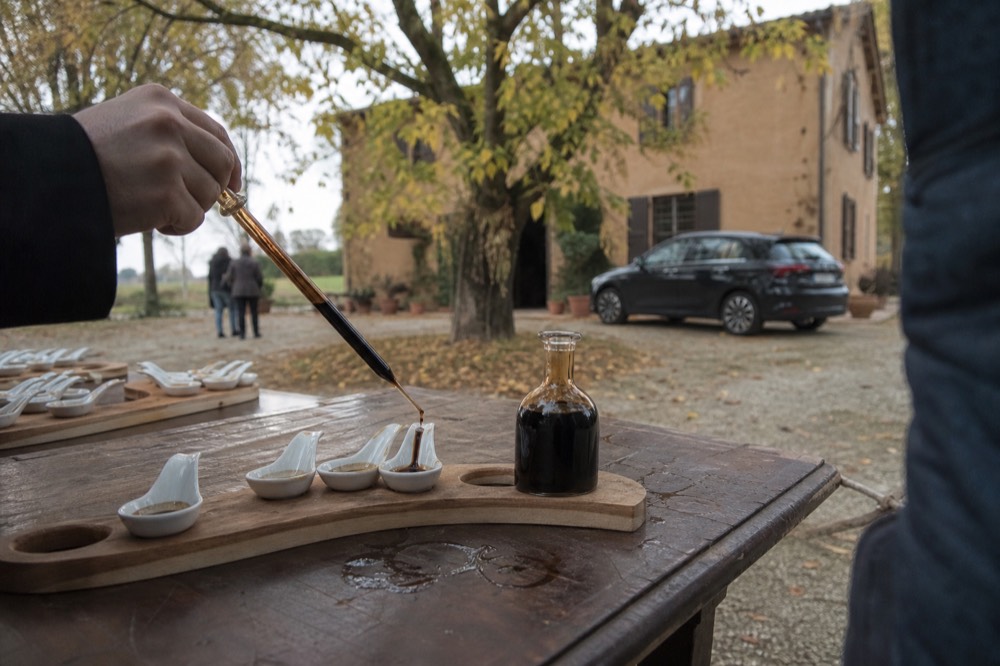
Outside the event, the everyday route is direct contact. The traditional DOP consortium keeps an interactive map of acetaie and encourages visitors to book through the producers themselves. Some families welcome you into a working attic above their house; others, like the larger historic houses in the province, are set up for structured tasting flights. The styles of visit differ enormously, from a short hands-on cellar walk in the city to a full sit-down lunch dressed with the family's own vinegar at a villa near Nonantola.
There is also a museum option that anchors the whole story. The Museo del Balsamico Tradizionale in Spilamberto, a short trip south of Modena, is run by the Consorteria and focuses exclusively on the traditional DOP. It opens Tuesday through Sunday, with shorter Wednesday hours and a Monday closure, and runs guided visits at fixed times through the day; booking is recommended. It is the one place where the history, the barrel batteries and the rules are laid out as an exhibit rather than a sales pitch.
| Way to taste | What it is | Best for |
|---|---|---|
| Booked acetaia visit | A producer's own cellar tour and tasting, arranged directly | Seeing working barrel lofts and buying at the source |
| Guided tour experience | A scheduled visit with transport or hosting included | Visitors without a car or short on time |
| Acetaie Aperte, Sunday 27 September 2026 | Over 30 acetaie open together, visits and tastings | A single-day immersion across the province |
| Spilamberto museum | Consorteria-run museum on the traditional DOP | The history and rules, told without a sales angle |
If a scheduled tour with hosting suits your plans better than arranging a visit yourself, check the live price and the next available dates before you fix the rest of your day around it; the small family acetaie in particular book out further ahead than their size suggests.
Does The Older Family Cellar Matter?
In the traditional product, yes, the cellar's age genuinely matters, because the barrels themselves carry the product. A battery of barrels decades or a century old contributes cultures and wood character that a young set cannot, which is why families with documented, continuous production guard their lofts carefully. Modena province has acetaie claiming production lines running back generations, and the oldest documented ones trade on that history honestly.
The barrels are the engine. Each battery is a graded series of small casks in different woods, numbered and marked, and the vinegar moves down the line by decanting as the volume concentrates. An old battery has been fed continuously for decades, and the families who keep them talk about the barrels the way winemakers talk about old vines: the object itself is the asset. This is also why "50-year-old balsamic" is a phrase to treat with care. The consortium says so itself: there is no such thing as a 50- or 100-year-old traditional balsamic, only barrels that old. The vinegar in the bottle is a blend drawn from a living system, not a vintage pulled from a dusty cask.
Among the family cellars open to visitors in the province, the Cavedoni acetaia at Levizzano Rangone claims the oldest documented balsamic production in Modena, across seven generations. The visit crosses the vineyard before the barrel loft and finishes with a tasting of five vinegars, which is enough range to hear what age actually does to the flavour, from the sharper young draws to the dense, almost syrupy reserves.
The label rules protect this history on your behalf. Only two wordings are permitted beyond the base name, the twelve-year Affinato and the Extra Vecchio at twenty-five years or more; words like "riserva", "superiore" or "classico" are expressly banned on a DOP label, as is any vintage year. If a bottle of the tradizionale carries flashy extra wording, it is not playing by the rules.
Where To Buy The Real Thing
Buy where the label does the talking: the full denomination name, the DOP or IGP marking, and, for the tradizionale, the numbered seal on the Giugiaro bottle. Inside Modena the safest purchases are at the acetaia itself, at the covered market's balsamic counters, or from producers at the September open day, where you are buying from the people who made it.
The numbered seal is the tradizionale's anti-counterfeit device: it cannot be broken without opening the bottle, and the serial beginning "A" or "E" pairs with a second algorithm-linked number you can check. For the IGP, the three-check test from earlier applies: full name, IGP wording, EU logo. Both work equally well in a supermarket at home and in a shop on Via Farini, which is the point of a denomination.
Buying at the source has one extra advantage: you taste first. A tasting at an acetaia tells you whether you prefer the brighter twelve-year or the deeper Extra Vecchio before you spend the money, and the difference between the two grades is large enough that guessing is a poor strategy. Our guide to Food Tours in Modena covers how these visits fit into a wider food itinerary, and the detailed breakdown of the two denominations is in our DOP versus IGP comparison guide. If you would rather see the barrel lofts in person than read about them, the balsamic vinegar tours in Modena guide lists the visits worth your time.
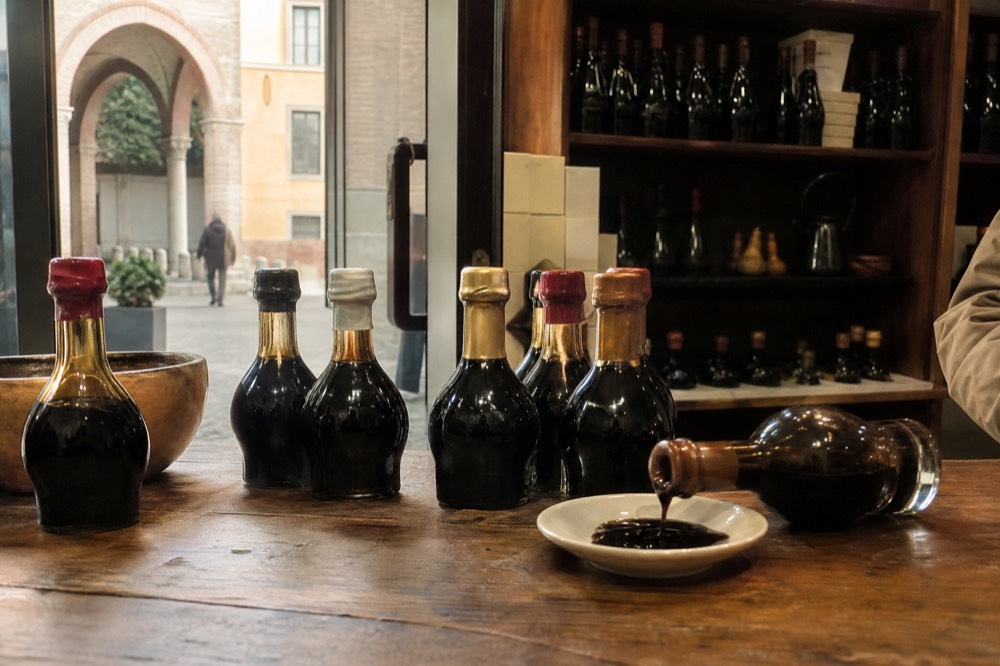
One caution for the road: beware of bottles that lean on the word "Modena" alone. The name is protected only in combination with the full denomination wording, and plenty of imitations print the city name large and the provenance small. The rules exist precisely so you do not have to trust the shopkeeper's story.
The short answers: the traditional DOP belongs to Modena and Reggio Emilia provinces only, the IGP covers both, the price gap comes from twelve years against sixty days, and the label wording plus the numbered seal are what prove you are holding the real thing. Each question below unpacks one of those points in full.
Common Questions About Balsamic Vinegar Geography
Where In Italy Is The Best Balsamic Vinegar?
Aceto Balsamico Tradizionale di Modena DOP can only be made, aged and bottled in the province of Modena, and Reggio Emilia holds its own equivalent DOP. The IGP zone covers both provinces. For the traditional barrel-aged product, the answer is Modena or Reggio Emilia, and nowhere else may legally claim it.
Is Reggio Emilia Balsamic The Same As Modena Balsamic?
No. They are two separate DOP denominations with similar ageing traditions but different bottles, seals and consortium rules. Neither may use the other's name. The everyday IGP, by contrast, may be produced across both provinces.
Why Is Traditional Balsamic So Much More Expensive Than Regular Balsamic?
The tradizionale DOP is cooked grape must alone, aged a minimum of twelve years in wooden barrels, with nothing added except the bacterial culture. The IGP matures a minimum of sixty days and includes wine vinegar. Twelve years against sixty days is the price gap, explained.
Can You Visit An Acetaia In Modena?
Yes. Many acetaie take booked guided visits, and the DOP consortium's FAQ says the tasting on such a visit is free. On Sunday 27 September 2026, over thirty acetaie open together for the annual Acetaie Aperte event.
How Can I Tell A Real Bottle Of Traditional Balsamic?
Look for the Giugiaro-shaped bottle in crystalline glass, the numbered non-reusable seal, and only the permitted grade wording: Affinato at twelve years or Extra Vecchio at twenty-five or more. Words like "riserva" or "superiore" are banned on the label.
Is 100Ml The Only Size Traditional Balsamic Comes In?
No. The 100ml Giugiaro bottle is the size you will usually see, but the rules permit 10cl, 20cl and 40cl in the same mandatory shape.
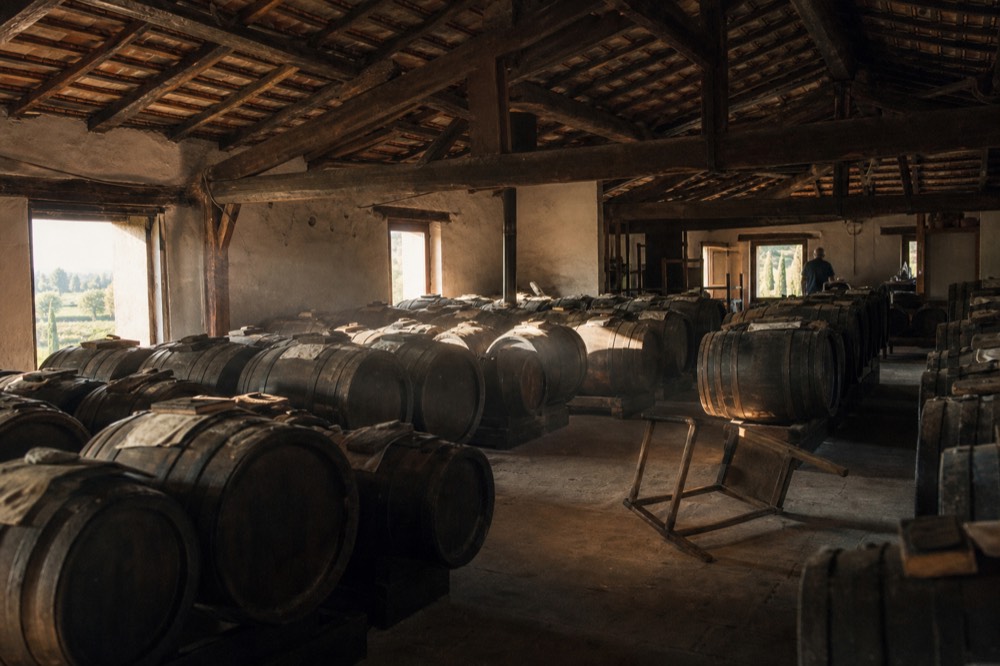
The geography of balsamic is unusually tidy for Italy: two provinces, two traditional DOPs, one shared IGP zone, and labels that tell you exactly which you are holding. If the tasting rather than the shopping is what draws you, these three cellar visits are the ones that best show the difference in the glass.