Traditional Balsamic Vinegar Of Modena DOP Vs IGP: What Separates The Two
Two protected products share the word balsamico and the name Modena, and almost nothing else. One is cooked grape must aged at least twelve years and sold in a sealed, numbered bottle. The other is a larger family of vinegar that can be ready in sixty days. Knowing which one you are holding, tasting or buying is the single most useful piece of Modena food knowledge.
Short answer
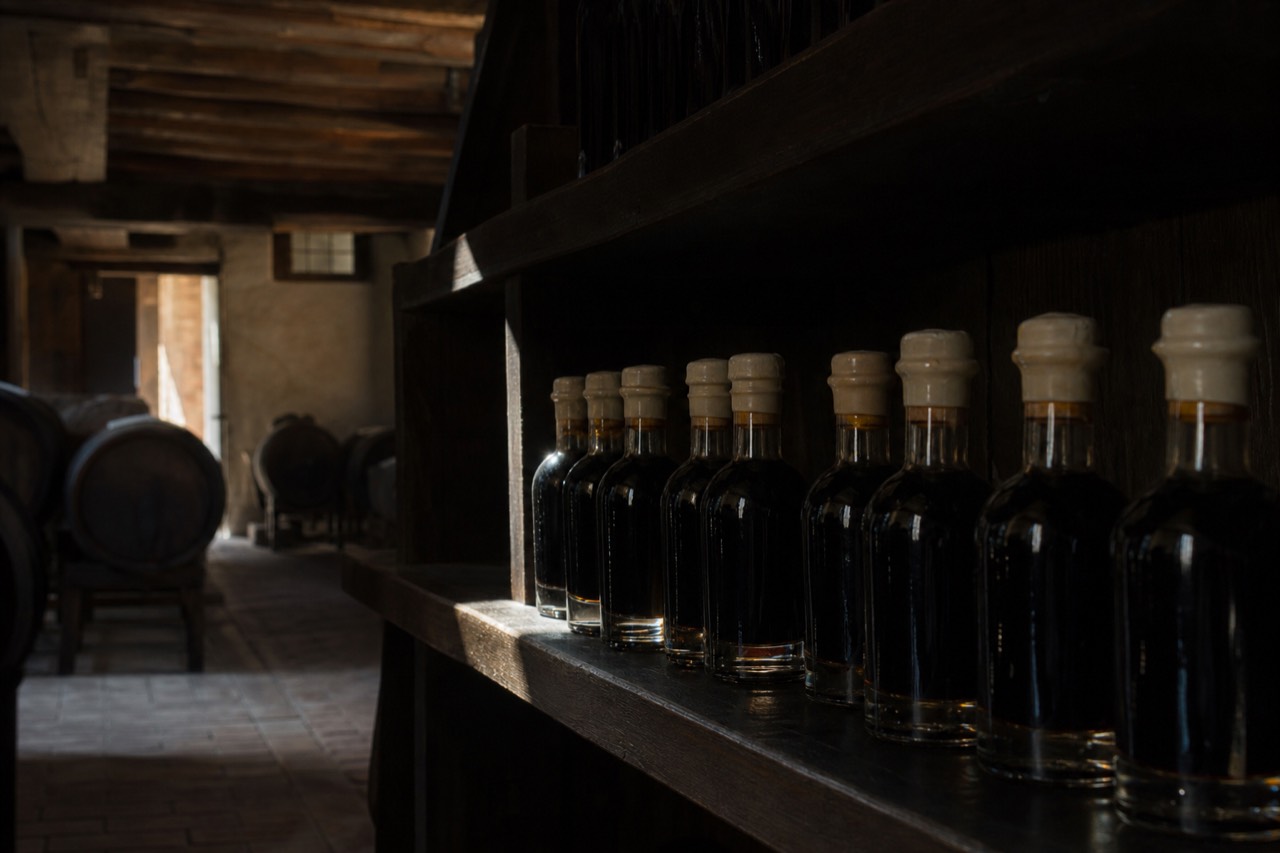
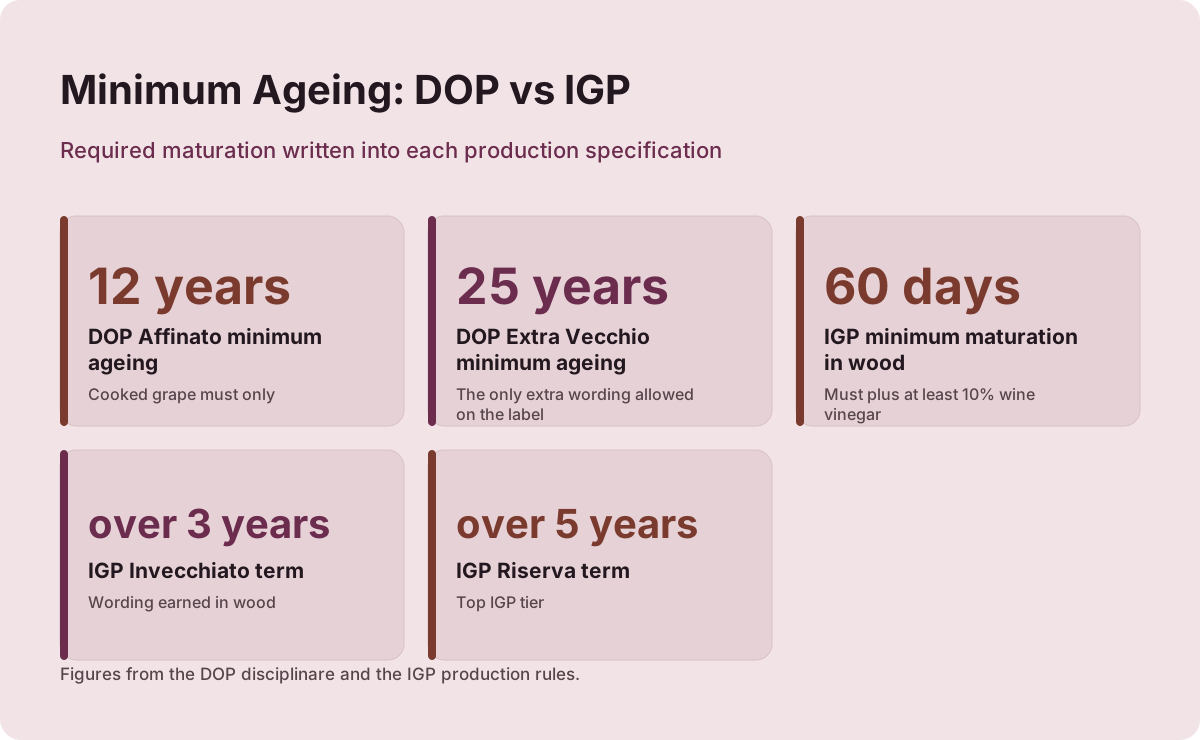
Aceto Balsamico Tradizionale di Modena DOP is cooked grape must, nothing added, aged a minimum of 12 years (25 for Extra Vecchio), bottled only in Modena province in the sealed Giugiaro bottle. Aceto Balsamico di Modena IGP adds wine vinegar, ages a minimum of 60 days, and may be sold in many container sizes. That is the price gap.
Two products sit on shelves across Modena wearing the word balsamico, and most visitors cannot tell them apart. One is Aceto Balsamico Tradizionale di Modena DOP, a cooked grape must aged for a minimum of twelve years and sold in a single mandatory bottle shape with a numbered seal. The other is Aceto Balsamico di Modena IGP, a much larger family of vinegar that blends cooked must with wine vinegar and can leave the warehouse after sixty days of maturation. The two are not rivals, exactly. They are different products with different rules, different prices and different uses, and both consortia are happy to explain the distinction to anyone who visits.
This guide separates them properly: what each is legally allowed to contain, how long each must age, what the bottle and seal tell you, and where to taste both in and around Modena. If you want the broader landscape of cellar visits, our balsamic vinegar tours in Modena guide covers the full field.
What Is Traditional Balsamic Vinegar Of Modena DOP?
Aceto Balsamico Tradizionale di Modena DOP is cooked grape must and nothing else, aged a minimum of twelve years in a graded battery of wooden barrels, examined and bottled only inside the province of Modena, and sold in one mandatory bottle with a numbered seal. There are exactly two grades: the twelve-year Affinato and Extra Vecchio at a minimum of twenty-five years. Nothing may be added to the must except the madre bacterial culture.
The production rules are set out in the disciplinare, the legal production specification, and they are strict at every stage. The grapes must be grown in the province of Modena, from a permitted list that includes Lambrusco, Ancellotta, Trebbiano, Sauvignon, Sgavetta, Berzemino and Occhio di Gatta varieties. The must is cooked over a direct flame in open vessels for at least thirty minutes at no less than 80°C. After that, nothing goes in except the madre, the bacterial culture that drives the acetification, and the long ageing does the rest. The full rules are published by the DOP consortium on its disciplinare page.
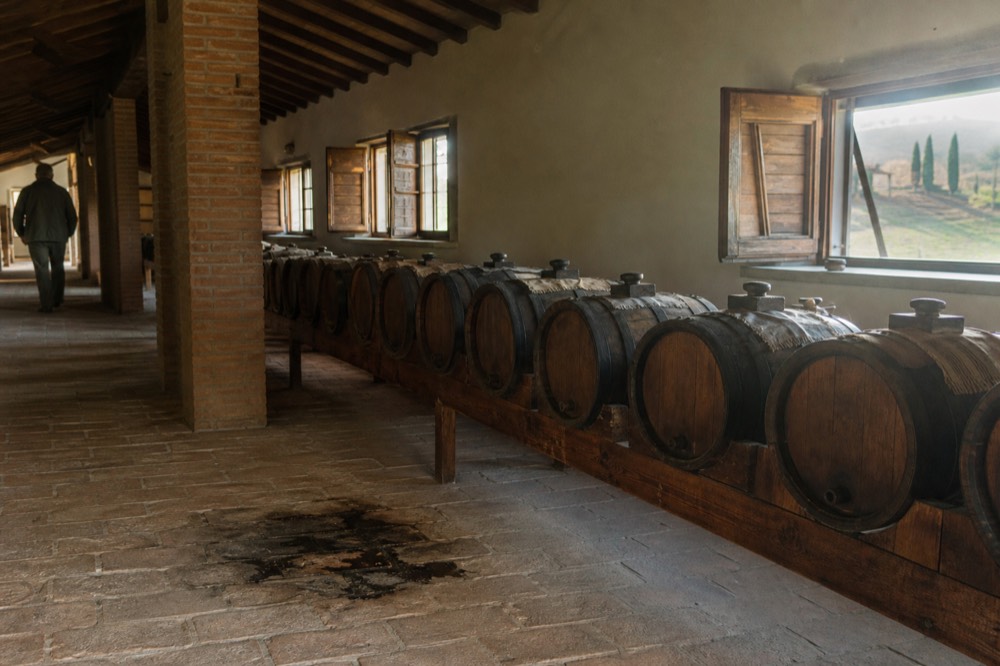
Ageing happens by successive decanting through a battery of small barrels of different woods, each numbered and marked, in the attico, the barrel loft where the Modena climate does part of the work: summer heat drives evaporation and concentration, winter cold slows the biological activity. At the end, the product must pass a binding analytical and sensory examination before anything may be sold under the DOP name, and bottling may only happen inside the province of Modena. At consumption the rules require a total acidity of at least 4.5g of acetic acid per 100g and a density at 20°C of at least 1.240, which is why a true Traditional Balsamic coats a spoon.
One correction worth carrying: there is no such thing as fifty-, hundred- or two-hundred-year-old Traditional Balsamic. Only the barrels can be that old. The consortium says so itself in its FAQ, and it is the most common myth sold to visitors.
| Rule | What the DOP disciplinare requires |
|---|---|
| Base material | Cooked grape must only, no additives except the madre culture |
| Cooking | Direct flame, open vessels, minimum 30 minutes at no less than 80°C |
| Permitted grapes | Lambrusco, Ancellotta, Trebbiano, Sauvignon, Sgavetta, Berzemino, Occhio di Gatta |
| Territory | Grapes, ageing and bottling all inside the province of Modena |
| Minimum ageing | 12 years (Affinato); 25 years minimum for Extra Vecchio |
| Grades | Two only; Extra Vecchio is the only extra wording allowed on the label |
| Certification | Binding analytical and sensory examination before any sale |
| Bottle | Mandatory Giugiaro design with a non-reusable numbered seal |
What Is Aceto Balsamico Di Modena IGP?
Aceto Balsamico di Modena IGP is cooked and/or concentrated grape must with at least ten percent wine vinegar added, plus a share of vinegar aged at least ten years, matured in wood for a minimum of sixty days. It may contain up to two percent caramel for colour, it may be sold in containers from 0.1 to 5 litres, and its production zone covers both Modena and Reggio Emilia provinces.
The IGP is the balsamic most people know: the bottle in the supermarket, the one poured over salads at scale. Its recipe is published openly by its own consortium, and it is a legitimate, protected, quality-controlled product. It is simply a different product from the DOP. Grape must must be at least twenty percent of the total mass sent for processing, wine vinegar makes up at least ten percent, and a share of vinegar at least ten years old goes into the blend. Up to two percent of the finished volume may be caramel, for colour stabilisation, and nothing else may be added. The IGP consortium explains the full process on its production page.
Two label terms carry weight on the IGP side. Over three years in wood earns the wording Invecchiato, and over five years earns Riserva. Those are the tiers to look for if you want an IGP with real depth for cooking or for the table (see Cooking Class Costs). The IGP was recognised at EU level in the Official Journal L 175/10 of 4 July 2009, and its production zone covers the provinces of Modena and Reggio Emilia, a wider territory than the DOP's Modena-only rule (see Via Emilia).
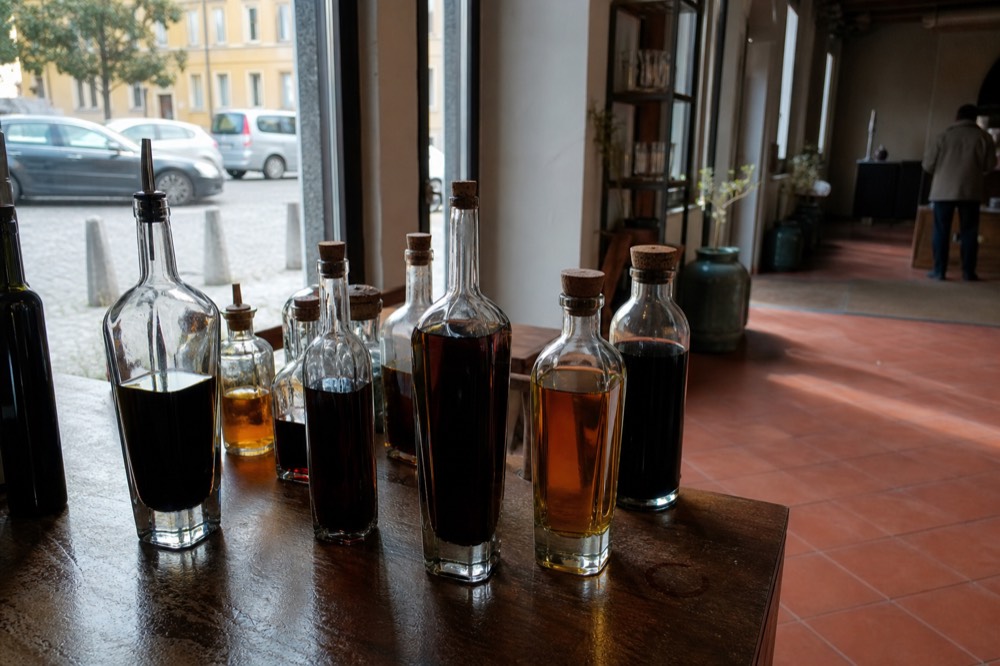
Container rules differ sharply too. The IGP may be sold in glass, wood, ceramic or terracotta from 0.1 litres up to 5 litres, and even in single-dose sachets up to 25ml. The DOP has one mandatory bottle shape and no alternatives, which is the next section's subject.
| Requirement | Aceto Balsamico di Modena IGP rule |
|---|---|
| Base material | Cooked and/or concentrated grape must, at least 20% of total mass |
| Added vinegar | At least 10% wine vinegar, plus a share aged at least 10 years |
| Other additions | Up to 2% caramel for colour; nothing else permitted |
| Minimum maturation | 60 days in wood |
| Extra ageing terms | Invecchiato over 3 years; Riserva over 5 years |
| Permitted grapes | Lambrusco, Sangiovese, Trebbiano, Albana, Ancellotta, Fortana, Montuni |
| Territory | Provinces of Modena and Reggio Emilia |
| Containers | Glass, wood, ceramic or terracotta, 0.1L to 5L, sachets to 25ml |
If tasting the two side by side sounds more useful than reading about them, the cellar visits below are the ones that put the DOP and the IGP in front of you with someone who makes them.
What Are The Real Differences Between DOP And IGP?
The differences are ingredients, time, territory and container: the DOP is cooked must alone, aged at least twelve years, made and bottled only in Modena province, in one sealed bottle; the IGP adds wine vinegar, matures at least sixty days across Modena and Reggio Emilia, and ships in almost any container. The DOP's rules are stricter on both origin and where each stage may happen.
Put plainly, the DOP is a condiment and the IGP is a vinegar. The DOP is used in drops: on Parmigiano Reggiano, on strawberries, on a piece of good meat at the end of cooking (see Dairy Factory Tours). The IGP is used in spoonfuls and glugs: dressings, reductions, marinades, everyday cooking. Neither use is wrong. Confusing them is what leads to disappointment, usually the visitor who paid DOP money and then cooked with it, or who expected an IGP to taste like syrup and found vinegar.
The DOP consortium's own one-line summary is that the DOP comes from cooked must alone and ages twelve or twenty-five years minimum, while the IGP adds wine vinegar. The DOP's stricter origin rules matter more than they first appear. Grapes, ageing and bottling must all happen inside the province of Modena, which is why an acetaia visit in the province is the only place you can watch the whole chain. The IGP's wider zone, two provinces, is one reason its volumes are enormous and its price is not.
| Dimension | Tradizionale DOP | Balsamico di Modena IGP |
|---|---|---|
| Ingredients | Cooked grape must only | Must plus at least 10% wine vinegar, up to 2% caramel |
| Minimum ageing | 12 years (25 for Extra Vecchio) | 60 days in wood |
| Territory | Modena province only | Modena and Reggio Emilia provinces |
| Certification | Binding analytical and sensory exam | Consortium-controlled production rules |
| Bottle | One mandatory Giugiaro shape, sealed | Glass, wood, ceramic, terracotta, 0.1L to 5L |
| Typical use | Drops, as a condiment | Spoonfuls, as a vinegar |
| Grades or tiers | Affinato, Extra Vecchio | Standard, Invecchiato, Riserva |
Why Is The Price Gap Between Them So Enormous?
The price gap comes down to time and evaporation: a DOP battery must wait at least twelve years before anything can be sold, losing volume to the Modena climate every summer, while an IGP can be blended and matured in sixty days. Twelve years against sixty days is roughly a factor of seventy in minimum ageing time, and that arithmetic lands directly on the shelf price.
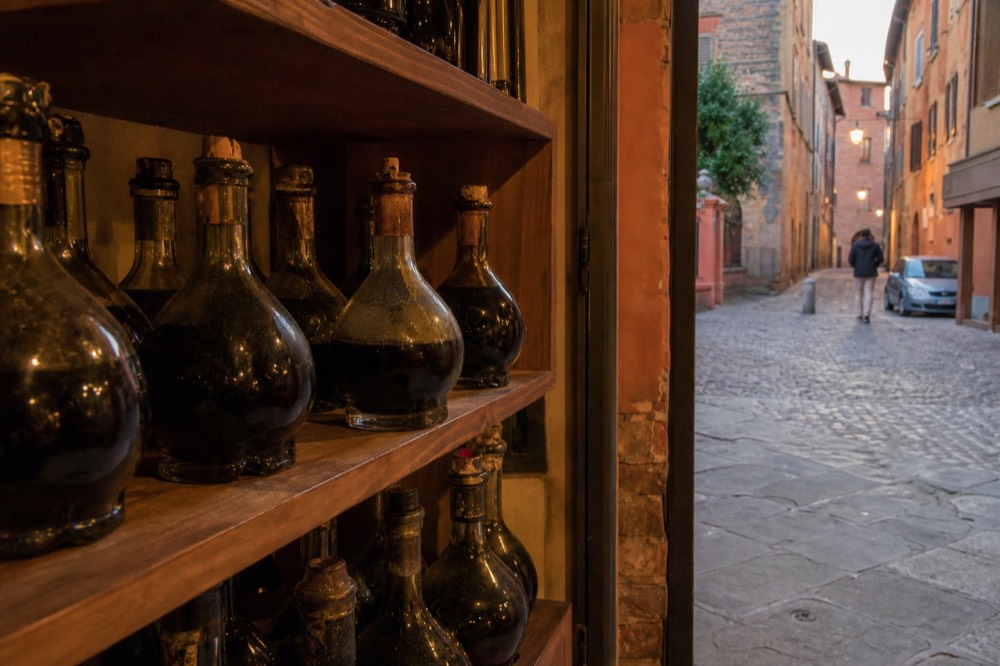
Every year in the barrel loft, a share of the product evaporates. What the producers call the angels' share concentrates what remains, so a barrel battery started with a full set of barrels yields, after twelve years, a small quantity of dense, dark liquid. That quantity is then examined, and only what passes may be bottled. An acetaia family is, in effect, running a twelve-year minimum investment before its first euro of revenue from a given battery, and twenty-five years for Extra Vecchio.
The IGP's economics are the opposite: industrial scale, continuous blending, and a sixty-day minimum that keeps the pipeline moving. Both products are authentic and both consortia police their rules, but only one of them ties up capital for a generation. When a producer in the province pours you a taste of the twelve-year and then a taste of the twenty-five-year, the price difference between those two drops alone is the ageing arithmetic made visible.
The honest way to verify all this is a cellar visit, and the tasting flight at Acetaia Leonardi is built exactly around that comparison, moving through the cellar and reserve barrels before a structured tasting. Check the current price and the next available dates on the live listing before you plan the day around it.
| Stage | Tradizionale DOP timeline | Balsamico di Modena IGP timeline |
|---|---|---|
| Raw material | Cooked must from Modena-province grapes | Must blend with wine vinegar added |
| First wait | Years in the graded barrel battery | Days to weeks in steel and wood |
| Minimum before sale | 12 years | 60 days in wood |
| Premium tier | Extra Vecchio at 25 years minimum | Riserva at over 5 years |
| Evaporation | Continuous, concentrating the product | Minimal at scale |
| Certification | Sensory exam before bottling | Consortium production controls |
For a deeper walk through the ageing grades themselves, see our aged balsamic vinegar grades in Modena guide.
What Do The Giugiaro Bottle And Numbered Seal Tell You?
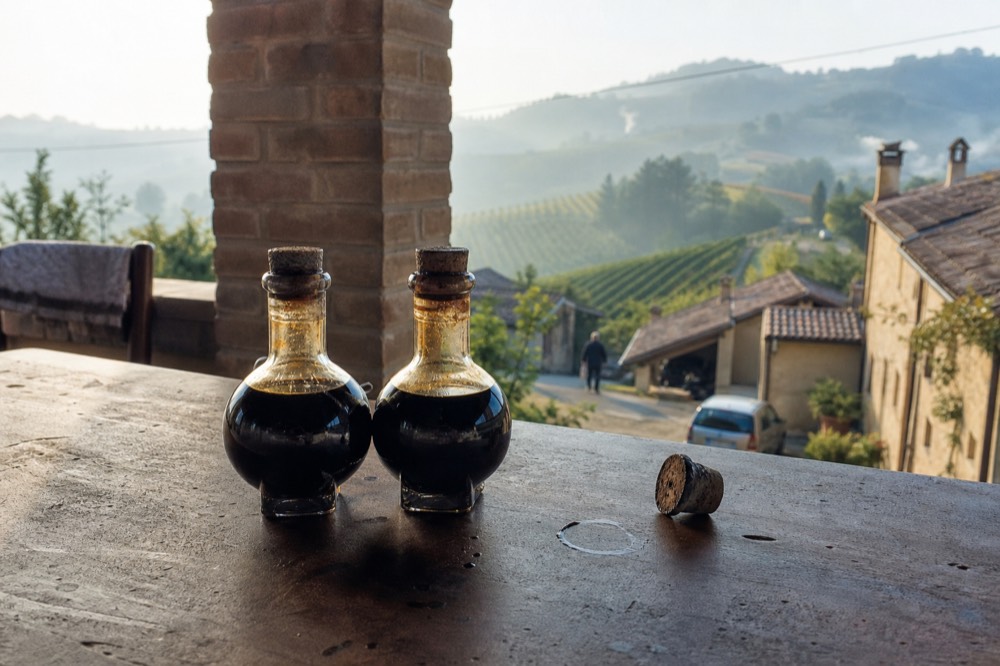
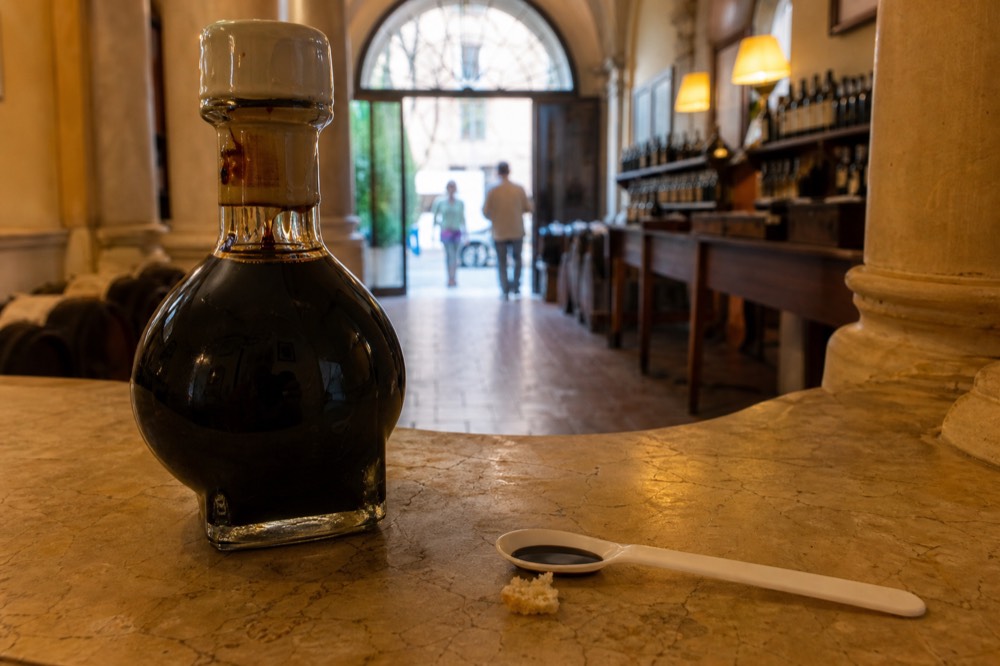
Every bottle of Aceto Balsamico Tradizionale di Modena DOP comes in the same mandatory bottle, Giorgetto Giugiaro's 1987 design, a spherical body on a rectangular base in solid white crystalline glass, closed with a non-reusable numbered seal that cannot be broken without opening the bottle. Serial numbers begin with A for the twelve-year and E for Extra Vecchio, with a second algorithm-linked number as an anti-counterfeit check.
The bottle is the DOP's most visible guarantee. Because the shape is mandatory and unique, any Traditional Balsamic sold in a different bottle is not Traditional Balsamic, whatever the label claims. The famous retail size is the 100ml Giugiaro bottle, though the disciplinare permits 10cl, 20cl or 40cl in that same shape, so the 100ml is the size you will almost always see, not the only permitted one.
The seal matters just as much. It is non-reusable, it cannot be broken without opening the bottle, and it carries the serial number that ties the liquid inside to the certification process. The A prefix marks the Affinato, the E prefix the Extra Vecchio. If you are buying, check the seal before anything else; if you are tasting at an acetaia, ask to see the seal on the bottle they pour from. Producers are proud of it and happy to explain the numbering.
One more label rule that catches shoppers: the disciplinare expressly bans the words extra, fine, scelto, selezionato, riserva, superiore and classico on the DOP label, as well as any vintage year. Extra Vecchio is the only extra wording allowed. A bottle of Traditional Balsamic labelled Riserva is, by definition, mislabelled.
| Identifier | What to check | What it proves |
|---|---|---|
| Bottle shape | Spherical body, rectangular base, white crystalline glass | Mandatory Giugiaro design, unique to the DOP |
| Seal | Non-reusable, intact, numbered | Bottle has not been opened or refilled |
| Serial prefix | A for the 12-year, E for Extra Vecchio | Grade of the contents |
| Second number | Algorithm-linked anti-counterfeit check | Traceability to certification |
| Label wording | No riserva, superiore, classico, selezionato or vintage year | Compliance with the disciplinare's wording ban |
How Do You Read A Label To Spot An Imitation?
For the IGP, three checks identify the real product: the full name Aceto Balsamico di Modena, the words Indicazione Geografica Protetta or IGP, and the yellow-and-blue EU PGI logo. For the DOP, the Giugiaro bottle and numbered seal do the same work. A bottle showing only the word balsamico, or only the name Modena, with no protected designation, is an imitation.
The IGP consortium publishes this checklist itself, and it is worth memorising before you shop anywhere in Italy or at home. Generic balsamic vinegar, made anywhere with no protected status, is legally sold in enormous volumes, and much of it borrows the Modena name loosely. The protected names are the guarantee, and the EU logo is the visual shorthand.
For the DOP, the checks are physical rather than textual: the bottle, the seal, the serial prefix. There is no DOP sold in a square glass bottle with a cork, and no DOP without a numbered seal. Our how to buy real balsamic in Modena guide takes the shopping side further, including what to ask for at the counter.
A practical note on tastings: the DOP consortium's own FAQ says the tasting on a booked guided visit to an acetaia is free, and you pick an acetaia from its interactive map and contact it directly. That makes a cellar visit one of the cheapest honest education available in the province, and it applies to the small family acetaie as much as the famous ones.
| What the label shows | What it means |
|---|---|
| Aceto Balsamico Tradizionale di Modena, DOP wording, Giugiaro bottle, sealed | The twelve-or-twenty-five-year cooked-must product |
| Aceto Balsamico di Modena plus IGP wording and EU PGI logo | The protected blended vinegar, 60-day minimum |
| Invecchiato or Riserva on an IGP | Over 3 or over 5 years in wood respectively |
| Only the word balsamico, no designation | Generic vinegar, no protected status |
| Modena in the name but no DOP or IGP mark | An imitation trading on the place name |
Where Can You Taste Both Products In Modena?
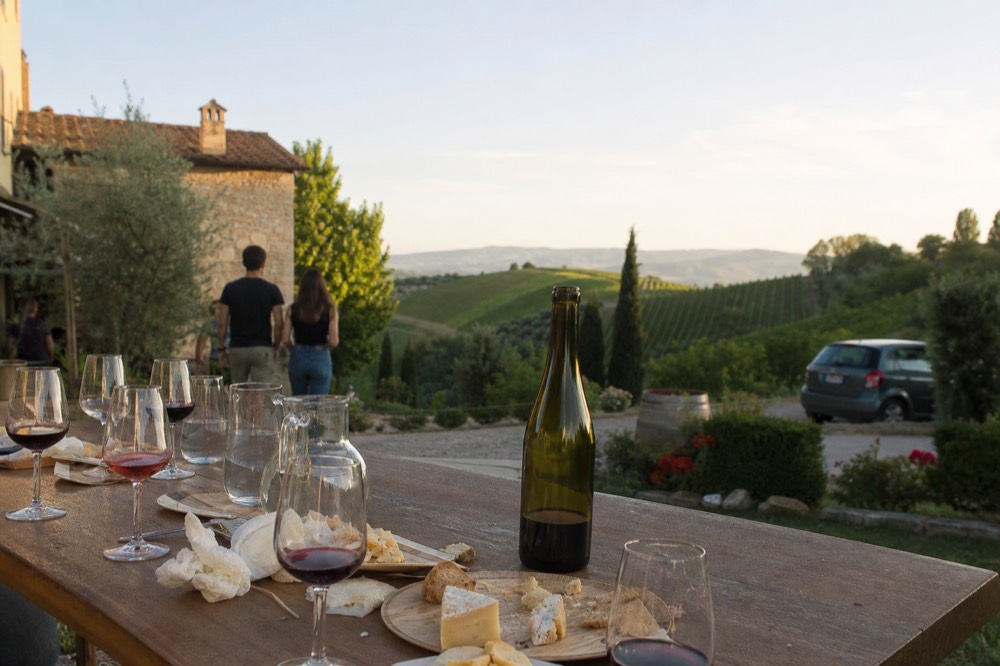
The fastest comparison is an acetaia visit: most acetaie in the province take booked guided visits, the DOP consortium's FAQ says the tasting on such a visit is free, and a structured flight pours the IGP, the twelve-year and the twenty-five-year side by side. In town, the Museo del Balsamico Tradizionale in Spilamberto is open Tuesday to Sunday 10:30-17:30, Wednesday to 13:30, closed Monday.
The museum in Spilamberto is dedicated exclusively to Aceto Balsamico Tradizionale di Modena DOP and is run by the Consorteria, the body of traditional producers; its hours and visit times are published on the museum's own site. Guided visits run at 10:45, 12:00, 14:00 and 15:30. It is the best single stop if you want the history and the rules without driving between producers, and SETA line 731 links Modena with Spilamberto.
If you would rather taste where the product is made, the roster of cellar visits in the province covers every format. Acetaia La Vecchia Dispensa in Castelvetro holds barrels over a century old and pours a tasting that puts the very old reserves next to the young ones, which is the single most instructive comparison a first-time visitor can make. Castelvetro sits on SETA line 740, 41 to 47 minutes from Modena Autostazione (see Is Modena Worth It). See the next available dates on the live listing before you commit, since the small acetaie book out ahead of their size.
For a one-stop version, Opera 02 at Ca Montanari is a hillside estate that makes both the Lambrusco and the vinegar, so one short tasting covers Grasparossa and the acetaia in the same room. That is the efficient choice for a visitor with one afternoon who wants wine and balsamic both explained by the people who make them.
| Place | What you taste | Practical notes |
|---|---|---|
| Acetaia Leonardi, Magreta near Formigine | Cellar, reserve barrels, structured flight | One of the larger historic acetaie, set up for visitors |
| Acetaia La Vecchia Dispensa, Castelvetro | Old reserves against young vinegars | Barrels over a century old; line 740 reaches Castelvetro |
| Opera 02, Ca Montanari | Grasparossa Lambrusco and balsamic together | Estate makes both, one tasting covers both |
| Museo del Balsamico Tradizionale, Spilamberto | The DOP's history and rules | Tue-Sun 10:30-17:30, Wed to 13:30, closed Mon; line 731 |
| Booked acetaia visits province-wide | Free tasting per the DOP consortium FAQ | Pick from the consortium's interactive map and contact direct |
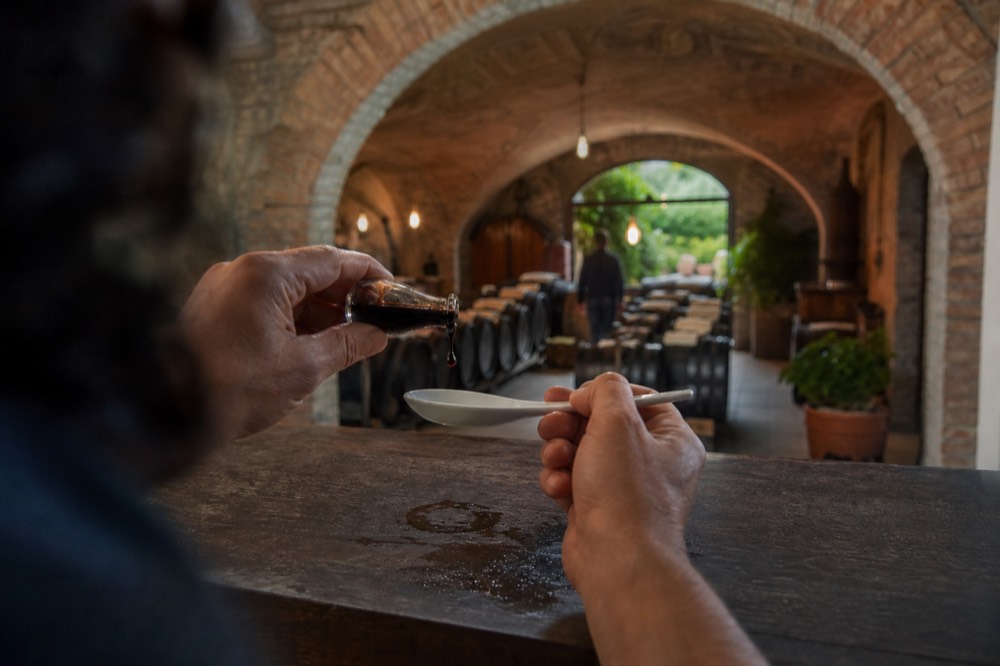
One date worth planning around: Acetaie Aperte 2026 falls on Sunday 27 September 2026, when over 30 acetaie across the province open their doors for guided visits and tastings of both the DOP and the IGP, run jointly by the two consortia. Several participating acetaie take bookings only, so check the event's own list early if your trip lands on that weekend.
The short answers: the two products differ in ingredients, ageing, territory and bottle; the DOP's twelve-year minimum against the IGP's sixty days explains the price gap; the Giugiaro bottle and numbered seal authenticate the DOP; and a booked acetaia visit is the easiest place to taste both together.
Common Questions About DOP Vs IGP Balsamic
Is Aceto Balsamico Tradizionale Di Modena DOP The Same As Balsamic Vinegar Of Modena?
No. The Tradizionale DOP is cooked grape must alone, aged at least twelve years and sold in the sealed Giugiaro bottle. Aceto Balsamico di Modena IGP is a different protected product that adds wine vinegar and matures a minimum of sixty days. They share two words and a place name, not a recipe.
Why Does Traditional Balsamic Cost So Much More?
Time and evaporation. A DOP battery must age at least twelve years before anything can be sold, and every summer in the loft a share evaporates and concentrates what remains. The IGP can be matured in sixty days at industrial scale. Twelve years against sixty days is the price gap in one line.
How Can I Tell A Real Bottle Of Traditional Balsamic?
Check three things: the mandatory Giugiaro bottle shape, a spherical body on a rectangular base in white crystalline glass; an intact non-reusable numbered seal; and a serial prefix of A for the twelve-year or E for Extra Vecchio. Anything in a different bottle or without the seal is not the DOP.
What Does IGP Mean On A Balsamic Bottle?
Indicazione Geografica Protetta, a protected geographical indication. It marks Aceto Balsamico di Modena, the blended vinegar made from grape must with at least ten percent wine vinegar, matured at least sixty days in wood, produced in Modena and Reggio Emilia. Look for the full name, the IGP wording and the yellow-and-blue EU logo together.
Can I Taste Both Types In One Visit?
Yes, and it is the best way to understand the difference. Most acetaie in the province take booked visits, the DOP consortium's FAQ says the tasting on such a visit is free, and structured flights typically pour the IGP, the twelve-year and the twenty-five-year side by side.
Which One Should I Cook With?
The IGP. It is built for spoonfuls: dressings, reductions and marinades, with Invecchiato or Riserva tiers when you want more depth. The DOP is a condiment used in drops, on cheese, fruit or a finished dish, and cooking with it wastes both the product and the money.
If this comparison has settled the shelf question for you, the next step is practical: Food Tours in Modena covers the cellar visits, tastings and full-day combinations across the province, with what each format actually includes.