What Is The Difference Between Balsamic Vinegar And Balsamic Vinegar Modena?
The honest answer to the balsamic vinegar question, from supermarket bottles to Aceto Balsamico Tradizionale di Modena DOP, with the rules that separate each tier.
 By Marco Montanari, Modena food tour guide and Emilian culinary specialist
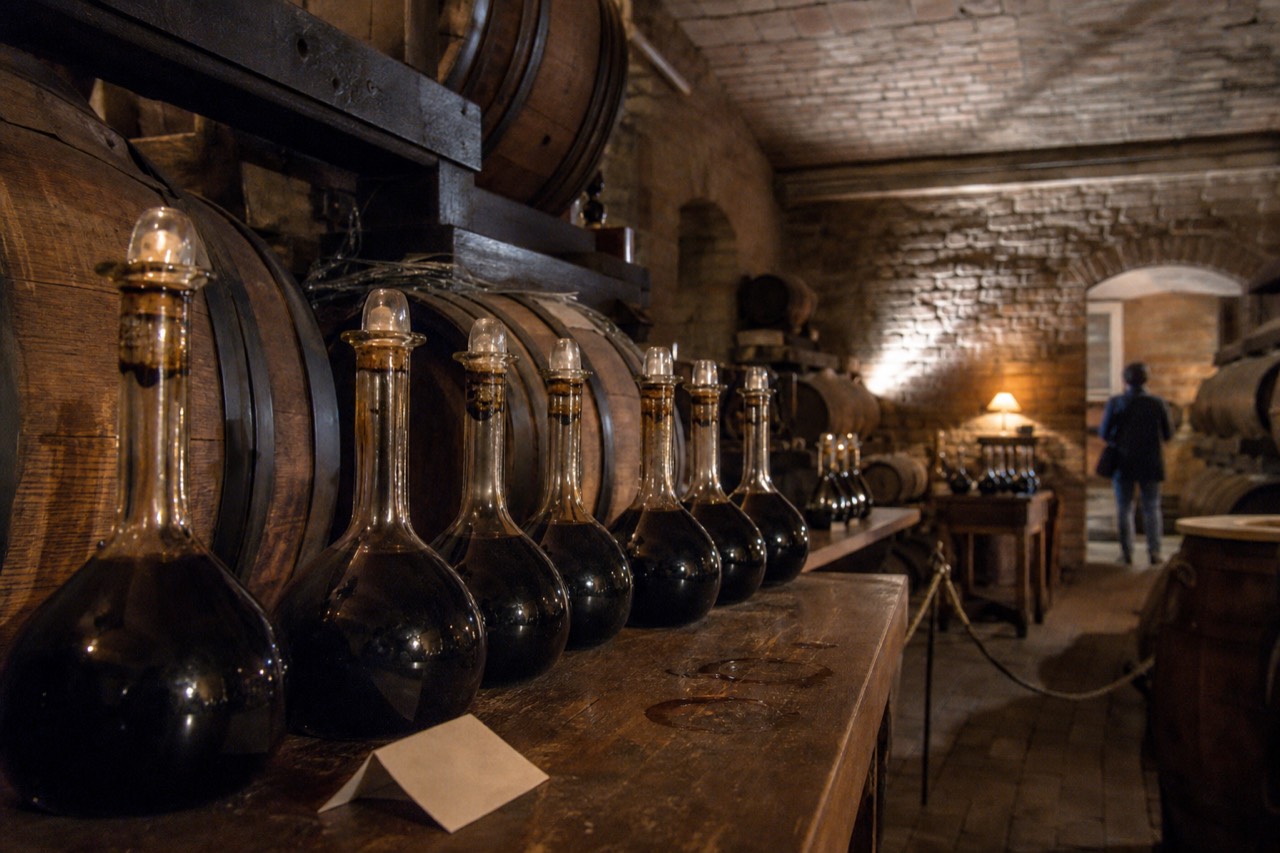
The short answer is that "balsamic vinegar" is a generic label with no legal meaning, while "balsamic vinegar of Modena" refers to two protected products with written production rules: Aceto Balsamico di Modena IGP, an industrial vinegar aged a minimum of 60 days in wood, and Aceto Balsamico Tradizionale di Modena DOP, cooked grape must aged at least 12 years and sold in a numbered, sealed bottle. Everything else on a supermarket shelf is an imitation of one of those two, or of neither. The two Modena products are themselves completely different things, and the rest of this article untangles all three tiers in order.
The confusion is not your fault. The word "balsamic" carries no protection on its own, so any producer anywhere can print it on a bottle of wine vinegar sweetened with sugar, caramel colouring or concentrated grape must, and many do. A bottle reading only "balsamic vinegar of California" or "balsamic style condiment" is legally fine and gastronomically unrelated to anything made in Modena. The name only starts to mean something when the full protected phrase appears on the label.
That is why this question has two layers. The first layer is the naive one, supermarket balsamic against anything carrying the Modena name (see Days in Modena). The second is the split inside Modena itself, between the IGP and the Tradizionale DOP, two products that share a city, a grape heritage and a few words of vocabulary, and almost nothing else (see Is Modena Worth It). Getting both layers straight takes about ten minutes of reading, and it will change how you shop and how you taste for years. If you want to go further, this site, Food Tours in Modena, exists to take you inside the places where the real thing is made.
What Is Supermarket "Balsamic Vinegar" Without A Modena Name?
A generic balsamic vinegar is typically wine vinegar with added grape must, sugar or caramel, made anywhere in the world under no denomination at all. It has no minimum ageing, no required ingredients, no inspection body and no protected name, so the bottle tells you nothing verifiable about what is inside. It can be pleasant, and it can be thin brown vinegar with syrup in it, and the label does not have to tell you which.
Start here because this is what most people own. The condiment that spread through kitchens worldwide was modelled loosely on Modena's product, but the version that globalised was cheap, fast and sweet, built to drizzle over caprese without costing anything. Producers in the United States, South America and elsewhere adopted the word freely, since no one owned it, and no one owns it now.
The giveaway is the label. If a bottle does not carry the full phrase "Aceto Balsamico di Modena" together with the words "Indicazione Geografica Protetta" or "IGP" and the yellow-and-blue European PGI logo, it is not the protected Modena product. A bottle showing only "balsamic" or only "Modena" in decorative script is an imitation, and the IGP consortium says exactly this on its own authenticity page.
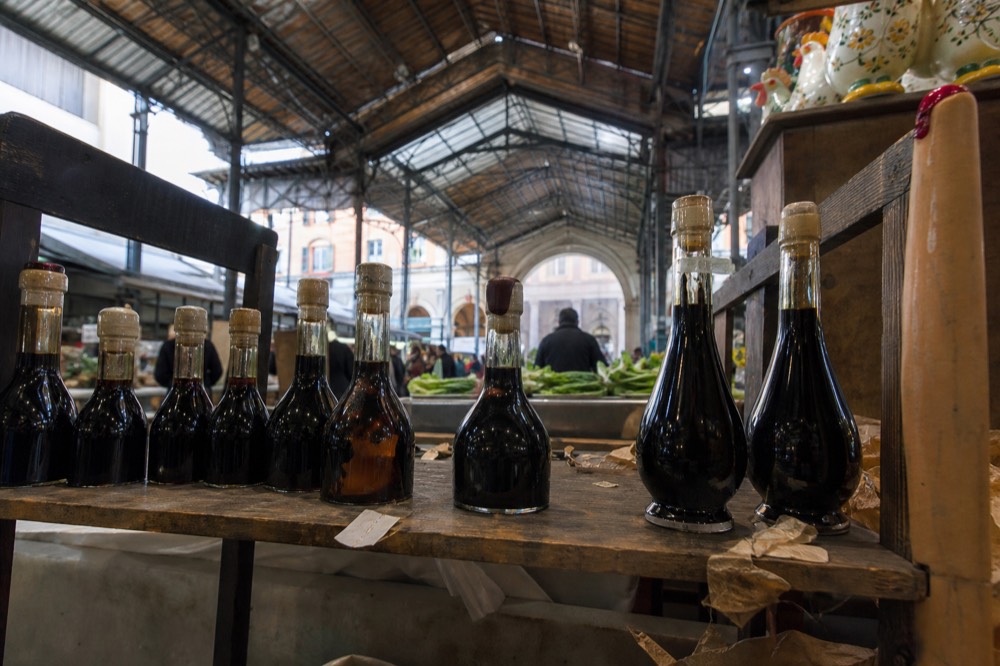
Is the generic stuff bad? Not necessarily. A well-made condiment can be a useful kitchen acid, and for deglazing a pan or dressing a quick salad, the difference between it and the protected product may not justify the price gap. The problem is not quality, it is that the label gives you no information about quality, ageing, ingredients or origin. You are buying on trust from a category with no rules.
| What the label says | What it legally means | What you are probably buying |
|---|---|---|
| "Balsamic vinegar" only | Nothing, no denomination exists | Wine vinegar plus must, sugar or caramel, any origin |
| "Balsamic style" or "condiment" | Nothing, chosen to avoid the rules | A sweetened vinegar blend, often very thin |
| "Aceto Balsamico di Modena" plus IGP logo | The protected IGP, EU-registered | Cooked must with wine vinegar, minimum 60 days in wood |
| "Aceto Balsamico Tradizionale di Modena" DOP | The protected DOP | Cooked must alone, 12 or 25 years, sealed bottle |
What Is Aceto Balsamico Di Modena IGP?
Aceto Balsamico di Modena IGP is the protected product most supermarket "Modena" bottles actually are: cooked and concentrated grape must with at least 10 percent wine vinegar and a share of vinegar aged at least ten years, matured a minimum of 60 days in wooden barrels. Up to 2 percent caramel may be added for colour, nothing else, and the must has to be at least 20 percent of the mass sent for processing.
This is the balsamic most of the world uses, and it is a genuine, inspected, denomination-protected product, not a fake. The rules are written into EU law, the IGP was recognised in the Official Journal in July 2009, and production is limited to the provinces of Modena and Reggio Emilia (see Via Emilia). Every bottle that carries the name, the IGP wording and the PGI logo has passed that framework, which is already a world away from the unregulated condiment above.
The production method explains the price. Grape must is cooked and concentrated, blended with wine vinegar, including a portion that has itself aged at least ten years, then matured in wood. Sixty days is the floor, not the norm: bottles labelled "Invecchiato" have spent over three years in wood, and "Riserva" over five. Those two words are the only age claims the IGP rules permit, and they are the ones worth paying a little more for at the supermarket.
Permitted grapes for the IGP include Lambrusco, Sangiovese, Trebbiano, Albana, Ancellotta, Fortana and Montuni, a broader list than the DOP allows, and one that reflects an industrial product made at scale. The IGP may also be sold in glass, wood, ceramic or terracotta from 0.1 litres up to 5 litres, and even in single-dose sachets, which the DOP's single mandatory bottle shape never permits. For a deeper comparison of the two Modena products, our guide to traditional balsamic DOP versus IGP breaks down every rule side by side.
| IGP label term | Minimum time in wood | What it tells you |
|---|---|---|
| No age wording | 60 days | The legal floor, a young everyday vinegar |
| "Invecchiato" | Over 3 years | Noticeably rounder, better for finishing |
| "Riserva" | Over 5 years | The top of the IGP range, closer to a sipping vinegar |
What Is Aceto Balsamico Tradizionale Di Modena DOP?
Aceto Balsamico Tradizionale di Modena DOP is cooked grape must and nothing else, aged a minimum of 12 years in a graded battery of small wooden barrels, bottled only in Modena province in the mandatory Giugiaro-designed bottle, and sold only after passing a binding analytical and sensory examination. There are exactly two grades: Affinato, aged at least 12 years, and Extra Vecchio, aged at least 25.
This is the product the whole category was named after, and it shares almost nothing with the bottle in your cupboard. The must is cooked over direct flame in open vessels for at least 30 minutes at no less than 80 degrees Celsius, and after cooking nothing may be added except the "madre", the bacterial culture that carries the acetification forward. No wine vinegar, no caramel, no sugar, at any stage. The DOP consortium's disciplinare sets all of this out in law.
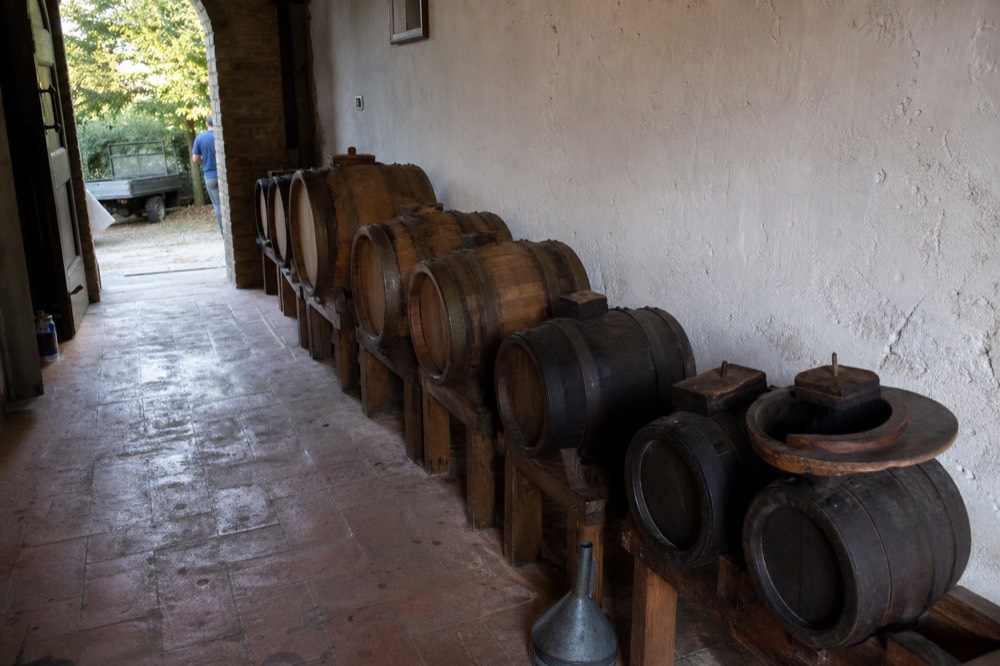
Ageing happens by successive decanting through a battery of barrels of different woods and sizes, each numbered and marked, in attics where the Modena summer heat and winter cold drive concentration year after year. Twelve years is the minimum to call it Affinato. Twenty-five is the minimum for Extra Vecchio, and the disciplinare permits no other age wording at all: "extra", "riserva", "selezionato", "classico" and any vintage year are expressly banned on the label.
Every bottle carries a non-reusable numbered seal that cannot be broken without opening the bottle. Serial numbers begin with "A" for the 12-year Affinato and "E" for Extra Vecchio, with a second algorithm-linked number as an anti-counterfeit check. The bottle itself is mandatory and unique: Giorgetto Giugiaro's spherical design in solid white crystalline glass, with the 100ml size the famous one, though the rules also permit 20cl and 40cl in the same shape.
One myth worth killing here: there is no such thing as 50-, 100- or 200-year-old Traditional Balsamic. Only the barrels can be that old. The vinegar inside them is drawn off and topped up continuously, and the consortium says so plainly in its own FAQ. If a label claims a century-old vinegar, it is marketing, not the DOP.
How Do The Two Modena Products Actually Differ?
The core differences are ingredients, time and place: the DOP is cooked must alone aged 12 or 25 years entirely in Modena province, while the IGP adds wine vinegar and caramel and needs only 60 days in wood across Modena and Reggio Emilia. That single comparison, 60 days against 12 years, is the honest explanation of the price gap between a supermarket bottle and a small sealed flask.
The DOP consortium's own one-line summary puts it well: the DOP comes from cooked must alone and ages 12 or 25 years minimum, while the IGP adds wine vinegar, and the DOP's rules are stricter on both origin and where each stage may happen. Grapes, ageing and bottling for the DOP must all happen inside the province of Modena, from a permitted list that includes Lambrusco, Ancellotta, Trebbiano, Sauvignon, Sgavetta, Berzemino and Occhio di Gatta. The IGP zone is wider and the process is industrial.
They are also used differently, and this matters more than most write-ups admit. The IGP is a working vinegar: salad, deglazing, marinades, everyday cooking, and the better Invecchiato and Riserva bottles are genuinely good at it. The Tradizionale DOP is a condiment in the strict sense, dropped in tiny amounts onto Parmigiano Reggiano, strawberries, vanilla ice cream or a piece of aged beef (see Parmigiano vs Parmesan). Heat destroys it, and anyone cooking with it at high temperature is spending a lot of money to make an ordinary sauce.
| Aceto Balsamico di Modena IGP | Aceto Balsamico Tradizionale di Modena DOP | |
|---|---|---|
| Base | Cooked must plus at least 10% wine vinegar | Cooked grape must, nothing added but the madre |
| Minimum ageing | 60 days in wood | 12 years (Affinato) or 25 (Extra Vecchio) |
| Additives | Up to 2% caramel for colour | None permitted |
| Production zone | Modena and Reggio Emilia provinces | Modena province only, including bottling |
| Bottle | Glass, wood, ceramic, 0.1L to 5L, sachets to 25ml | Mandatory Giugiaro shape, 100ml, 20cl or 40cl |
| Seal | Standard labelling | Non-reusable numbered seal, "A" or "E" prefix |
| Typical use | Cooking, salads, marinades | Drops on cheese, fruit, ice cream, finished dishes |
Which One Should You Buy, And For What?
Buy the IGP, ideally an Invecchiato or Riserva grade, for cooking, marinades, and everyday dressing, where its brighter acidity and lower cost shine. Reserve the Tradizionale DOP for finishing, since heat wastes its depth; buy it only in the smallest bottle you can afford, and treat it as a condiment to drip sparingly over finished dishes, or as a gift for someone who will appreciate it. The worst outcome is not buying the wrong one, it is buying the DOP and then boiling it, or buying the generic condiment and expecting it to taste like twelve years in an attic.
For most kitchens the honest recommendation is the middle tier. A well-chosen IGP Riserva covers 90 percent of what people actually do with balsamic, at a fraction of the DOP price, and the label rules mean you know what you are getting. Check the bottle for the three authenticity marks: the full name, the IGP wording, and the yellow-and-blue PGI logo. Our guide on how to buy real balsamic in Modena walks through the whole checklist.
The DOP is a different purchase decision, closer to buying a good bottle of wine than a condiment. Buy it from an acetaia or a serious merchant, keep it for the uses where a few drops are the point, and expect the price to reflect more than a decade in wood. If you are visiting the province, tasting before buying is the whole reason to spend a morning at a producer, and the difference between a young Affinato and an Extra Vecchio poured side by side is the fastest education available.
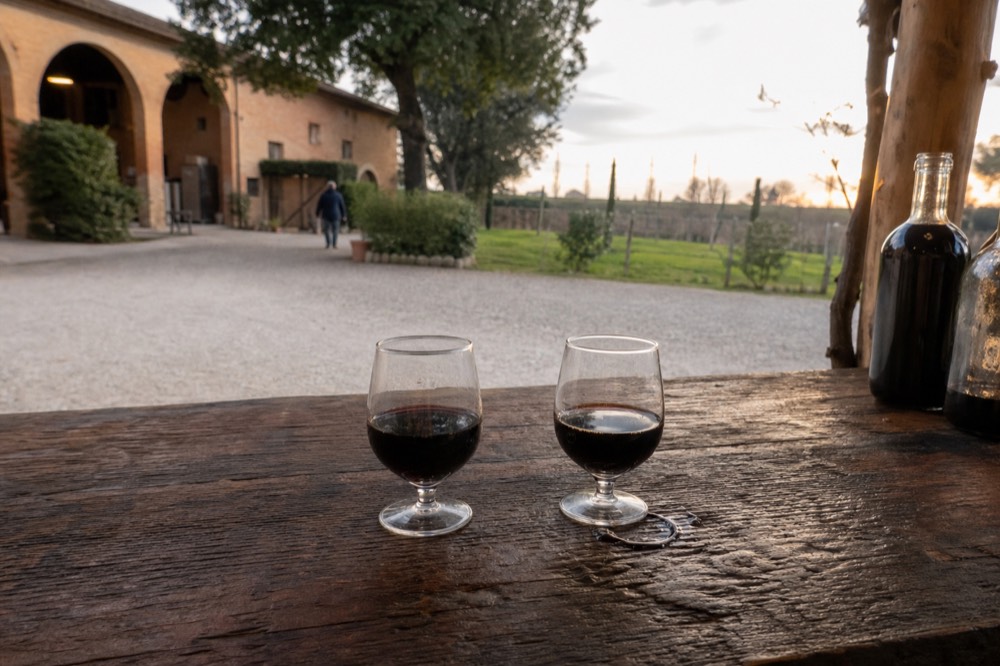
Acetaia Leonardi, one of the larger historic producers in the province and the one most set up for visitors, runs exactly that format: the cellar, the reserve barrels, then a structured tasting flight. It is the natural first stop if this article has made you want to taste the tiers rather than read about them. Check the current price and the next available dates on the live listing before you plan the day.
Can You Taste The Difference Without Buying Both?
Yes, and the cheapest way is a booked visit to an acetaia in Modena province, where the consortium's own FAQ notes that the tasting on a guided visit is free, and where producers pour young and old vinegars side by side. A single well-run tasting teaches more than any article, because acidity, density and sweetness are things your palate learns faster than your reading does.
The open-doors event is the other route. Acetaie Aperte 2026 falls on Sunday 27 September 2026, with over 30 acetaie opening for guided visits and tastings of both the IGP and the Tradizionale DOP, run jointly by the two consortia. Several participating acetaie take bookings only, so if you are in the region that weekend, plan ahead. The event site lists the participating producers.
If a trip is not on the calendar, taste at home with structure instead. Buy one good IGP Riserva and one small bottle of Tradizionale DOP, pour a few drops of each on separate pieces of Parmigiano Reggiano, and pay attention to what happens on the palate. The IGP will read as bright and vinegary-sweet. The DOP will read as dense, round and long, with acidity that arrives late and quietly. Once you have tasted that contrast, the labels stop being confusing, because your mouth already knows the difference the words are pointing at.
Common Questions About Balsamic Vinegar And Balsamic Vinegar Modena
What Is The Difference Between Balsamic Vinegar And Balsamic Vinegar Modena?
"Balsamic vinegar" alone is an unprotected generic label made anywhere. "Balsamic vinegar of Modena" means one of two EU-protected products: the IGP, cooked must with wine vinegar aged at least 60 days in wood, or the Tradizionale DOP, cooked must alone aged at least 12 years in a sealed numbered bottle.
Is Balsamic Vinegar Of Modena The Real Thing?
Yes, if the bottle carries the full name "Aceto Balsamico di Modena", the words "Indicazione Geografica Protetta" or "IGP", and the yellow-and-blue PGI logo. It is a genuine protected product, just a different and much younger one than the Tradizionale DOP.
Why Is Traditional Balsamic So Expensive?
Time and loss. The DOP must age at least 12 years in a battery of wooden barrels, nothing but cooked must goes in, bottling may only happen in Modena province, and every bottle must pass a binding examination before it can be sold under the name.
Can I Use Traditional Balsamic For Cooking?
You can, but you should not. Heat destroys the density and aromas that twelve-plus years of ageing built, and the DOP is meant to be used in tiny amounts on finished dishes, cheese, fruit and ice cream. Cook with the IGP and finish with the DOP.
How Can I Spot A Fake Balsamic Bottle?
Look for the three IGP marks, the full name, the IGP wording and the PGI logo, or for the DOP's Giugiaro bottle with its numbered non-reusable seal. A bottle showing only "balsamic" or only "Modena" in decorative script is an imitation.
Where Can I Taste Both Kinds In Modena?
Booked visits to working acetaie pour young and old vinegars side by side, and the consortium's FAQ notes that the tasting on such a visit is free. Acetaie Aperte, the last Sunday of September each year, opens over 30 acetaie in a single day.
The three tiers, then, in one line each: generic balsamic is whatever the maker decided, the IGP is a real regulated Modena vinegar built for the kitchen, and the Tradizionale DOP is a decade-plus of cooked must in a sealed flask, meant for drops rather than pours (see Three Types of Parmesan). If you want to see the whole ladder in a single morning, the pairing day that combines a Parmigiano dairy with a family acetaia is the most efficient version, and the selection below covers both ends of the price range.