What Is Via Emilia Famous For In Modena, Italy?
Via Emilia is the Roman road that strings Emilia-Romagna's protected foods together, and Modena sits at its productive heart. Here is what the road is famous for and how to tour it.
 By Marco Montanari, Modena food tour guide and Emilian culinary specialist
What Is Via Emilia Famous For?
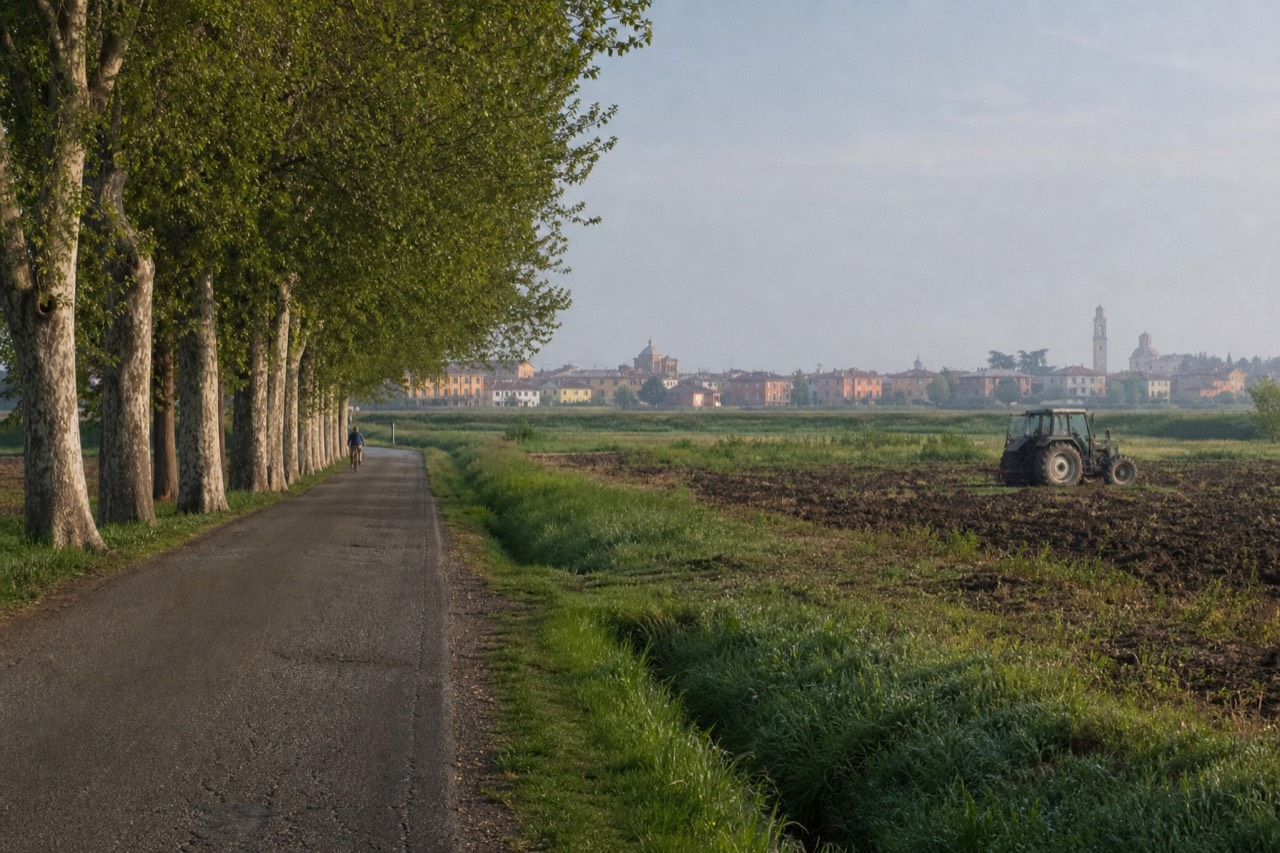
Via Emilia is famous for being the straight Roman road that gave Emilia-Romagna its name and its shape, and for the belt of protected foods produced in the country it crosses: Parmigiano Reggiano DOP, Aceto Balsamico Tradizionale di Modena DOP, Aceto Balsamico di Modena IGP and six Lambrusco DOC denominations. Modena, Piacenza, Parma, Reggio Emilia and Bologna all grew up along it, and the dairies, acetaie and wine cellars visitors tour today sit in the fields beside it.
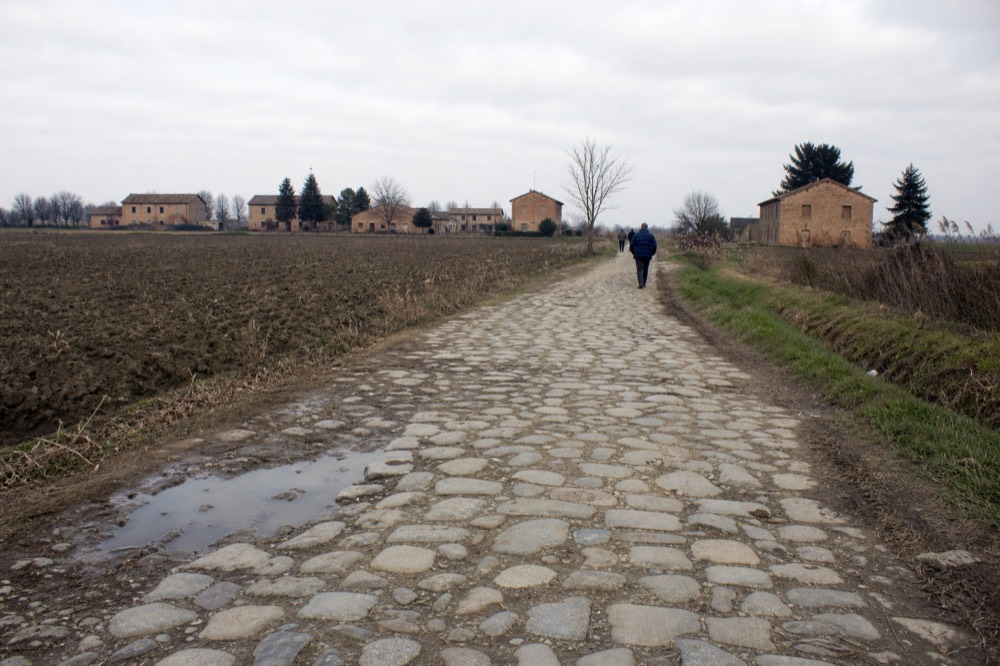
The road is one of the great surviving pieces of Roman engineering in northern Italy: a ruler-straight consular route linking the Po valley towns to the Adriatic coast at Rimini. It never wandered, and neither did the towns. They lined up along it like beads on a string, each one a market point for the farms within a day's cart ride. That layout still governs the region today. The A1 motorway and the main rail line shadow it, the provincial towns face onto it, and the food country fans out to either side.
What makes it genuinely famous rather than just old is what the land on either side produces. The plain south of the road, running up into the first hills, holds most of the Parmigiano Reggiano production zone, the Modena-province zone for traditional balsamic vinegar, and the vineyards of the Lambrusco denominations. The Consorzio del Parmigiano Reggiano defines that zone as the provinces of Parma, Reggio Emilia, Modena, Bologna left of the river Reno, and Mantova right of the Po, with milk, cheesemaking, ageing and packing all happening inside it, as the Consorzio's own territory pages set out.
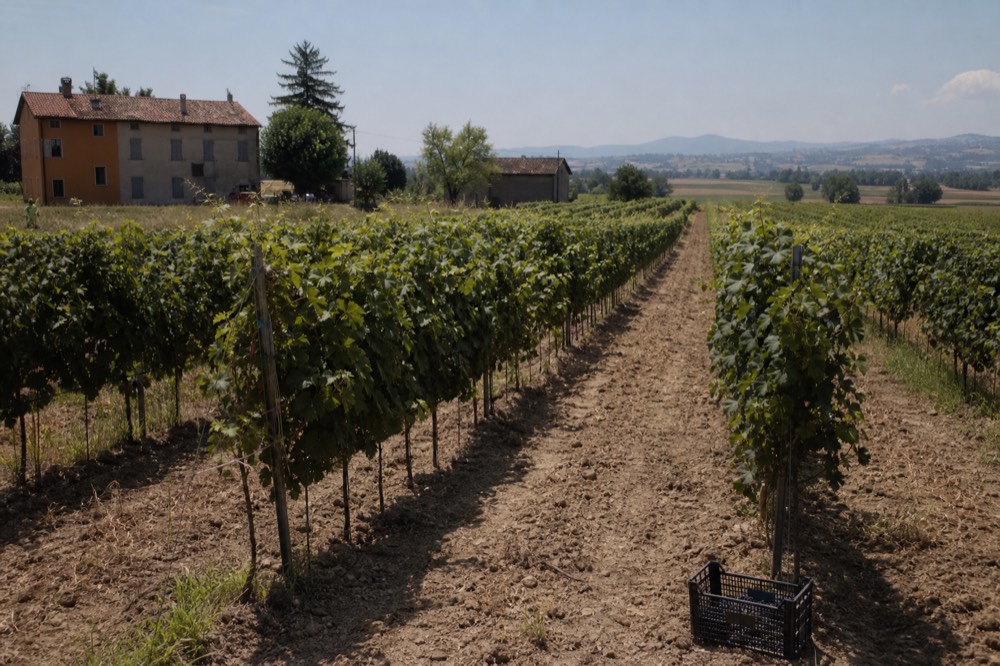
So when people ask what Via Emilia is famous for, the honest answer has two layers. It is famous as a road, the spine of Emilia-Romagna, and it is famous as a food map. Follow it from Modena in either direction and within half an hour you are standing in a dairy where the morning make is under way, or in a barrel loft where vinegar has been ageing since before your parents were born. That concentration is not an accident of marketing. It is what the road and its soil made possible, and it is why this site exists at all: Food Tours in Modena covers the stretch of that country where the densest cluster of visits sits.
If you want to taste the whole belt in one organised day, a combination tour that crosses the dairy, the acetaia and the Lambrusco cellar country with lunch on a producer's premises is the most efficient way to do it. Check the current price and the next available dates on the live listing before you plan the day.
Why Does One Road Explain So Much Of The Region's Food?
Because the road fixed where the towns, the markets and the farms sat, and the protected foods that later grew up around them all drew their boundaries from that same geography. The Parmigiano zone, the balsamic zones and the Lambrusco denominations are all province-based rules, and the provinces are all towns the road created. The rules and the road point at the same ground.
Take the clearest case. Aceto Balsamico Tradizionale di Modena DOP may only be made from grapes grown, cooked, aged and bottled inside the province of Modena, using a graded battery of small barrels of different woods, with a minimum ageing of 12 years and an Extra Vecchio grade from 25 (see Balsamic Grades). Its sibling product, Aceto Balsamico di Modena IGP, covers the provinces of Modena and Reggio Emilia and works to far lighter rules, a minimum of 60 days in wood against the DOP's dozen years. Those two zones, and the price gap between the two products, are both legible straight off the map along the road. The IGP consortium's production pages spell out the difference, and our own comparison guide, traditional balsamic DOP versus IGP, walks through it in detail.
Lambrusco tells the same story from the wine side. The Consorzio Tutela Lambrusco covers six DOC denominations, and four of them, Sorbara, Grasparossa di Castelvetro, Salamino di Santa Croce and Modena DOC, sit in Modena province, all of it countryside the road crosses or skirts. Every one of the six permits secco, semisecco, amabile and dolce styles, so the honest framing is that Lambrusco is made across the full sweetness range and the dry, secco style is the one poured alongside Modena food. The consortium's denominations page lists all six, and our Lambrusco tastings guide covers where to drink them.
The pattern repeats at every scale. Mercato Albinelli, Modena's covered market, has traded on a site a few streets off the road's line since 1931, with stalls Monday to Saturday and restaurants opening seven days. The Ferrari museums sit at Maranello and Modena, both on or beside the road's axis. Even the coeliac-friendly framing the region is known for is national, but the venues you would use it in line the road. Geography came first, the food rules followed, and the tours follow the rules.
Which Famous Foods Are Made Along The Road Near Modena?
Within a short drive of central Modena the road's hinterland produces Parmigiano Reggiano DOP, both Modena balsamic vinegars, four of the six Lambrusco DOCs, and the fresh pasta tradition that ties them together at the table. Each has a visitable producer, and most of the tours on this site are built around exactly those four stops.
The table below is the honest summary of what the country beside the road makes, and where its rules say it must be made.
| Product | Protection | Where it must be made | What a visit gets you |
|---|---|---|---|
| Parmigiano Reggiano | DOP | Parma, Reggio Emilia, Modena, Bologna left of the Reno, Mantova right of the Po | Copper vats and the morning make, salting room, ageing shelves, a tasting across ages |
| Aceto Balsamico Tradizionale di Modena | DOP | Province of Modena only, grapes to bottling | The barrel battery, the 12-year and 25-year grades, a guided tasting |
| Aceto Balsamico di Modena | IGP | Provinces of Modena and Reggio Emilia | Large-scale production, the authenticity marks, how the affordable bottle differs |
| Lambrusco (four DOCs) | DOC | Modena province for Sorbara, Grasparossa, Salamino, Modena DOC | Vineyard and cellar walk, three or four styles poured side by side |
The depth behind that table is what surprises people. The DOP vinegar's disciplinare sets a minimum ageing of 12 years, permits only two grades, the 12-year and Extra Vecchio from 25, and bans words like "riserva" and "superiore" from the label. Every bottle carries a numbered, non-reusable seal, and the famous retail size is the 100ml Giugiaro bottle, though the rules also permit 20cl and 40cl in the same shape. There is no such thing as 50- or 100-year-old Traditional Balsamic; only the barrels can be that old. Our acetaia visits guide covers what an actual loft visit looks like.
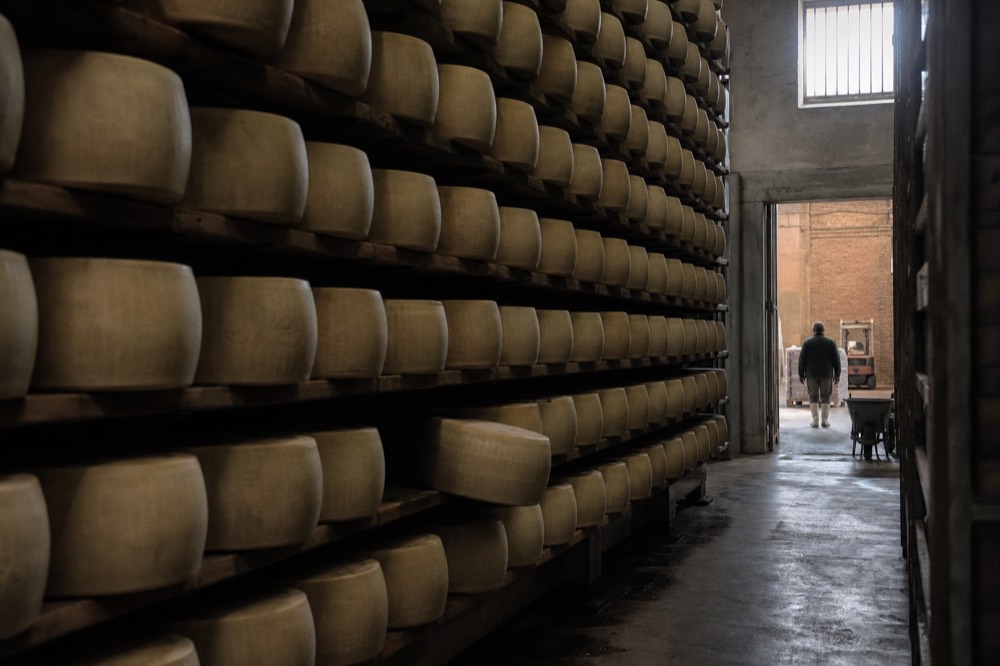
Parmigiano is just as rule-bound, and just as visitable. Cheesemaking happens in the morning, and a real Modena-province dairy states plainly that afternoon tours cover that stage on video instead of live, so book a morning slot if seeing the make matters to you. Every wheel carries a casein plate with a traceability code in its first hours, and only wheels that pass the hammer-tested inspection at 12 months keep the fire brand. The rind is edible, the cheese is naturally lactose-free at every age, and the white crunch is tyrosine crystals, which grow with age.
Lambrusco rounds it off, and the road's hill towns are where its two most distinctive denominations live. Grasparossa di Castelvetro comes from the high plain and the Modena hills and has the most pronounced body and tannin of the group; Sorbara is the pale, high-acid one with violet and red fruit (see Spotting Quality Balsamic). Cleto Chiarli, Modena's oldest commercial Lambrusco house, founded in 1860, pours four wines in its own cellars at Castelvetro, and the visit is one of the easiest ways to taste the denominations side by side. Check the live listing for the next available tasting dates before you commit to a day.
How Do You Tour The Road's Food Country Without A Car?
You use the towns as bases and the local buses and booked tours as the links. SETA line 800 runs from Modena's bus station to Maranello in 27 to 31 minutes, line 740 reaches Castelvetro in 41 to 47 minutes, line 731 links Modena with Spilamberto, and the combination day tours include transport from Modena or Bologna so the producer stops are stitched together for you.
The bus spine matters because the producers sit in the countryside, not the centres. Castelvetro, the Grasparossa hill town, is reachable on line 740. Spilamberto, home of the balsamic museum, sits on line 731. Maranello, for the Ferrari museum and the Michelin-starred Il Cavallino restaurant in Ferrari's original 1950 canteen, is on line 800, which runs from early morning into the evening with Sunday service as well (see Maranello Worth It?). Our Ferrari and food tours guide covers that end of the road in detail.
| Destination from Modena | Line | Journey time | What is there |
|---|---|---|---|
| Maranello | SETA 800 | 27 to 31 minutes | Museo Ferrari, Il Cavallino, the Motor Valley stops |
| Castelvetro di Modena | SETA 740 | 41 to 47 minutes | Grasparossa wineries, a historic acetaia, the September sagra |
| Spilamberto | SETA 731 | See the timetable | Museo del Balsamico Tradizionale, the Consorteria |
| Bomporto | SETA 410 | 20 to 22 minutes | The Sorbara Lambrusco country |
| Lesignana | SETA 500 | 9 to 11 minutes | A working Parmigiano dairy with daily booked visits |
For the dairies and acetaie that sit beyond a walk from a stop, two options work. One is a tour with transfers included, which is why the combination days are popular: the driving between the dairy, the cellar and the acetaia is handled, and the producers, not a guide reading from a card, do the explaining. The other is the producers' own booking systems. The Consorzio del Parmigiano Reggiano runs a booking page for tourist dairy visits, and many acetaie take booked guided visits directly, with the DOP consortium's own FAQ noting that the tasting on such a visit is free (see Dairy Factory Tours). See the next available dates on whichever listing you are weighing up before you lock the rest of the day.
What Does A Perfect Day Along Via Emilia Look Like?
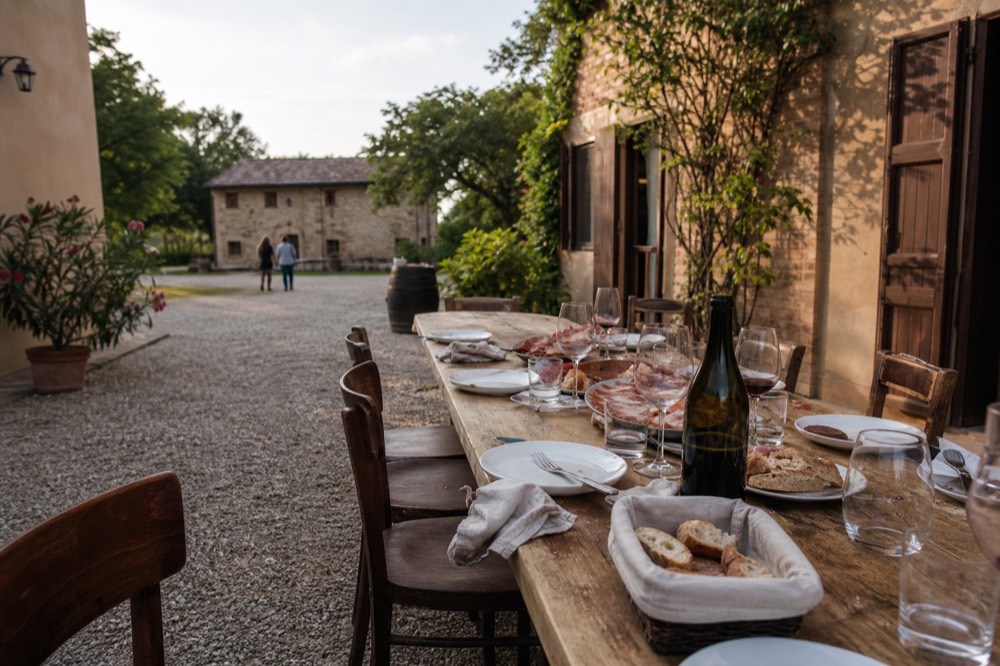
Start with the morning make at a Parmigiano dairy, because cheesemaking happens in the morning and afternoon visits cover it on video; move to a hill-town acetaia or winery for the late morning; lunch on the producer's premises; and finish in Modena's centre at Mercato Albinelli or a pasta class. Book the dairy and the class ahead, and leave the market for the walk-in end of the day.
The single most efficient version of that day is the combination tour that crosses all three producer types and adds the Ferrari stop, with pickup from Bologna or Modena and lunch included (see Three Types of Parmesan). It is the longest day on the roster and the one that most literally drives the road, from the dairy to the acetaia to the Lambrusco cellar. There is also a self-drive version at roughly half the chauffeured price, for travellers who want the same stops with their own car. Check the current price on the live listing for whichever format fits your group.
If you would rather build the day yourself, the pieces are all bookable. A working dairy about 15 minutes from Modena runs the visit with the transfer included, copper vats to ageing shelves, ending on a flight of the same cheese at different ages. A sommelier-led Lambrusco cellar walk at Nonantola ends on three styles poured side by side so the differences are obvious. A hands-on tagliatelle and tortelloni class in a Modena home kitchen, or a private Cesarine class with two regional pasta shapes and tiramisu, closes the loop by putting the road's food on your own plate. Our cooking classes guide compares the formats.
| Day shape | Morning | Midday | Afternoon | Best for |
|---|---|---|---|---|
| Full combination day | Parmigiano dairy, morning make | Lunch at a producer | Acetaia, Lambrusco cellar, Ferrari stop | First-time visitors, no car |
| Vineyard and vinegar day | Organic acetaia at Vignola | Hill-town lunch | Grasparossa cellar at Castelvetro | Wine-first travellers |
| City and market day | Mercato Albinelli walk | Tortellini in brodo at a market counter | Pasta class in a home kitchen | Slow travellers, bad-weather days |
| Self-drive producer loop | Dairy near Modena | Acetaia in the hills | Two wineries, your own pace | Repeat visitors with a car |
One planning note worth the emphasis: the closing days and the calendar matter more here than in most of Italy. The market stalls shut on Sundays and on the published holiday closures, the Spilamberto museum closes Mondays, and the whole vinegar country opens its doors at once on the last Sunday of September for Acetaie Aperte. If your trip lands near 27 September 2026, plan the road around it, because over 30 acetaie open that day and several take bookings only.
Via Emilia is famous as the Roman road that gave Emilia-Romagna its shape and as the food axis that strings together Parmigiano Reggiano dairies, traditional balsamic acetaie and Lambrusco hill towns, with Modena sitting at the densest stretch of all three. The questions below cover the cities it runs through, how to tour its producers without a car, and the late-September window when the whole vinegar country opens its doors at once.
Common Questions About Via Emilia
What Is Via Emilia Famous For?
It is famous as the Roman road that gave Emilia-Romagna its shape and name, and as the axis of the region's protected food belt: Parmigiano Reggiano DOP, the two Modena balsamic vinegars and four of the six Lambrusco DOC denominations are all made in the country the road crosses, with Modena at the densest part of it.
Which Cities Does Via Emilia Run Through?
It runs straight through the Po valley towns it created, including Piacenza, Parma, Reggio Emilia, Modena and Bologna, and reaches the Adriatic at Rimini. Modena, Parma and Bologna are the three food names most visitors come for.
Is Via Emilia The Same As The Via Emilia Food Route?
The road itself is a physical Roman route, but the phrase is often used loosely for the food country along it. The protected products each have their own formal zone, set by their consortia: the Parmigiano zone covers five provinces, the DOP vinegar is Modena province only, and four Lambrusco DOCs sit in Modena province.
Can You Visit Food Producers Along Via Emilia Without A Car?
Yes. SETA buses reach Maranello, Castelvetro, Spilamberto and Bomporto from Modena, the Parmigiano Consorzio runs a booking page for dairy visits, many acetaie take booked visits directly, and the combination day tours include transport from Modena or Bologna.
What Is The Best Time Of Year To Tour The Road's Food Country?
Late September is the standout window: Acetaie Aperte opens over 30 acetaie on Sunday 27 September 2026, the Castelvetro Grasparossa sagra runs 19 to 27 September, and Modena's own producer event follows on 28 and 29 September. Book ahead for that weekend, because several acetaie take bookings only.
Why Is Modena The Best Base For Touring The Road?
Because the city sits mid-road with the densest cluster of bookable visits around it: working dairies within 15 minutes, acetaie in and just outside the city, the Lambrusco hill towns on a bus line, the Ferrari museums on line 800, and a covered market and pasta classes in the centre for the days between.