What Are The Three Types Of Parmesan Cheese In Modena?
The three ageing tiers of Parmigiano Reggiano, what changes in the wheel at each stage, and how the loose word parmesan differs from the protected Modena cheese.
 By Marco Montanari, Modena food tour guide and Emilian culinary specialist
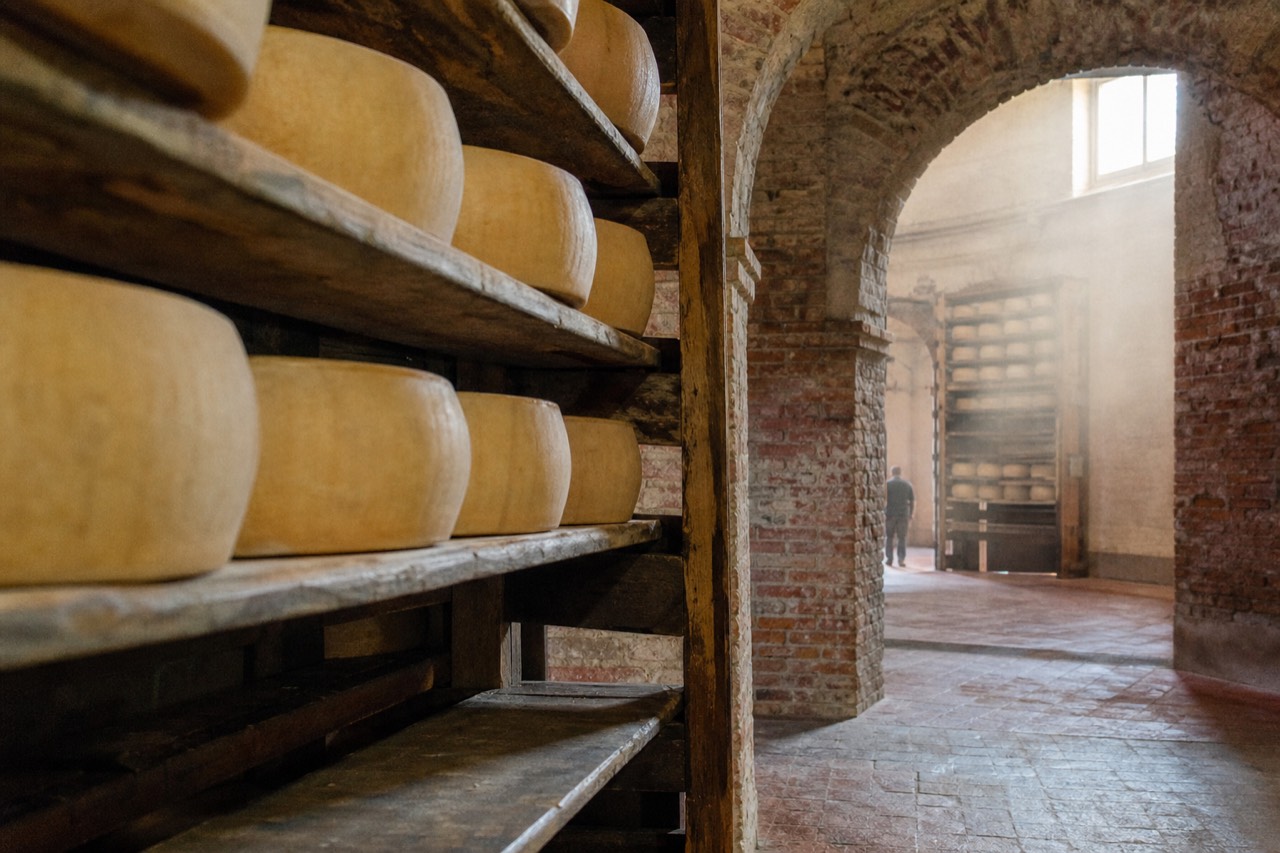
Ask an American cook what parmesan is and the answer is a green cardboard tube. Ask in Modena and the answer is a law. Parmigiano Reggiano DOP is a protected cheese made in a defined zone from raw milk, salt and rennet, nothing else, and the "three types" people ask about are really three ageing tiers of that one cheese: young wheels around 12 to 18 months, the classic 24 to 36 month band, and long-aged wheels of 40 months and beyond. A fourth thing often gets folded into the question, the mountain-certified wheels selected again at 20 months, and the word "parmesan" itself deserves its own sorting out, because outside Italy it names a family of imitations that share no rules with the original.
This site, Food Tours in Modena, spends a lot of its research time on exactly this cheese, because a dairy visit is one of the most bookable food experiences in the province. Here is what the three types actually are, what changes in the wheel as it ages, and where you can taste the tiers poured next to each other.
What Are The Three Types Of Parmesan Cheese In Modena?
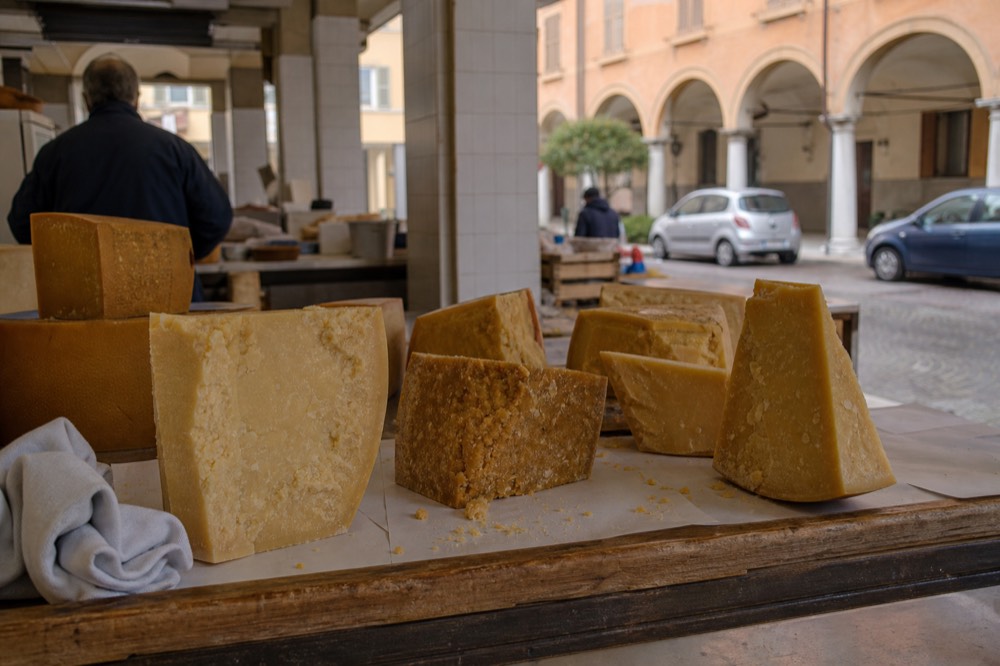
The three types are ageing tiers of one protected cheese: young Parmigiano Reggiano at 12 to 18 months, the classic 24 to 36 month wheels that most Italians buy, and stravecchio wheels aged 40 months or more, which turn granular, intense and dense with crunchy tyrosine crystals. All three come from the same milk, the same vat and the same rules; only time separates them.
That is the honest answer, and it needs one correction attached. There is no official "type one, type two, type three" nomenclature in the disciplinare. The Consorzio del Parmigiano Reggiano sets a minimum ageing of 12 months and no maximum, and states plainly that 24 to 36 months is the commonest age on sale. Everything else is how the trade and the dairies talk about the cheese. The youngest wheels are sometimes labelled nuovo or giovane by sellers, the middle band is simply the standard cheese, and the oldest tier carries descriptions like stravecchio or extra aged on shop cards, not on the rind. The rind itself only ever carries the age of the year of production.
The confusion is mostly an American export. In the United States "parmesan" is a generic style name that any hard grating cheese can use, which is why a shelf there can hold a wedge of the real DOP next to a cellulose-powdered domestic block at a third of the price. In Italy that word is not free to use. Only cheese made in the defined zone, from Parma and Reggio Emilia through Modena and part of Bologna to a strip of Mantova, from milk produced in that zone, and aged at least 12 months inside it, may carry the name (see Via Emilia). The Consorzio's own pages walk through the product and its territory in detail: the production zone and rules are published on parmigianoreggiano.com.
If you want to taste the tiers rather than read about them, a dairy visit is the most efficient way, because a good one pours several ages in a row.
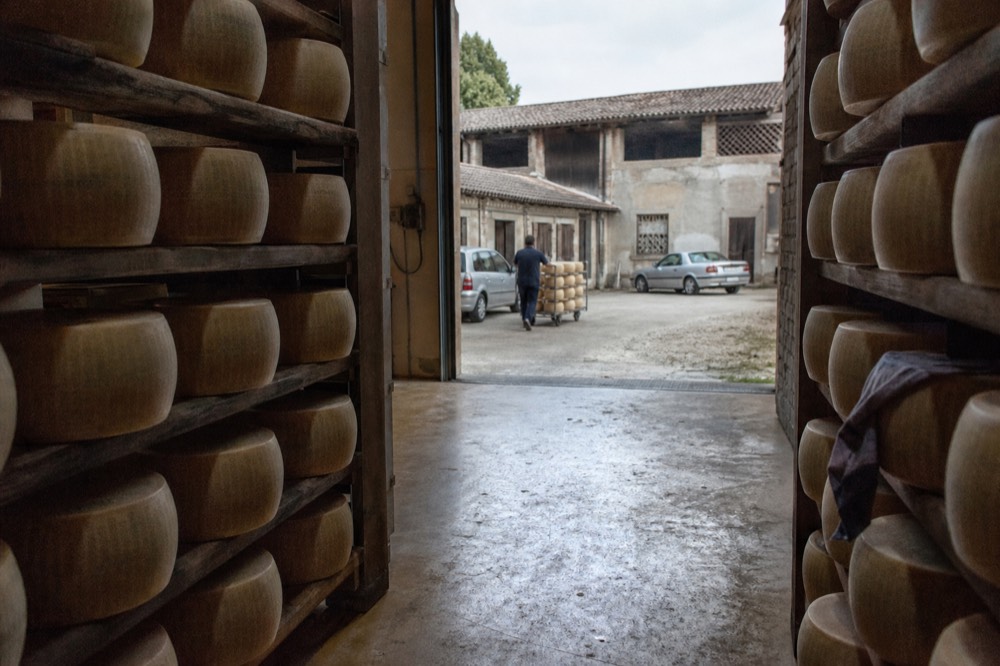
The table below is the shape of the answer in one glance.
| Tier | Typical age | What it tastes like | How it is used |
|---|---|---|---|
| Young (nuovo) | 12 to 18 months | Milky, elastic, mild lactic tang, fewer crystals | Table cheese, snacks, melting |
| Classic | 24 to 36 months | Balanced savoury depth, visible white crystals, grainy break | Everything: eating, grating, brodo |
| Stravecchio | 40 months and beyond | Intense, brothy, very granular, dense crunch | Shaved, eaten alone, paired with balsamic or honey |
What Actually Changes As The Wheel Ages?
Ageing drives out moisture and concentrates everything else: the wheel loses weight, the paste turns from elastic to granular, tyrosine crystals form and multiply, and the flavour walks from milk toward broth, nut and spice. The Consorzio's guidance is that 24 to 36 months is the commonest age on sale, which is why that band defines how the cheese tastes to most people.
The crystal question comes up constantly on dairy tours, and it has a clean answer. Those white specks are tyrosine, an amino acid cluster, and the Consorzio states in its own FAQ that they grow in number and size with age. A 14-month wheel has few; a 40-month wheel is full of them, and the crunch is part of the point of the old tier. The same FAQ answers two other frequent worries: the rind is edible because the cheese is only milk, salt and rennet with no additives, preservatives or rind treatment, and Parmigiano Reggiano is naturally lactose-free at every age, because the lactose converts to lactic acid within the first 48 hours of the make.
One thing that does not change with age is the make itself. Cheesemaking happens in the morning at Modena-province dairies; a real dairy, 4 Madonne at Lesignana, states on its own visits page that afternoon tours cover that stage on video instead of live (see Days in Modena). So if watching the curd being cut and the wheels being lifted from the copper vat matters to you, book a morning slot, and check the current times on the operator's listing before you plan the day. The 4 Madonne visits page publishes its own arrangements, including its standard tasting of four different ages plus ricotta and tosone.
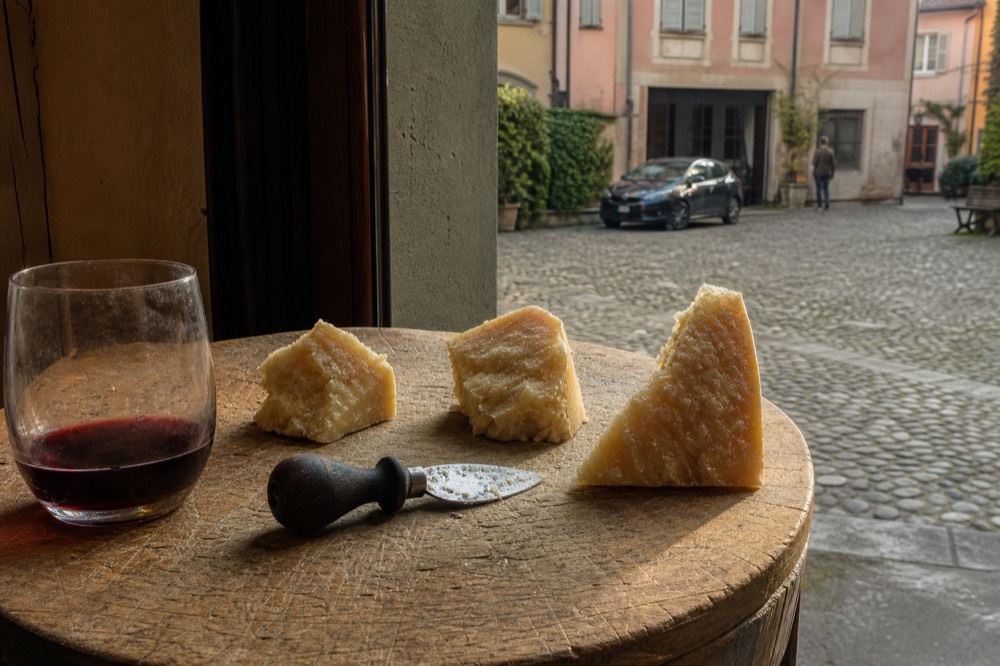
A useful way to hold the tiers in your head is what each one does in the mouth.
| Age band | Texture in the hand | Texture in the mouth | Best single use |
|---|---|---|---|
| 12 to 18 months | Slightly softer, paler paste | Elastic, milky, mild | Cubes with aperitivo |
| 24 to 36 months | Classic straw colour, firm | Grainy break, savoury, balanced | Grated over pasta, tortellini in brodo |
| 40 months plus | Deep gold, hard, dry edges | Shattering, brothy, very crunchy | Shaved with honey or Traditional Balsamic DOP |
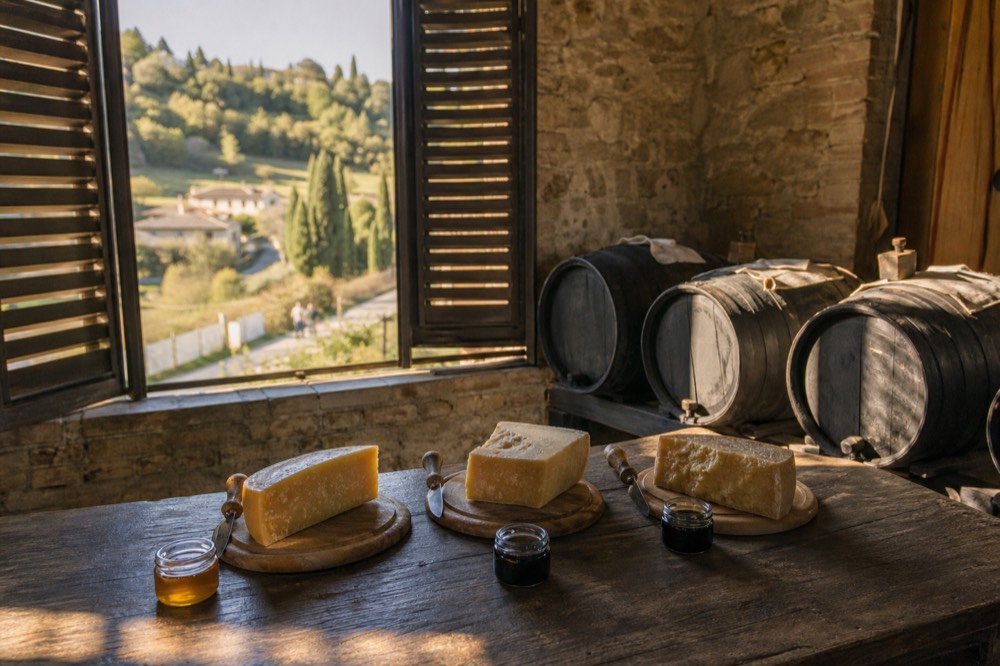
The oldest tier has a natural partner in Modena, and it is the other protected product of the province. A few drops of Aceto Balsamico Tradizionale di Modena DOP, the 12-year-minimum cooked-must vinegar that ages in graded barrel batteries, on a shard of 40-month cheese is the classic local pairing, and the DOP consortium's own FAQ covers how that vinegar is made and tasted: the traditional balsamic consortium publishes its FAQ at balsamicotradizionale.it.
What Is Prodotto Di Montagna, The Fourth Category People Miss?
Prodotto di Montagna is a separate certification, not a fourth age: mountain-zone wheels must be made and aged in the mountains, follow stricter feed rules, and pass a second selection at 20 months before they may carry the mark. Over 110 mountain dairies and more than 1,200 mountain farmers are involved across Parma, Reggio Emilia, Modena and Bologna.
The rules are specific. The certification, introduced in 2016, requires the dairy and the stables to sit in the mountain zone, at least 60 percent of the dry matter in the cows' annual feed to come from mountain sources, a minimum of 12 months of ageing in the mountains, and sale only from 20 months onward, after the extra quality selection. One Modena-area producer, 4 Madonne, publishes its own detailed page on those rules and sells a 24-month mountain wheel from its site, which is a rare case of a named dairy price we can state: the mountain 24-month punta is listed at EUR 25.50 per kilo vacuum-packed on the producer's own page.
The mountain mark is not a curiosity. Wheels sold as Prodotto di Montagna are selected a second time at 20 months before they may carry the designation, and the system behind them is large: more than 110 mountain dairies and more than 1,200 mountain farmers across Parma, Reggio Emilia, Modena and the Bologna area left of the Reno. For a visitor, the mark signals a wheel with a documented mountain origin and an extra round of inspection.
For a visitor, the practical takeaway is simpler than the rulebook. An organic dairy tour is the easiest way to see the stricter end of the production spectrum, and the private organic format is the one that gets you alone with the guide while the morning make is running.
Is Parmesan The Same Cheese As Parmigiano Reggiano?
No. Parmigiano Reggiano DOP is a specific protected cheese with a defined zone, raw milk, a 12-month minimum ageing and a hammer-tested inspection at 12 months; "parmesan" outside Italy is a generic style name that any producer may use, with no zone, no inspection and no minimum ageing. The name protection is the whole difference.
Inside the EU the name is reserved, and the Consorzio enforces it with the rind marks described in the next section. Outside the EU the protection thins out, which is why "parmesan" in an American or British supermarket can mean almost anything hard and pale. The generic versions are typically aged far less, made from pasteurised milk, often with additives the DOP forbids, and priced accordingly. None of that makes them bad cheese; it makes them a different product wearing a borrowed name.
The comparison visitors actually care about is taste for money, and the honest framing is this: the price gap between the DOP and the imitations is the price of the rules, the 12-month wait, the inspection that culls failed wheels, and the zone's raw milk. Whether that gap is worth it is exactly what a tasting of several ages answers better than any article, and Modena is one of the cheapest places in the world to run that experiment, because you can taste at the dairy where the wheel was made. Our companion piece on Parmigiano Reggiano tours from Modena lays out the visit formats, and the deeper head-to-head lives in Parmigiano Reggiano or parmesan, which is better.
| Parmigiano Reggiano DOP | Generic "parmesan" | |
|---|---|---|
| Legal status | Protected name, defined zone | Generic style name in most non-EU markets |
| Milk | Raw milk from the zone | Any milk, often pasteurised |
| Minimum ageing | 12 months, no maximum | None required |
| Inspection | Hammer-tested at 12 months; failures lose the name | None |
| Ingredients | Milk, salt, rennet only | May include additives and preservatives |
| Rind | Dotted origin mark and fire brand | Usually plain or printed |
How Do You Read The Rind And Tell The Ages Apart?
Every wheel carries a casein plate applied in its first hours with a unique alphanumeric code, the letters CFPR and a Datamatrix traceability code, plus dotted lettering around the rind; at 12 months, wheels that pass the hammer-tested inspection receive the oval fire brand, and failed wheels have their marks milled off and lose the DOP name entirely.
That traceability chain is the answer to "how do I know it is real", and it is stronger than most people expect. The casein plate means a wedge can be traced to the exact day and the exact dairy. The dotted band around the rind spells out the origin. The fire brand reading "Consorzio Tutela Parmigiano-Reggiano" with the production year is applied only to wheels that pass the expertise inspection at 12 months, where an inspector hammers the wheel and listens for defects. Wheels that fail have every origin mark milled off the rind and are sold without the right to the name. The Consorzio publishes a full guide to these marks and what each guarantees: the marks and labels guide is on parmigianoreggiano.com.
The rind tells you the year of production, not the tier. A wheel branded with its production year could be sold at 14 months or at 40; the seller's card, or the dairy's tasting menu, tells you which. That is why the numbered-seal logic of the neighbouring balsamic world has no direct parallel here: with the cheese, the age is a commercial description layered on top of a traceable wheel, and the trustworthy place to read it is at the dairy or a serious formaggeria rather than off a supermarket shelf tag.
Where Can You Taste The Three Types Side By Side In Modena?
The efficient way is a dairy visit with a multi-age tasting: 4 Madonne at Lesignana runs daily guided visits by reservation, about one hour, at EUR 22 per adult, and its standard tasting pours four different ages of Parmigiano Reggiano DOP plus ricotta, tosone and cheese spread on bread, with balsamic, honey, preserves, wine and water.
That is a producer's own published price, one of the few dairy figures in the province that is stated on a primary page, and it makes the point better than any argument: tasting four ages in one sitting costs about the same as a plate of pasta in the centre of Modena. The dairy sits at Strada Lesignana 130, about 8 km from Modena by its own page's distances, reachable by SETA line 500 to Lesignana in 9 to 11 minutes from the Autostazione, though the dairy itself points at taxi and cycle options rather than a bus (see Is Modena Worth It). Allergies and intolerances must be flagged when booking, which matters for the pairing spread.
The private organic format goes further than the standard group slot. It walks an organic dairy, Caseificio Bio Reggiani, with your own guide, timed around the morning make, and tastes from young cheese through to long-aged wheels, so the three tiers arrive in order with the explanation attached. Check the next available dates on the live listing before you build a day around it, because morning slots around the make are the constrained ones.
If one product is not enough, the pairing day is the format that answers this article's question and the vinegar question in a single outing: a working dairy in the morning, then the barrel loft of a family acetaia, both explained by the people who run them (see Balsamic Grades). Seeing the 12-year-minimum DOP vinegar batteries in the same day as the 12-month-minimum cheese makes the two protected clocks of the province feel like a matched pair.
Which Age Should You Buy To Take Home?
Buy by use, not by prestige: 24 to 36 months is the all-purpose wheel that grates, eats and travels well; 12 to 18 months is the table cheese children tend to prefer; and 40 months plus is the one to shave, not grate, and to pair with honey or Traditional Balsamic DOP rather than bury in sauce.
Two practical notes finish the job. First, the rind is edible and the cheese carries no preservatives, so a vacuum-packed wedge travels well and keeps for weeks; the dairies themselves sell vacuum-packed punte, which is the standard souvenir format. Second, price rises steeply with age, and the wholesale figures above show the mechanism: the 24-month average sits well above the 12-month one because every extra month is storage, weight loss and risk. Paying the premium for the oldest tier makes sense only if you plan to eat it as a cheese course rather than melt it.
For planning a whole day around the cheese, the factory-visit guide covers how a Parmigiano Reggiano dairy tour works from Modena, Parma or Bologna, including what the morning make looks like and what the afternoon substitute is.
The short answers: the three types are the 12 to 18 month, 24 to 36 month and 40-month-plus ageing tiers of Parmigiano Reggiano DOP; the white specks are tyrosine crystals that grow with age; the rind is edible; the cheese is naturally lactose-free; and there is no single best age, only the age that matches how you plan to use it.
Common Questions About Parmesan Cheese In Modena
What Are The Three Types Of Parmesan Cheese?
The three types are ageing tiers of Parmigiano Reggiano DOP: young wheels at 12 to 18 months, the classic 24 to 36 month band, and long-aged stravecchio wheels of 40 months and beyond. They are the same cheese under the same rules; only the ageing time differs.
Is Parmigiano Reggiano The Same As Parmesan?
Inside the EU, yes in name only in reverse: Parmigiano Reggiano DOP is the protected original with a defined zone, raw milk and a 12-month minimum ageing. Outside the EU, "parmesan" is a generic style name any producer can use, with none of those rules.
What Do The White Crystals In Old Parmesan Mean?
They are tyrosine crystals, and they are a sign of age, not a defect. The Consorzio states that the crystals grow in number and size as the wheel ages, which is why the 40-month tier is noticeably crunchier than the young one.
Can You Eat The Rind Of Parmigiano Reggiano?
Yes. The cheese is only milk, salt and rennet, with no additives, preservatives or rind treatment, so the rind is edible. Many cooks simmer it in brodo or minestrone rather than eating it straight.
Is Parmigiano Reggiano Lactose-Free?
Yes, naturally, at every age. The lactose converts to lactic acid within the first 48 hours of the make, which the Consorzio confirms in its own FAQ. No process is applied to remove it.
How Old Is The Best Parmigiano Reggiano?
There is no single best age. The 24 to 36 month band is the commonest on sale and the most versatile; older wheels are more intense and crunchier but cost more and are better shaved than grated. Tasting several ages side by side at a dairy is the reliable way to find your own answer.