Lambrusco Wine Tasting In Modena: Cellars, Denominations And What To Expect
The Lambrusco poured in a Modena cellar bears little resemblance to the sweetened export bottles that gave the wine its bad name abroad. Here is what the six DOC denominations actually cover, which estates around Modena open their doors, and how to build a tasting day around them.
Short answer
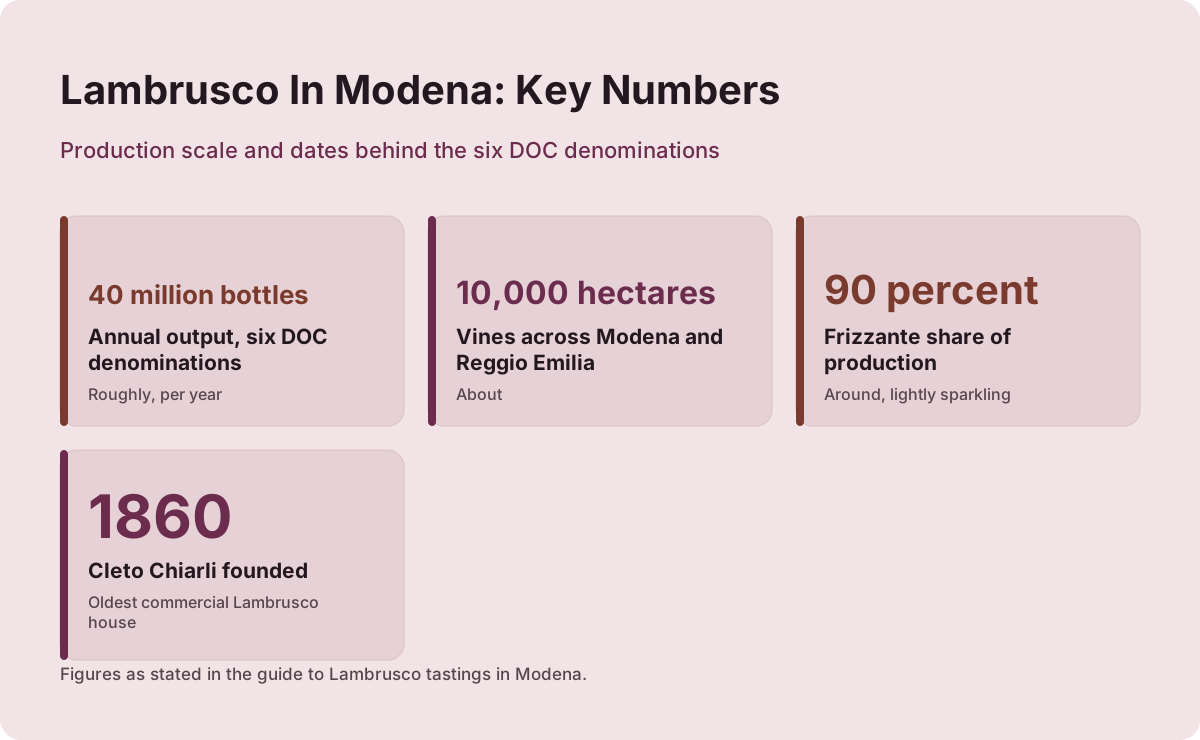
Four of Italy's six Lambrusco DOC denominations sit in Modena province: Sorbara, Grasparossa di Castelvetro, Salamino di Santa Croce and Modena. Around 40 million bottles a year come from roughly 10,000 hectares, and several working cellars, from Castelvetro to Nonantola, take booked visitors for tours and side-by-side tastings.
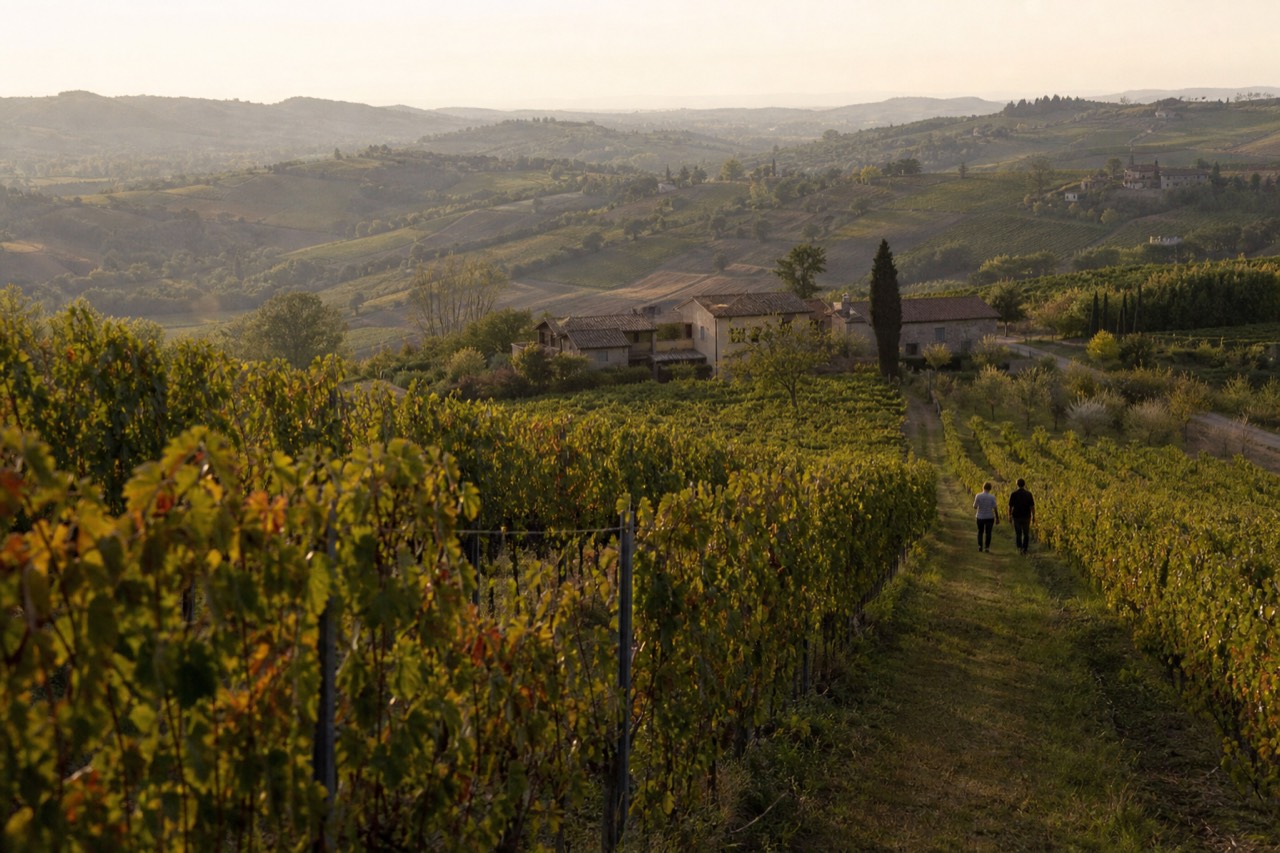
Lambrusco is the wine Modena drinks with its own food, and it has been made here long enough that the local consensus is simple: it belongs on the table, not in a discussion. Roughly 40 million bottles a year leave the six DOC denominations, and about 10,000 hectares of vines across Modena and Reggio Emilia provinces feed them (see Via Emilia). Yet the version most visitors know, the sweetened fizz sold abroad in decades past, is not what a cellar in Castelvetro pours. That gap between the export memory and the local reality is the whole reason to taste it at the source.
This guide covers the denominations, the cellars that welcome visitors, the differences between the styles, and the practical mechanics of getting out to the hills without a car. The wine is genuinely local in a way few products are: Lambrusco grapes are even among the permitted varieties for Aceto Balsamico Tradizionale di Modena DOP, the twelve-year-and-over vinegar made only in this province. Nothing on this page requires prior wine knowledge. The pourers do the explaining. This is one of the producer guides on Food Tours in Modena, and it is written to be read before you book anything.
Why Does Lambrusco Taste Different At The Source?
The Lambrusco sold abroad for decades was a blended, often sweetened product built for distant markets, while the bottles poured in Modena's own cellars are dry-to-off-dry DOC wines made from single designated zones, and every one of the six denominations makes its wine across the full style range from secco to dolce, with the dry secco style being what locals pour alongside food. The difference is not marketing. It is a different product with different rules.
The export story is well documented and widely misunderstood. In the second half of the twentieth century, large-volume blends shipped under the Lambrusco name to North America and elsewhere, frequently sweetened and carbonated for those palates. That industrial version defined the wine for a generation of foreign drinkers. The DOC system, which governs what may legally carry a denomination name, protects something else entirely: wines from defined territories, made from specified grapes, under rules enforced by the Consorzio Tutela Lambrusco.
A useful correction to a common claim: it is wrong to say flatly that "Lambrusco is dry, not sweet." All six denominations permit secco, semisecco, amabile and dolce versions. The honest framing is that the wine is made across the full range, and the dry secco style is the one that gets poured alongside Modena food. Frizzante, lightly sparkling, accounts for around 90 percent of production, so expect gentle fizz rather than champagne-pressure bubbles (see Lambrusco vs Prosecco).
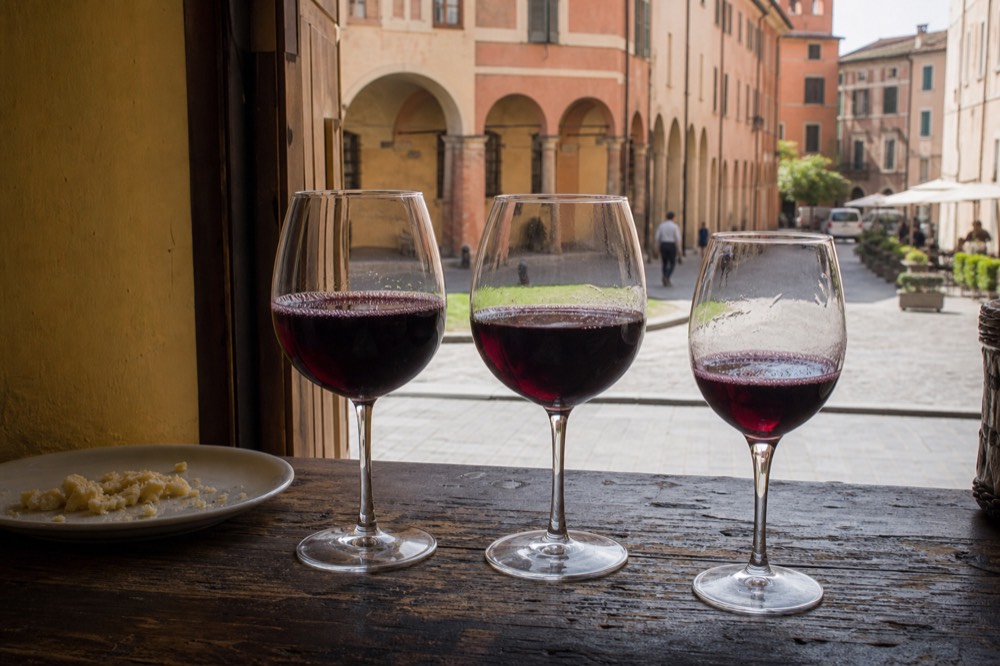
Tasting at a cellar makes these distinctions concrete in a way no shop shelf can. When a guide pours a pale Sorbara next to a deep Grasparossa and a ruby Salamino, the differences in colour, acidity and tannin are visible before they are describable. That side-by-side structure is the core of a good cellar visit, and it is the reason we recommend going to the source rather than sampling at a city counter.
What Are The Six Lambrusco DOC Denominations?
The Consorzio Tutela Lambrusco covers six DOC denominations: Lambrusco di Sorbara, Lambrusco Grasparossa di Castelvetro, Lambrusco Salamino di Santa Croce, Modena, Reggiano and Colli di Scandiano e di Canossa. Four of the six, Sorbara, Grasparossa di Castelvetro, Salamino di Santa Croce and Modena, sit inside Modena province; the other two belong to Reggio Emilia. Each has its own character and its own home cellars.
The consortium, recognised on 1 January 2021 from a merger of three earlier protection bodies, is the reference point for all of this. Its denomination pages describe each zone's profile, and the distinctions matter when you are choosing where to go tasting, because the cellar you visit determines the styles in your glass.
| Denomination | Province | Character |
|---|---|---|
| Lambrusco di Sorbara | Modena | Pale, violet and red fruit, high acid, the most delicate of the group |
| Lambrusco Grasparossa di Castelvetro | Modena | High plain and hills, most pronounced body and tannin |
| Lambrusco Salamino di Santa Croce | Modena | Deep ruby, raspberry and cherry, medium-bodied, drunk through a whole meal |
| Modena | Modena | A central band of the province; whites, reds, rosatos and novelli alongside Lambrusco |
| Reggiano | Reggio Emilia | The Reggio side of the Lambrusco country |
| Colli di Scandiano e di Canossa | Reggio Emilia | The Scandiano hills denomination |
For a tasting day out of Modena, the two zones that matter most are Sorbara, north of the city towards Bomporto, and the Grasparossa hills around Castelvetro, south. Both are reachable, both have estates that take visitors, and between them they show the two poles of the wine: the pale, high-acid style and the darker, structured one.
If you want a first visit that resolves the differences in one afternoon, these three cellars are the strongest starting points on the roster, covering a sommelier-led cellar walk, a vineyard estate and a historic house with its own museum.
The consortium's own material is the place to verify any denomination question before you go, and its site is the primary source we used for the table above. Nothing in a cellar visit requires you to have memorised it, but knowing whether you are standing in Sorbara or Grasparossa country changes what the pourer tells you.
Which Cellars Near Modena Take Visitors?
Several working cellars around Modena run booked visits: a sommelier-led cellar and wine-museum tour at Nonantola, a family vineyard estate and cellar at Castelvetro's Fattoria Moretto, tastings at Cleto Chiarli, the oldest commercial Lambrusco house founded in 1860, and the hillside Opera 02 estate, which pours Grasparossa and its own traditional balsamic in the same room. Formats range from a short tasting to a full vineyard walk.
The choice comes down to what kind of visit you want. A cellar-and-museum walk with a sommelier explains the wine from the ground up, which suits first-timers. A vineyard estate visit adds the field itself, the soil and the exposure, which matters in the Grasparossa hills where the denomination's body comes from. A historic commercial house shows the scale end of the tradition. And an estate that makes both wine and vinegar lets you taste the two flagship Modena liquids side by side.
| Cellar | Location | Visit type | Best for |
|---|---|---|---|
| Sommelier-led cellar tour | Nonantola | Cellar walk plus wine museum, three styles poured side by side | Understanding the differences in one sitting |
| Fattoria Moretto | Castelvetro | Vineyard and cellar tour before the tasting | Seeing where the wine starts |
| Cleto Chiarli | Castelvetro | Cellar tasting at a house founded in 1860 | The historic commercial tradition |
| Opera 02, Ca Montanari | Castelvetro hills | Combined Lambrusco and acetaia tasting | Pairing the wine with traditional balsamic |
The sommelier-led format deserves a specific note. It ends on three styles poured next to each other, which is the single fastest way to internalise what the denominations mean. One review on the live listing calls it exactly that kind of eye-opener, and the format is built for people who arrive knowing nothing. Check the current price before you plan the day around it.
Booking lead times are modest for most of these, but the smaller family estates run on fewer daily slots, so a weekend visit in the September sagra period is worth locking in earlier. Formats change seasonally too, and harvest-time visits sometimes fold in a look at the incoming grapes.
How Do The Four Modena Styles Actually Differ?
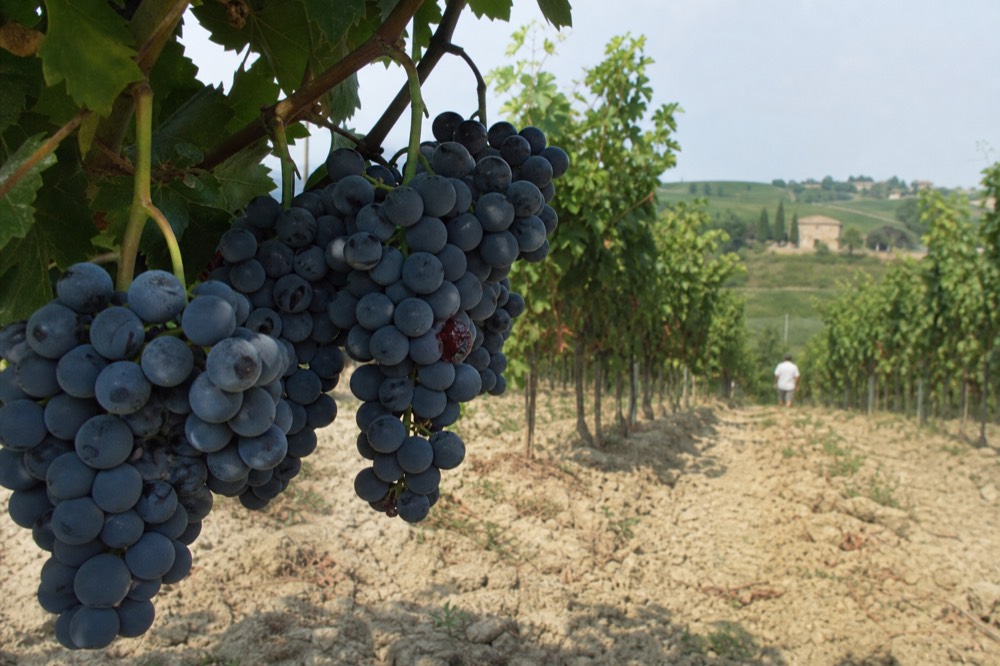
Sorbara is the pale, high-acid, violet-scented one; Grasparossa di Castelvetro brings the most body and tannin, grown on the high plain and hills; Salamino di Santa Croce is deep ruby with raspberry and cherry, medium-bodied and drunk through an entire meal; and Modena DOC is the broad central-band denomination that also covers whites, rosatos and novelli. Colour, acid and tannin are the three axes that separate them in the glass.
The practical way to learn these is comparative tasting, and the infographic below shows how the four Modena-province denominations divide up by zone and profile.
Sorbara's paleness surprises people. It can look like a dark rosé, and its acidity makes it the natural partner for the fattier end of Modena cooking. Grasparossa, grown where the plain starts climbing, is the opposite pole: darker, more tannic, a wine that wants food with weight. Salamino sits between them and earns its place as the all-meal wine. Modena DOC, the umbrella denomination over the central band, is the one visitors encounter least deliberately and most often, because it covers a wide range of everyday frizzanti and spumanti.
| Style axis | Sorbara | Grasparossa | Salamino | Modena DOC |
|---|---|---|---|---|
| Colour | Pale ruby | Deep purple-ruby | Deep ruby | Varies widely |
| Acidity | Highest | Moderate | Moderate | Varies |
| Tannin | Light | Most pronounced | Medium | Varies |
| Fruit | Violet, red fruit | Dark fruit | Raspberry, cherry | Depends on wine |
| Sweetness range | Secco to dolce | Secco to dolce | Secco to dolce | Secco to dolce |
That last row is worth a second look. Every denomination, without exception, permits all four sweetness levels. A "sweet Lambrusco" and a "dry Lambrusco" can both be fully legitimate DOC wine from the same zone. The label tells you which, and a cellar guide will show you how to read it, which is a skill that transfers directly to any wine shop in the region.
Where Does Lambrusco Fit At The Modena Table?
Lambrusco is the default pour with Modena's own dishes: the dry secco style with tortellini in brodo, salumi and gnocco fritto, the structured Grasparossa with heavier meats and aged cheese, and the off-dry styles with the spicier end of the local repertoire. The wine's acidity and gentle fizz are functional, they cut through the region's rich cooking, which is why the pairing is a tradition rather than a fashion.
This is where a tasting visit earns its keep twice over. You learn the styles at the counter, then you apply them at dinner, and Modena's restaurants pour local Lambrusco by the carafe as a matter of course. The pairing logic is not complicated. Fat and fizz are old friends; acidity resets the palate between rich bites. A region that fries its bread and stuffs its pasta with pork reached for a dry, lightly sparkling, high-acid red for reasons that survive any analysis.
| Local dish | Lambrusco style that works | Why |
|---|---|---|
| Tortellini in brodo | Sorbara secco | Acidity and delicacy against the rich broth |
| Salumi and gnocco fritto | Sorbara or Salamino secco | Fizz cuts the fried and cured fat |
| Bollito and heavier meats | Grasparossa | Body and tannin stand up to the protein |
| Aged cheese | Grasparossa or Salamino | Dark fruit against savoury depth |
| Spicy or peppery dishes | An off-dry semisecco | Gentle sweetness balances the heat |
If you are building a whole food day around the wine, the walking tours through the old centre and Mercato Albinelli cover the savoury end of that table, and a Modena market and city food walk pairs naturally with an afternoon cellar visit. The market's own hours, stalls Monday to Saturday 07:00-15:00 with restaurants opening through the evening, make a morning-market, afternoon-cellar rhythm easy to plan.
For visitors who want the pairing taught rather than inferred, some cellars and estates structure their tastings around local products, and the combined wine-and-vinegar format does this best. Opera 02 in the Castelvetro hills pours its Grasparossa alongside its own Aceto Balsamico Tradizionale di Modena DOP in the same sitting, which is as close to a summary of the province on a table as it gets. See the next available dates if that combined format appeals, because those slots go first.
A hands-on pasta class in a Modena home kitchen is another natural companion, since you then eat the region's shapes with the region's wine at the same table. The classes and the cellars book independently, so most visitors run them on separate days.
When Is The Best Time Of Year For A Lambrusco Tasting?
September is the peak: harvest is underway, the Sagra dell'Uva e del Lambrusco Grasparossa runs in Castelvetro from 19 to 27 September 2026, and the surrounding weeks carry the Castelvetro wine festival, the Acetaie Aperte open days on Sunday 27 September and Modena's own producer event on 28 and 29 September. Spring and early summer are quieter and perfectly good for cellar visits.
The late-September cluster is genuinely special. The grapes come in, the hills celebrate, and the whole producer economy of the province opens its doors in the same fortnight. The sagra in Castelvetro is the oldest and most local of the events, a wine festival rather than a tourist product, and it sits right in Grasparossa country where several visiting cellars are based. If your dates are flexible, that window is the one to aim for.
| Period | What happens | Considerations |
|---|---|---|
| Late September | Harvest; Castelvetro sagra 19-27 September 2026; Acetaie Aperte Sunday 27 September; Modena producer event 28-29 September | Book early, the window is popular |
| Spring | Vineyard growth season, calm cellars | Quietest visiting experience |
| 21 June | World Lambrusco Day, an annual international celebration | Events vary by year |
| August | Italian holidays | Check individual cellar schedules |
Acetaie Aperte, it should be said clearly, is a vinegar event rather than a wine one: over 30 acetaie open their doors on Sunday 27 September 2026 for visits and tastings of both Aceto Balsamico di Modena IGP and Aceto Balsamico Tradizionale di Modena DOP. It lands in the same window as the wine sagra, which is why the fortnight works so well for a combined trip. Several participating producers take bookings only, so the open days need planning like any other visit.
Outside that peak, cellar visits run year-round by reservation, and a winter tasting in a quiet barrel room has its own appeal. The vineyard walks are less photogenic without leaves, but the pourers have more time. What matters is checking the individual cellar's calendar, because small family estates close for short periods around harvest logistics and holidays.
How Do You Get To The Lambrusco Cellars Without A Car?
SETA bus line 740 runs from Modena Autostazione to Castelvetro in 41 to 47 minutes, also serving Levizzano, which covers the Grasparossa hill cellars; line 410 reaches Bomporto in 20 to 22 minutes on the Sorbara side; and since the cellars sit outside the city, transfer arrangements vary by tour, so the live booking page is the place to check whether pickup is included, and a car is optional for some formats.
Public transport to the wine country exists, but it is a bus network, not a rail one, and the timetables matter. The SETA Modena line list is the authoritative source, with schedules in force from 31 August 2026. Line 740 is the one that matters for Castelvetro and the Grasparossa hills; line 410 covers Bomporto, the comune that contains Sorbara, in 20 to 22 minutes.
| Destination | Line | Journey time from Modena Autostazione | What it serves |
|---|---|---|---|
| Castelvetro | 740 | 41 to 47 minutes | Grasparossa hill cellars, also serves Levizzano |
| Bomporto | 410 | 20 to 22 minutes | The Sorbara zone |
| Maranello | 800 | 27 to 31 minutes | The Ferrari side, for a combined day |
The practical caveat: none of these stops has a route-checked walking time to a specific cellar, so confirm the last stretch with the estate when you book. Many visitors skip the problem entirely by choosing a tour format with transfer built in. The sommelier-led Nonantola visit and the full-day combinations both handle the logistics, which is worth paying attention to if you would rather not read a bus timetable on holiday.
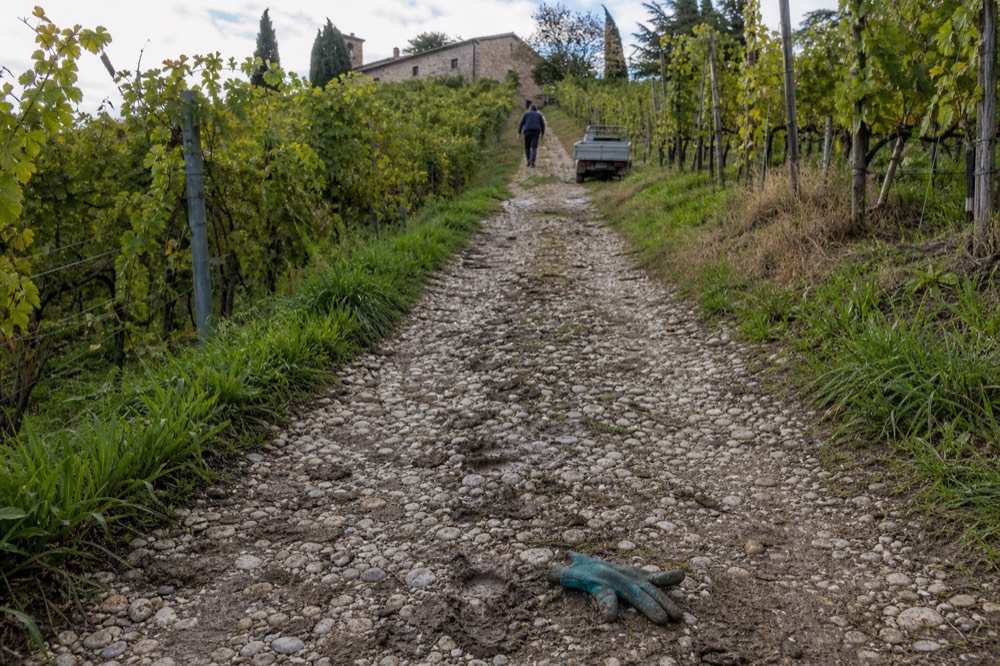
Fattoria Moretto, in the Grasparossa hills at Castelvetro, is the format that shows the full arc, vineyard first, then cellar, then the wines poured. It is a small family estate, so the visit feels personal rather than scripted. Check the current price before committing to the bus-and-visit combination, since the transfer question changes the day's shape.
For a wider loop, the Motor Valley and food day trips from Modena pair a dairy, a cellar and the Ferrari museums with transport included, and line 800's 27-to-31-minute run to Maranello makes a self-guided version possible too. And if you are basing yourself in the regional capital, the Bologna to Modena day trip notes the short train ride that connects the two.
What Should You Expect From A First Lambrusco Tasting?
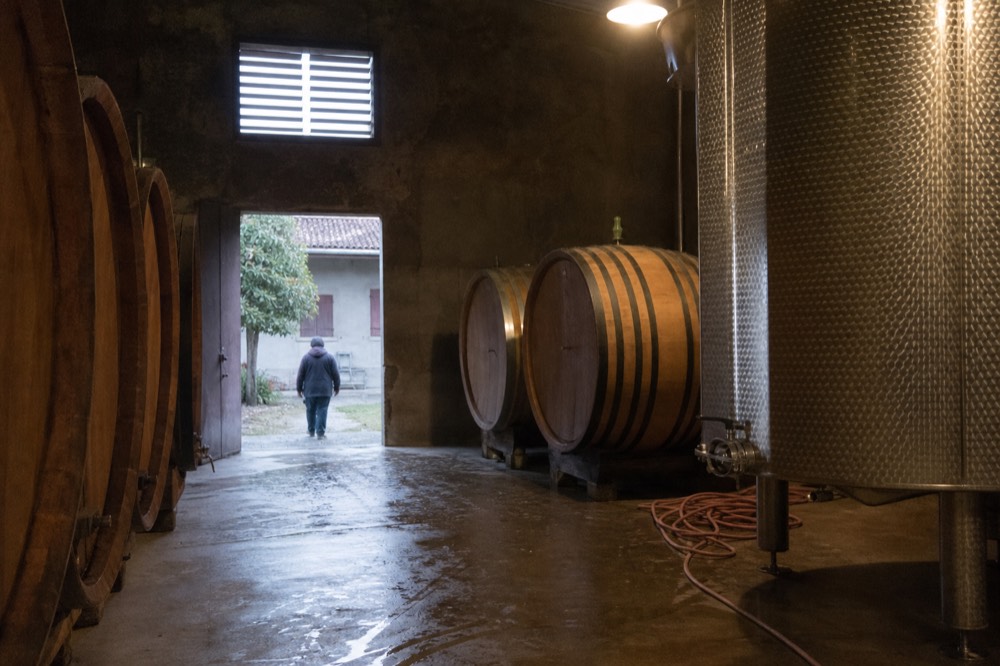
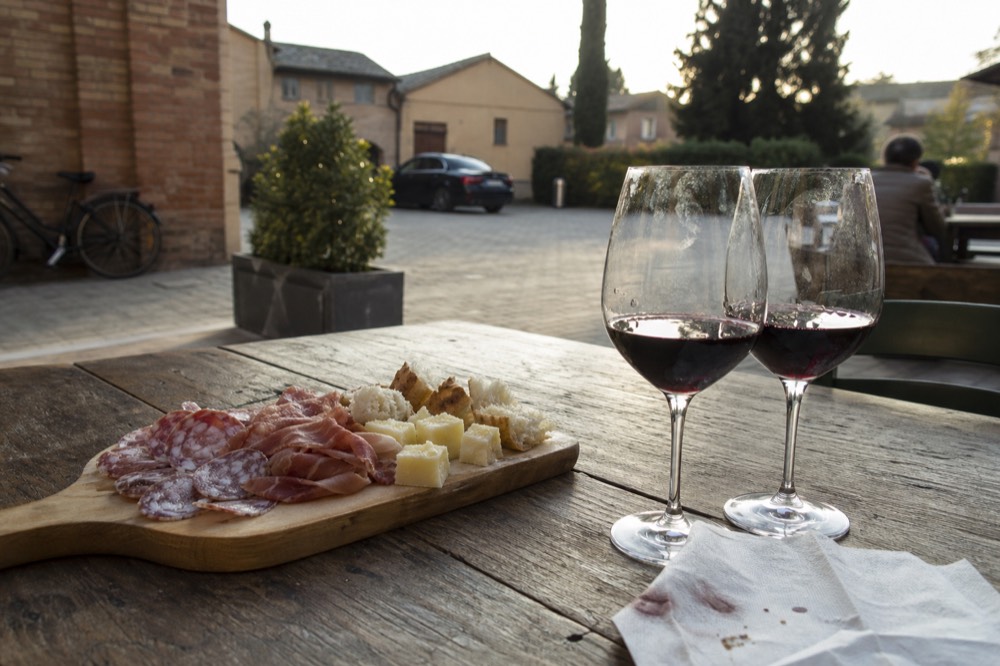
Expect a short guided walk through a working cellar, sometimes the vineyard too, followed by a seated tasting of three to four wines with local products such as salumi, Parmigiano Reggiano and breads, lasting roughly one to two hours in total, with the guide explaining the denomination, the style range and how to read the label. Formats are small-group and conversational rather than formal.
Nobody expects prior knowledge, and the guides who run these visits are used to correcting the export-bottle memory on the spot. The tasting usually moves from the lightest wine to the most structured, which mirrors the Sorbara-to-Grasparossa axis described above, and the local products served alongside are not decoration: they demonstrate the pairing logic in real time. If you have booked a vineyard format, add time for the walk and wear shoes that tolerate dirt paths.
A few practical notes make the first visit smoother. Book rather than turn up, because the small estates run on fixed daily slots. Say when booking if anyone in your group has allergies, since the tasting plates carry cheese and cured meats. And take the label-reading explanation seriously, because the sweetness designation on a Lambrusco label, secco, semisecco, amabile or dolce, is the single most useful thing you will learn all day. Asking the guide which denomination you are tasting, and which grapes are in the blend, anchors everything else the visit covers.
Visitors who want the deepest version of the format can combine a cellar visit with a cooking class, tasting the wine and then cooking the food it accompanies (see Cooking Class Costs). The cooking class guide covers the home-kitchen formats, and the longest of them starts with a market shop, which slots neatly into the morning-market rhythm described earlier.
How Much Should You Budget And How Should You Book?
Cellar visits in the region are modest, mid-priced experiences rather than premium ones: the formats on this site's roster render their live prices on their listings, so check each one directly, while the general planning range for a booked cellar tasting with products in Emilia is a few tens of euros per person, and full-day combinations with transport cost more but remove the logistics. Book small estates a week or more ahead, longer around the late-September events.
Lambrusco tastings in Modena run from roughly $30 to $45 per person, with four bookable experiences across that range. What we can say is structural: short tastings sit at the accessible end of wine experiences, vineyard-and-cellar formats cost a little more, and the full-day combinations with pickup and lunch are the premium tier. The food tour prices guide breaks down the general cost landscape across formats.
| Format | Rough position | What drives the price |
|---|---|---|
| Short cellar tasting | Entry level | Tasting of three to four wines with products |
| Vineyard plus cellar tour | Mid | The walk and the smaller group |
| Combined wine and balsamic tasting | Mid | Two products, one estate |
| Full-day combination with transport | Top of the range | Pickup, multiple producers, lunch |
Booking mechanics are simple. Every format on the roster has a live listing with current dates and prices, and the free-cancellation terms on most of them mean an early booking carries little risk. The rule of thumb: for a weekday visit outside September, a few days ahead is usually enough; for weekends, the sagra fortnight or a small family estate, book as soon as your dates are firm. See the next available dates on the listing rather than assuming a slot exists.
One last planning note. The Lambrusco country overlaps almost entirely with the balsamic and Parmigiano country, and the producers are often minutes apart. A day that pairs a morning dairy visit with an afternoon cellar tasting is the classic Modena itinerary, and the Parmigiano Reggiano tours guide covers the dairy side of it (see Dairy Factory Tours). The full-day combinations bundle all three with transport, which is the simplest version of the idea.
Where Should You Start: The Three Cellar Visits Compared
For a first Lambrusco tasting out of Modena, start with the sommelier-led cellar tour at Nonantola if you want the differences explained, Fattoria Moretto if you want to see the vineyard, or Cleto Chiarli if you want the historic house, and the choice among the three comes down to format preference rather than quality, because all three pour representative wines of their zones with a guide who knows them.
The comparison resolves like this. If the goal is understanding, take the sommelier format: three styles side by side, a museum, and a guide whose job is explanation. If the goal is place, take the vineyard estate: the Grasparossa hills are where that style's body comes from, and standing in the rows makes the point. If the goal is history, the 1860 house shows the commercial tradition that carried Lambrusco through the era when it needed carrying.
Whichever you choose, the visit slots into the same planning frame: book ahead, confirm the last-mile transport, and leave the afternoon loose, because tastings in this region have a way of extending. The wine is the reason to go, but the welcome is why people stay longer than the slot says.
If you are still choosing, these are the three formats this site recommends for a first Lambrusco tasting around Modena, with live prices and dates on each listing (see Three Types of Parmesan).
The six most common questions about Lambrusco tasting in Modena, answered from the verified sources behind this guide: whether the wine is sweet, how many denominations exist, which cellars you can reach without a car, when to go, what to eat with it, and how long a visit lasts. Each answer below is the short version of a section above, so you can jump straight from a question to the detail that matters.
Common Questions About Lambrusco Tasting In Modena
Is Lambrusco A Sweet Wine?
No, and yes. Every one of the six Lambrusco DOC denominations permits secco, semisecco, amabile and dolce versions, so the range runs from fully dry to sweet. What locals pour with food is the dry secco style. The sweetened export blends of past decades are a different product from the DOC wines poured in Modena's cellars.
How Many Lambrusco Denominations Are There?
Six DOC denominations fall under the Consorzio Tutela Lambrusco: Lambrusco di Sorbara, Lambrusco Grasparossa di Castelvetro, Lambrusco Salamino di Santa Croce, Modena, Reggiano and Colli di Scandiano e di Canossa. Four of the six are in Modena province; Reggiano and Colli di Scandiano e di Canossa are in Reggio Emilia.
Can You Visit Lambrusco Cellars Without A Car?
Yes. SETA bus line 740 runs from Modena Autostazione to Castelvetro in 41 to 47 minutes, covering the Grasparossa hill estates, and line 410 reaches Bomporto in 20 to 22 minutes on the Sorbara side. Several tour formats also include transfer or arrange pickup, which removes the timetable question entirely.
When Is The Best Month For A Lambrusco Tasting In Modena?
September. Harvest is underway, the Sagra dell'Uva e del Lambrusco Grasparossa runs in Castelvetro from 19 to 27 September 2026, and the surrounding days carry Acetaie Aperte on Sunday 27 September and Modena's producer event on 28 and 29 September. Book early for that window; spring is the quieter alternative.
What Food Is Lambrusco Paired With?
The dry secco styles go with Modena's rich cooking: tortellini in brodo, salumi and gnocco fritto, where the fizz and acidity cut through the fat. The structured Grasparossa pairs with heavier meats and aged cheese, and off-dry styles balance spicier dishes.
How Long Does A Lambrusco Cellar Visit Last?
Most booked formats run roughly one to two hours: a guided walk through the cellar, sometimes the vineyard as well, followed by a seated tasting of three to four wines with local products. Full-day combinations that add a dairy or an acetaia run longer and include lunch.