Aged Balsamic Vinegar In Modena: The Grade Ladder Explained
Traditional Balsamic Vinegar of Modena DOP comes in exactly two grades, a minimum of 12 years and a minimum of 25, and the rulebook bans every other age claim from the label. Here is what each grade tastes like and what a cellar visit actually pours.
Short answer
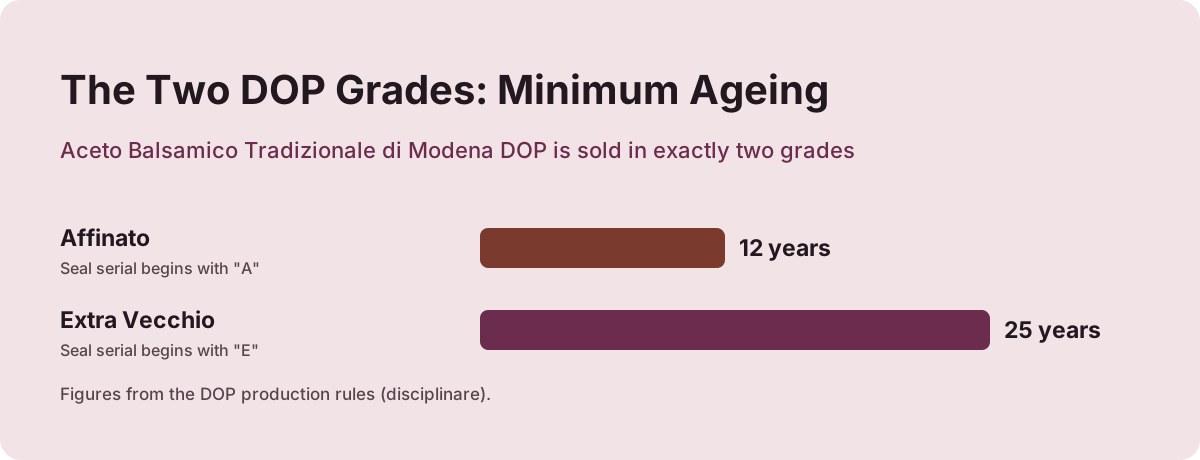
Aceto Balsamico Tradizionale di Modena DOP has two grades only: Affinato, aged at least 12 years, and Extra Vecchio, aged at least 25 years. The disciplinare bans words like riserva, selezionato and any vintage year on the label. Cellar tastings in Modena typically pour both grades side by side.
Modena's most protected product is not a wine and not, strictly, a vinegar in the way most kitchens use the word. Aceto Balsamico Tradizionale di Modena DOP is cooked grape must aged in a descending battery of wooden barrels for a minimum of 12 years, and it is sold in exactly two grades. That is the whole ladder. There is no 18-year tier, no riserva, no vintage statement, and no third grade hiding behind a premium label, because the production rules forbid all of it.
This matters to a visitor more than it might first appear. Walk into any acetaia around Modena, or stand at a tasting counter in the city, and the person pouring will hand you a spoon of the 12-year and a spoon of the 25-year and ask you to compare (see Is Modena Worth It). Knowing what the rules actually say, and which words on a bottle are legal and which are marketing, is the difference between buying the real thing and buying something that merely sounds older than it is. The distinction between this product and the far larger Aceto Balsamico di Modena IGP category is covered in full in our DOP versus IGP comparison; this page stays on the grades themselves, and it is part of Food Tours in Modena, our running coverage of everything edible in this province.
What Are The Two Grades Of Aged Balsamic Vinegar In Modena?
Aceto Balsamico Tradizionale di Modena DOP is released in exactly two grades: Affinato, aged at least 12 years, and Extra Vecchio, aged at least 25 years. The disciplinare sets both minimums, permits no other grade names, and bans every embellishing word, so any bottle claiming a different tier or a vintage year is not the DOP product.
The 12-year minimum is not a suggestion. The production rules state that ageing must in every case be not less than 12 years, counted through the successive barrel battery. The consortium heads the younger grade "Affinato almeno 12 Anni", refined at least 12 years, and the older one carries only the words "Extra Vecchio", with a minimum of 25 years behind it. Nothing else exists between them, and nothing exists above them as a formal grade.
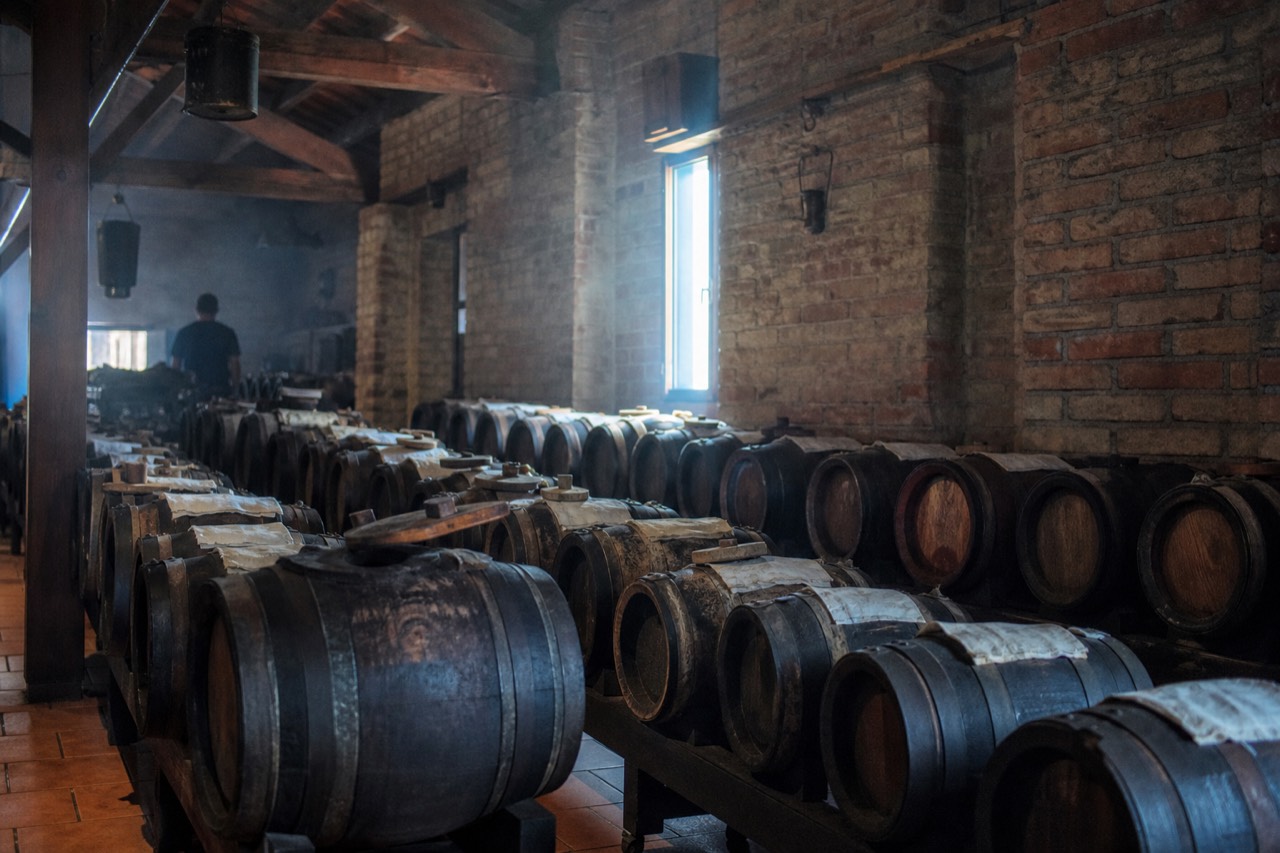
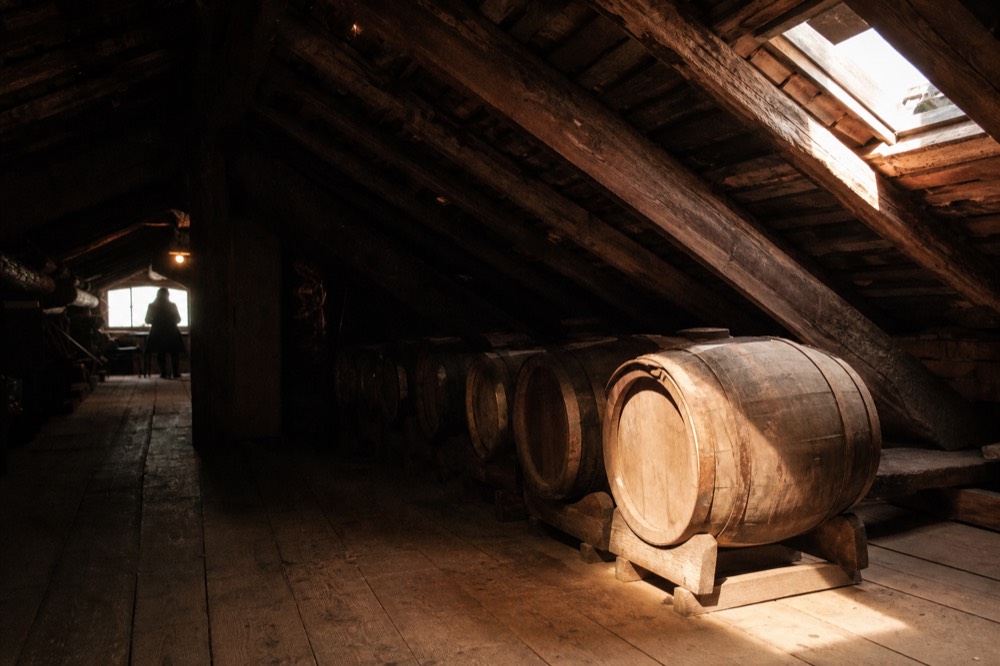
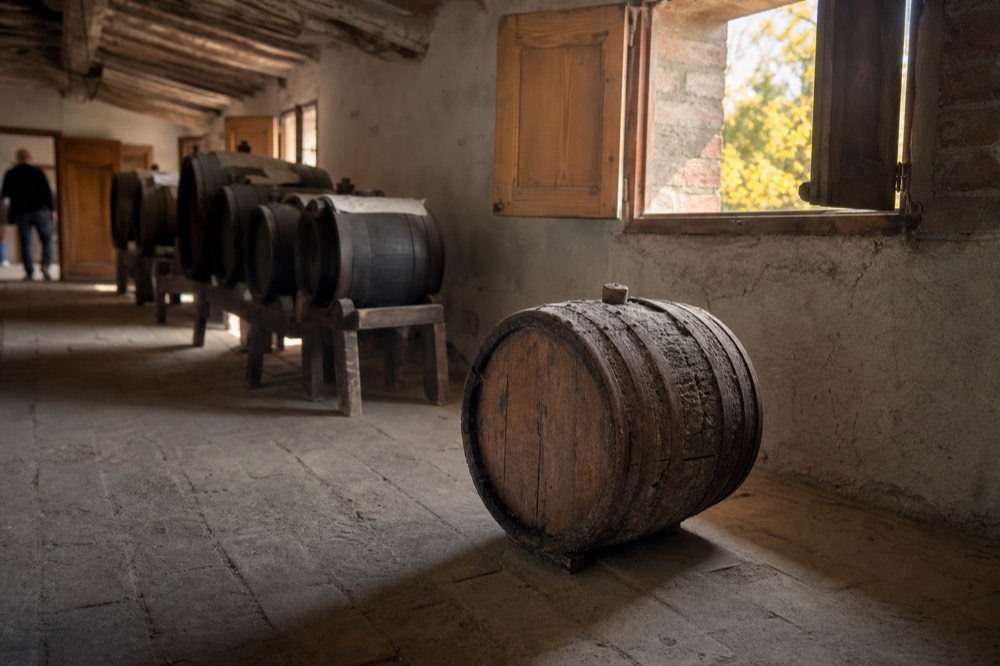
Both grades come out of the same process: cooked must, a bacterial culture called the madre, and years of evaporation and transfer through small barrels of different woods, each barrel numbered and marked. The disciplinare itself is public, and the consortium's own materials walk through it clause by clause. What changes between the grades is time, and time in an attic loft in the Modena climate means concentration: the longer the must sits, the more water leaves, the denser and more complex what remains becomes.
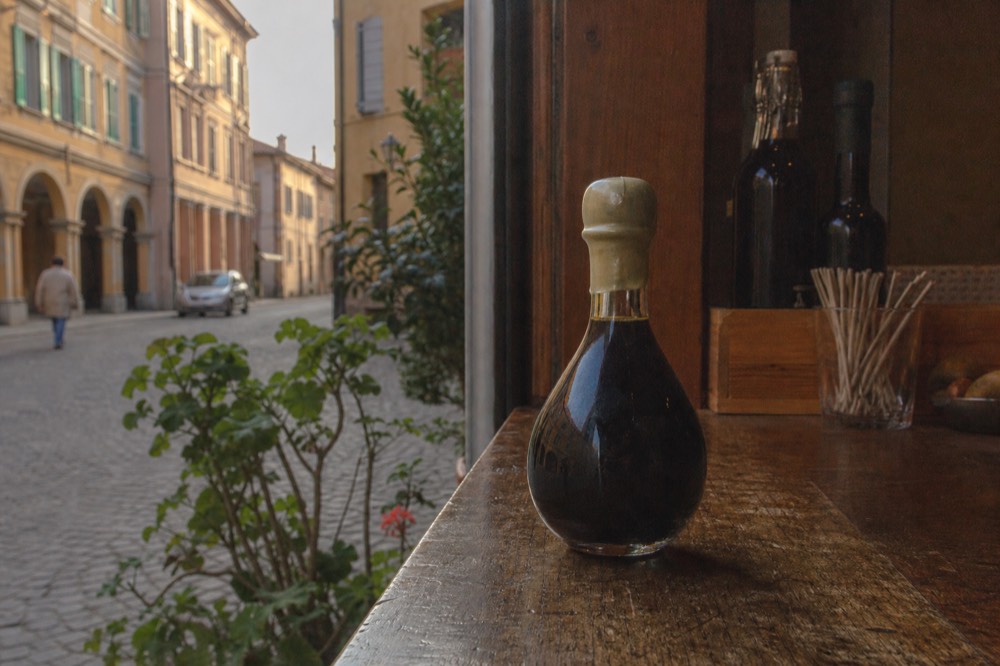
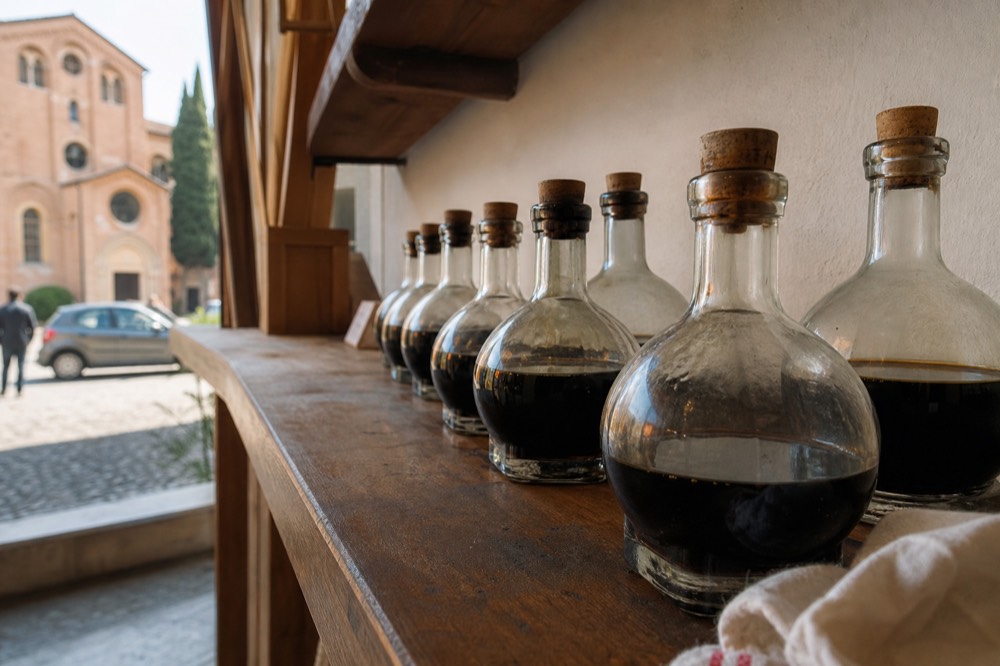
A point that surprises many first-time buyers: the bottle is the same for both grades. The mandatory Giorgetto Giugiaro design, a spherical body on a rectangular base in solid white crystalline glass, was introduced in 1987 and applies to every DOP bottle regardless of age. The famous retail size is the 100ml Giugiaro bottle, though the rules permit 10cl, 20cl and 40cl in that same shape. The grade is told apart by the numbered seal, not by a different vessel.
| Grade | Minimum ageing | Seal serial begins with | What the label may say |
|---|---|---|---|
| Affinato | 12 years | "A" | "Affinato" and the DOP name |
| Extra Vecchio | 25 years | "E" | "Extra Vecchio" and the DOP name |
| Anything else | Not a DOP grade | No valid seal | Banned wording, imitation or IGP |
The seal deserves a word because it is the anti-counterfeit device. Every bottle carries a non-reusable numbered seal that cannot be broken without opening the bottle, with serial numbers beginning "A" for the 12-year and "E" for Extra Vecchio, plus a second algorithm-linked number as a check. If you are shopping rather than tasting, the seal is the fastest honest test, a subject we expand in the guide to buying real balsamic vinegar in Modena.
What Does The 12-Year Affinato Actually Taste Like?
Affinato, the 12-year grade, pours dark and glossy with a balanced acidity: noticeable sweetness, a clean sour edge, and a fluid body that still moves on the spoon. It is the grade most often used on food, from Parmigiano Reggiano to strawberries, and it is the one almost every cellar tasting starts with.
Tasting notes are inevitably personal, but the consistent pattern reported across acetaie is this: the Affinato has the full balsamic identity, sweet and sour in balance, with woody and cooked-fruit notes from the barrel battery, and a texture that coats without being syrup-heavy. Acidity stays present. The disciplinare requires total acidity of at least 4.5g per 100g and density at 20°C of at least 1.240 at consumption, so even the younger grade is legally dense and tart, never a flat sweet sauce.
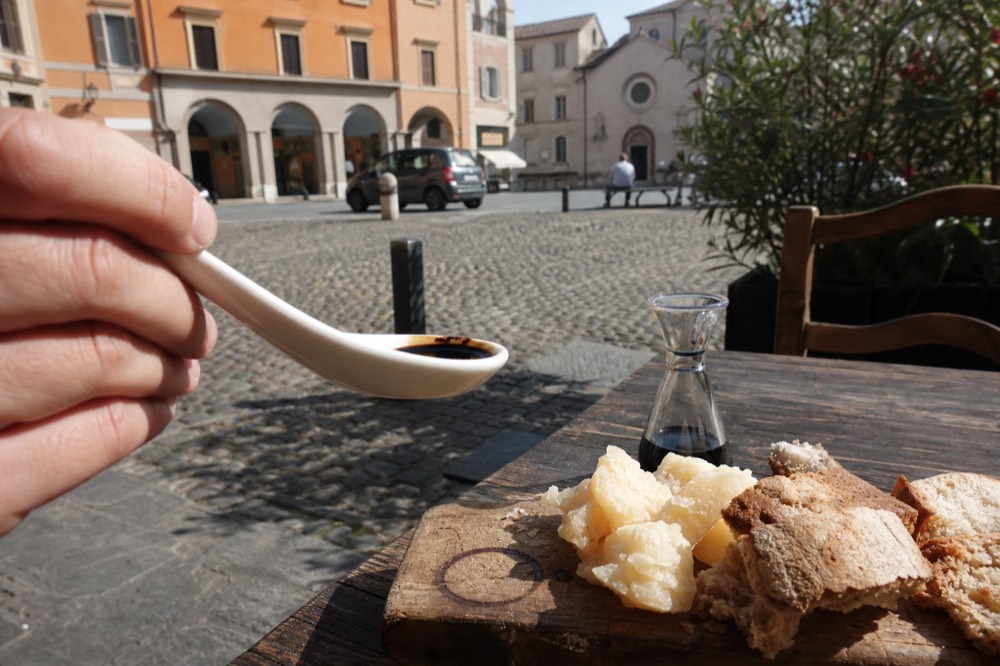
At a tasting it is usually poured first for a structural reason: it sets the baseline. Once you have the 12-year's balance in mind, the 25-year lands differently, thicker, rounder, with the acidity folded in rather than standing beside the sweetness. Guides at working acetaie walk visitors through exactly this comparison, and several of the best cellar visits in the province build the whole tasting around it. You can compare the current options and check the live price for each before choosing one.
In the kitchen, the Affinato is the workhorse. A few drops on aged cheese, on grilled meat, on a plain risotto, and it does the work a whole glaze would otherwise do. Modenese families who keep their own barrel battery, and there are still households that do, reach for this grade daily and keep the older one for occasions. That domestic habit is the origin of the whole tasting culture visitors now encounter.
What Does Extra Vecchio Taste Like At 25 Years And Up?
Extra Vecchio, the 25-year-minimum grade, is denser, darker and rounder than the Affinato: the sweetness and acidity fuse, the body turns near-syrupy, and flavours shift toward dried fruit, wood and a long finish. It is the spoon most cellar tastings end on, and the grade Modenese tradition treats as the meditation product.
Thirteen more years of evaporation in a Modena attic does something chemistry describes plainly and tasting confirms: concentration. The liquid loses water, gains density, and the volatile acidity that reads as sharp in a young vinegar integrates into the whole. The result is a product that behaves almost like a condiment-essence, a drop or two on a strawberry or a sliver of Parmigiano Reggiano is the classic service, and the tradition is to take it plain at the end of a meal as a digestivo (see Parmigiano vs Parmesan).
| Characteristic | Affinato (12 years) | Extra Vecchio (25 years and up) |
|---|---|---|
| Body on the spoon | Coating, still fluid | Dense, slow-moving |
| Sweetness and acidity | Side by side, balanced | Fused, acidity folded in |
| Typical use | Daily condiment, on food | Plain spoon, special occasions |
| Seal serial prefix | A | E |
| Price relationship | The accessible grade | The premium grade |
One caution that belongs here rather than later: "Extra Vecchio" is the only extra wording the disciplinare allows on a DOP label. It does not mean "extra old beyond 25" in a graded sense; it is simply the name of the second tier, with 25 years as its floor. A producer may age a batteria far longer, but the bottle cannot say so, which leads directly to the next section.
If a side-by-side tasting of both grades sounds like the point of the trip, the centenary acetaia visit in Castelvetro is built around exactly that, old reserves poured next to young ones. See the next available dates on the live listing before fixing your itinerary.
Which Label Words Are Banned Outright On A DOP Bottle?
The disciplinare bans the words extra, fine, scelto, selezionato, riserva, superiore and classico on a DOP label, along with any vintage year. Only "Affinato" and "Extra Vecchio" may describe the grade, so any bottle carrying riserva, selezionato or a date is either the IGP product or an imitation.
This list comes straight from Article 8 of the production rules, and it exists because the category was being diluted by marketing language. A bottle that says "riserva" and looks traditional is very often Aceto Balsamico di Modena IGP, a different product with a 60-day minimum wood maturation, or something with no protected status at all. Neither is dishonest in itself, but neither is the 12-or-25-year DOP, and the price should reflect that.
| Label wording | Legal status on a DOP bottle | What it usually means |
|---|---|---|
| Affinato | Required wording for the 12-year grade | The DOP, younger grade |
| Extra Vecchio | Required wording for the 25-year grade | The DOP, older grade |
| Riserva, Selezionato, Superiore, Classico, Fine, Scelto, Extra (alone) | Banned outright | IGP product or imitation |
| A vintage year | Banned outright | Not the DOP |
| Age claims like 50 Anni, 100 Anni | Banned outright | Marketing, not a grade |
For the IGP, the parallel wording is different and legal within its own rules: over three years in wood earns "Invecchiato" and over five earns "Riserva". So a bottle labelled riserva can be a perfectly honest IGP, which is why reading the full name matters more than reading any single adjective. The three checks for the IGP are the full name "Aceto Balsamico di Modena", the words "Indicazione Geografica Protetta" or "IGP", and the yellow-and-blue EU logo (see Three Types of Parmesan).
Which Grade Are You Handed At A Cellar Tasting?
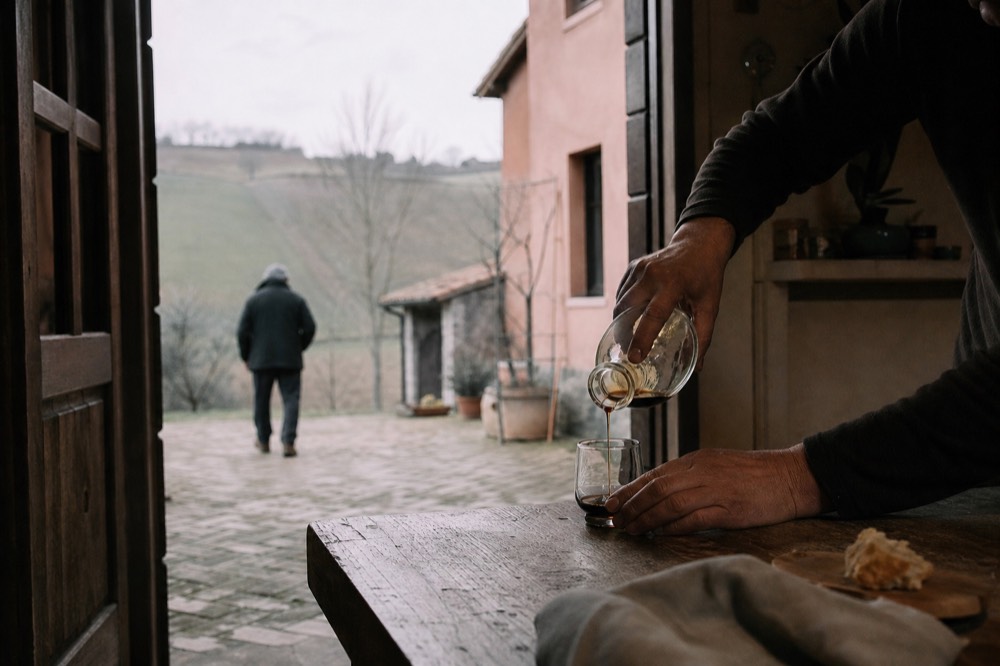
At a booked cellar tasting in Modena you are typically handed both grades, the 12-year Affinato and the 25-year Extra Vecchio, poured side by side in small portions, often alongside local products such as cheese. The consortium's own guidance notes that the tasting on a booked acetaia visit is free, with the purchase decision left to you.
The structure varies by acetaia but the spine is constant: a walk through the barrel loft, an explanation of how the batteria works, then spoons or small glasses of the two grades. Some acetaie add a progression through barrels of different ages from the same battery, which is the most instructive version, because you taste concentration happening rather than just its endpoints. The longer formats add a sit-down pairing with local products, and the most-reviewed experiences in the province pair the vinegar with a full Emilian lunch.
| Tasting format | What is poured | Where it happens |
|---|---|---|
| Short cellar visit and tasting | Both DOP grades, guided comparison | City and provincial acetaie |
| Tasting with food pairing | Both grades plus cheese and local products | Acetaie with tasting rooms |
| Full lunch experience | Both grades through a multi-course Emilian meal | Historic villa and estate acetaie |
| Vineyard-to-loft private visit | Both grades, organic estate walk | Vignola and hill-country acetaie |
The oldest documented cellar in the province runs a five-vinegar tasting that crosses the vineyard before the barrel loft, and the short version of the same family cellar near Nonantola covers the barrel rooms and a guided pairing without the lunch. Whichever format you lean toward, check the current price on the live listing before you commit a day to it.
The centenary acetaia in Castelvetro does something distinctive with the same material: it puts the very old reserves next to the young ones in the same flight, which is the fastest way to understand what the grade ladder actually means on the tongue. That visit is the one we point most visitors at when the question is specifically about age.
Can Traditional Balsamic Really Be 50 Or 100 Years Old?
No, not as a bottle claim. The consortium states it plainly: there is no such thing as 50-, 100- or 200-year-old Traditional Balsamic, only barrels that old. The must in a bottle is the product of its own ageing run, and the disciplinare bans any age number on the label, so "100-year balsamic" is marketing language, not a grade.
The confusion is understandable. A barrel battery is often old, sometimes a century or more, and families rightly boast about it. But the liquid drawn off in any year is the result of that year's position in the battery, and the two legal grades are the only vocabulary for describing it. When an acetaia says its barrels are a century old, that is a claim about the wood and the family, both real; when a shop label says the vinegar is 100 years old, that is a claim the rules do not permit anyone to make.
This is also where the DOP and IGP part ways most visibly for a shopper. The IGP is a large industrial category, cooked and concentrated must with at least 10% wine vinegar added, matured a minimum of 60 days in wood, sold in containers from 0.1L to 5L. It is a genuine Modena product at its own price point. It is simply not the spoon you are handed at a traditional cellar tasting, and no age romance attaches to it beyond the optional Invecchiato and Riserva wording at three and five years.
| Claim seen on a label or menu | Verdict | Why |
|---|---|---|
| "Traditional Balsamic aged 50 years" | Not a legal DOP claim | Only two grades exist; no age numbers permitted |
| "Barrels over a century old" | Can be true | A claim about the barrels, not the bottle |
| "Riserva di Modena" | Not a DOP grade | Riserva is banned wording on the DOP; legal only on the IGP at 5 years |
| "Extravecchio" | The 25-year DOP grade | The one permitted extra wording |
How Do You Read A Bottle And Its Seal Before Buying?
Read three things in order: the full product name, the grade wording, and the numbered seal. The full name must be Aceto Balsamico Tradizionale di Modena, the grade must be Affinato or Extra Vecchio, and the seal must carry a serial beginning A or E with its second check number. All three together are the DOP; miss one and you are holding something else.
The bottle shape itself is a first filter, because the Giugiaro sphere is mandatory and hard to fake cheaply, though imitations exist. The seal is the stronger test. It is non-reusable, it cannot be broken without opening the bottle, and its serial prefix tells you the grade at a glance. Bottling may only happen inside the province of Modena, and nothing may be sold as DOP until it passes a binding analytical and sensory examination, so a genuine bottle carries the whole chain with it.
| Check | DOP (both grades) | IGP |
|---|---|---|
| Full name on label | Aceto Balsamico Tradizionale di Modena | Aceto Balsamico di Modena |
| Age wording | Affinato or Extra Vecchio only | Invecchiato 3 years, Riserva 5 years, optional |
| Bottle | Mandatory Giugiaro shape, 10cl/20cl/40cl | Glass, wood, ceramic or terracotta, 0.1L to 5L |
| Minimum ageing | 12 or 25 years | 60 days in wood |
| Zone | Modena province only | Modena and Reggio Emilia provinces |
| Seal | Numbered, non-reusable, A or E prefix | EU PGI logo and IGP wording |
For visitors who want the full landscape of cellar visits before choosing where to buy, the balsamic vinegar tours in Modena guide maps the formats, and the acetaia visits guide covers the practical mechanics of booking one.
When Can You Taste Both Grades Without A Booking?
Two answers: the Spilamberto balsamic museum pours the DOP story year-round with guided visits at fixed times, and the Acetaie Aperte open day on Sunday 27 September 2026 opens over 30 acetaie across the province for visits and tastings of both the DOP and the IGP, with several taking bookings only.
The Museo del Balsamico Tradizionale in Spilamberto, run by the Consorteria, is the institutional home of the product. It opens Tuesday through Sunday, 10:30 to 17:30, closing early on Wednesdays at 13:30 and shut on Mondays, with guided visits at 10:45, 12:00, 14:00 and 15:30; booking is recommended. It sits at Via F. Roncati 28 in Spilamberto, reachable on its own site's published hours and by SETA line 731 from Modena. Publish the hours, and check the museum directly for anything beyond them.
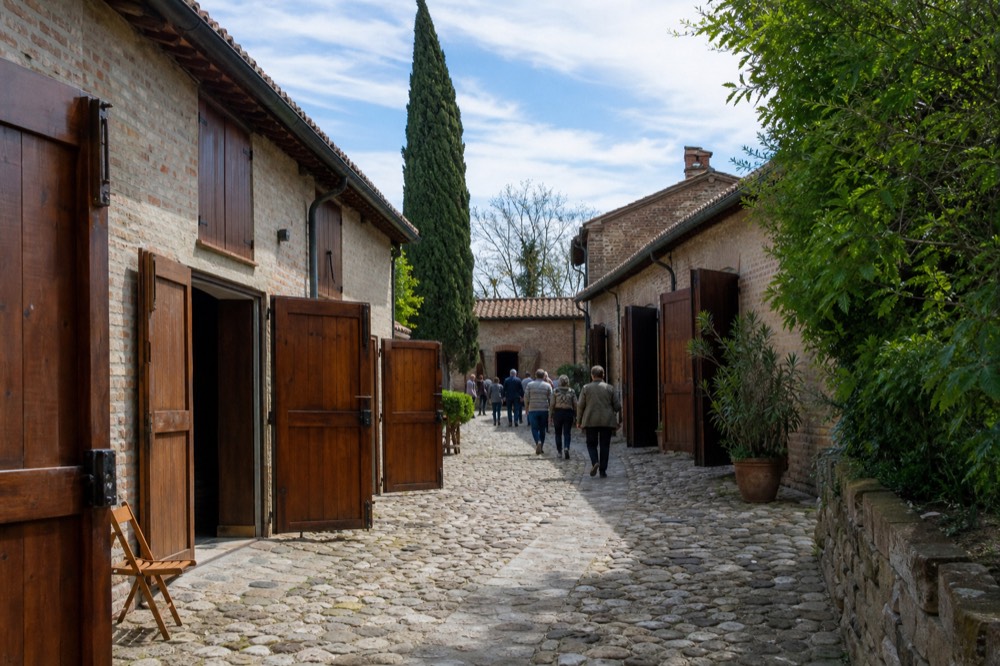
The open day is the other route. Acetaie Aperte 2026 falls on Sunday 27 September 2026, organised jointly by the two consortia and dedicated to the Oro Nero di Modena in all its forms, with over 30 acetaie opening their doors for guided visits and tastings of both Aceto Balsamico di Modena IGP and the Tradizionale DOP. Several participating acetaie take bookings only, so the event page's acetaie list is the working tool. The date sits inside a rich late-September window in the province: the Castelvetro grape and Grasparossa festival runs 19 to 27 September, and the Gusti.a.Mo producer event in Modena follows on 28 and 29 September (see Days in Modena).
For travellers who prefer a scheduled experience with a guide rather than an open-day scramble, the short cellar-and-pairing format near Nonantola covers the barrel rooms, the batteria and a guided tasting of the grades with local products, and it is the easiest version to slot into a single day. Check the current price and the next available dates on the operator's live listing.
However you arrange it, the comparison to insist on is the same one the rulebook implies: both grades, same spoon, one after the other. The ladder from 12 years to 25 is the whole story of aged balsamic vinegar in Modena, and it takes about ninety seconds of tasting to understand what twelve more years in an attic actually buy you.
The two DOP grades are Affinato at a minimum of 12 years and Extra Vecchio at a minimum of 25, the disciplinare bans every other age or quality word on the label, and a booked cellar tasting in Modena normally pours both grades side by side. These are the questions visitors ask most often about the ladder, the wording and the seal.
Common Questions About Aged Balsamic Vinegar In Modena
What Are The Two Grades Of Traditional Balsamic Vinegar Of Modena?
Affinato, aged at least 12 years, and Extra Vecchio, aged at least 25 years. The disciplinare permits no other grade names and bans every embellishing word and any vintage year on the label.
Is Extra Vecchio Better Than Affinato?
Not better, different. Extra Vecchio is denser, rounder and more concentrated after a minimum of 25 years, and tradition serves it plain or on special occasions. Affinato at 12 years is the balanced everyday grade most Modenese families keep on the table.
Can You Buy 50 Or 100 Year Old Balsamic Vinegar?
No. The consortium states there is no such thing as 50-, 100- or 200-year-old Traditional Balsamic; only the barrels can be that old. Any age number on a label means the bottle is not the DOP product.
What Do Riserva And Selezionato Mean On A Balsamic Bottle?
On a DOP bottle they mean nothing legal: both words are banned by the disciplinare. Riserva is legal wording on Aceto Balsamico di Modena IGP for over five years in wood, so a riserva bottle is the IGP, a different product with a 60-day minimum maturation.
Which Grade Am I Given At A Cellar Tasting In Modena?
Usually both. The standard booked visit walks the barrel loft and then pours the 12-year and the 25-year side by side, often with cheese or other local products. The consortium's own FAQ notes the tasting on such a visit is free.
How Do I Tell The Grades Apart On The Bottle?
By the wording and the seal. The label reads Affinato or Extra Vecchio, and the non-reusable numbered seal carries a serial beginning A for the 12-year or E for the 25-year, with a second algorithm-linked number as an anti-counterfeit check.