Best Balsamic Vinegar From Modena: How To Read The Seal And Label
The bottle itself is a legal document. Learn how to read the seal, the label and the three places in Modena where you can buy real balsamic vinegar without falling for the airport trap.
Short answer
To buy real balsamic vinegar from Modena, check the bottle: only the Giugiaro glass bottle with a numbered, non-reusable seal and the words 'Aceto Balsamico Tradizionale di Modena DOP' confirms the 12-year or 25-year product. The shape is mandatory for every producer, and it comes in 10cl, 20cl and 40cl sizes. At the acetaia, you can taste and buy directly; at Mercato Albinelli, look for the IGP label and EU PGI logo; at the airport, avoid bottles without the seal or in odd shapes.
In Modena, the real balsamic vinegar is a legal document in a bottle. The shape, the seal and the wording on the label are not decorative: they are the only way to tell the protected product from an imitation, and they are the same whether you are standing in a barrel loft, a market stall or the airport shop. Food Tours in Modena covers the producer visits that put you inside the acetaia, but the bottle you take home has to pass the same checks wherever you buy it.
Why The Bottle Itself Is The Only Proof You Need
The Giugiaro bottle, the numbered seal and the DOP wording are the only protection you have. A bottle that deviates from any of these three points is not Traditional Balsamic Vinegar of Modena DOP, no matter what the price tag says. The bottle is the label, and the label is the law.
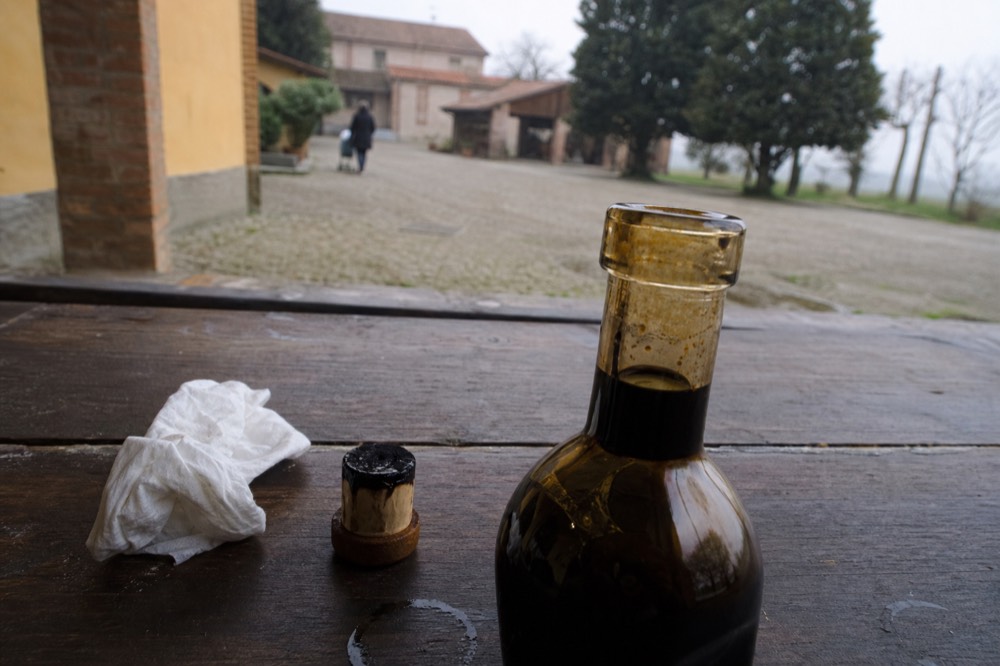
The disciplinare of the DOP consortium is explicit: the bottle must be the 1987 Giorgetto Giugiaro design, a spherical body on a rectangular base in solid white glass. The most common retail size is the 100ml bottle, but the rules also permit 10cl, 20cl or 40cl in that same shape. The cap is a non-reusable numbered seal that cannot be removed without breaking it, and the serial number begins with an "A" for the 12-year Affinato grade and an "E" for the Extra Vecchio of at least 25 years. The bottle carries the words "Aceto Balsamico Tradizionale di Modena DOP" and the consortium's mark. Nothing else is allowed. The Consorzio Tutela Aceto Balsamico Tradizionale di Modena lists every permitted detail, and the bottle is the only packaging that can legally carry the DOP name.
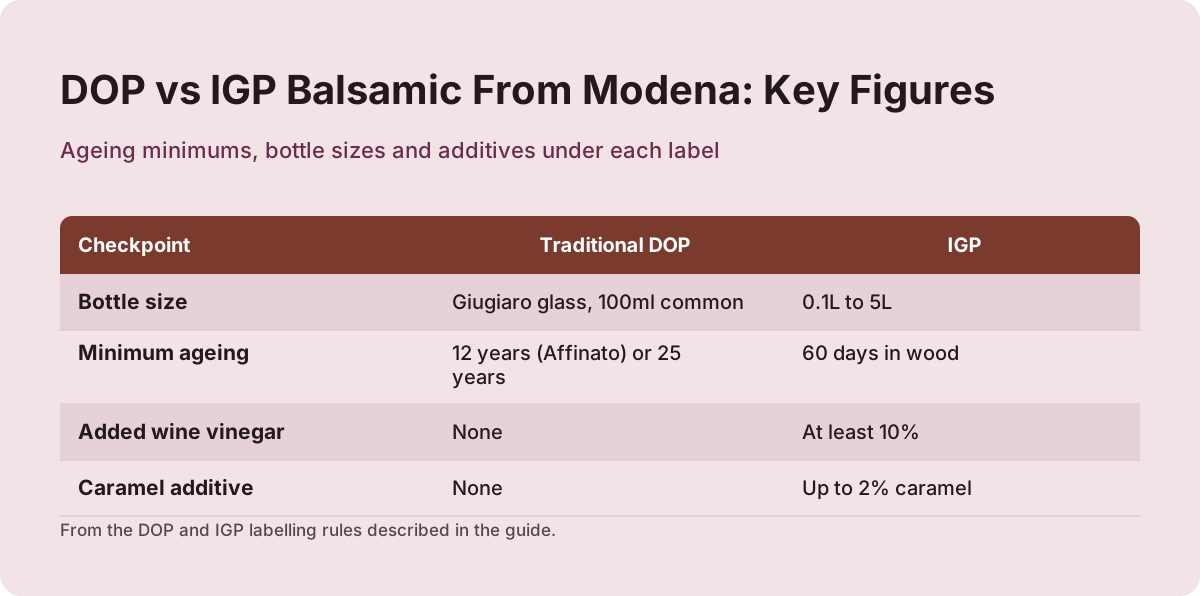
The IGP product, Aceto Balsamico di Modena IGP, has a different set of labelling rules. It must show the full name "Aceto Balsamico di Modena", the words "Indicazione Geografica Protetta" or "IGP", and the yellow-and-blue EU PGI logo (see Is Modena Worth It). It can be sold in glass, wood, ceramic or terracotta from 0.1L to 5L, and even in single-dose sachets. The IGP is a genuine product with a protected designation, but it is not the 12-year barrel-aged vinegar. The Consorzio Tutela Aceto Balsamico di Modena explains that a bottle showing only "balsamico" or only "Modena" is an imitation. The real benchmark is the seal. The full DOP and IGP comparison covers the legal framework in detail.
| Checkpoint | Traditional DOP | IGP |
|---|---|---|
| Bottle shape | Giugiaro glass, 100ml common | Any glass, wood, ceramic, terracotta |
| Seal | Numbered, non-reusable, A or E prefix | No mandatory seal |
| Label wording | Aceto Balsamico Tradizionale di Modena DOP | Aceto Balsamico di Modena IGP |
| Ageing minimum | 12 years (Affinato) or 25 years (Extra Vecchio) | 60 days in wood, plus a share of vinegar aged over 10 years |
| Permitted grapes | Lambrusco, Ancellotta, Trebbiano, Sauvignon, Sgavetta, Berzemino, Occhio di Gatta | Lambrusco, Sangiovese, Trebbiano, Albana, Ancellotta, Fortana, Montuni |
| Added wine vinegar | None | At least 10% |
| EU logo | DOP red-and-yellow | PGI yellow-and-blue |
How To Read The Seal At The Acetaia
At the acetaia, the seal is the first thing you check. The alphanumeric serial number, the consortium's mark and the mandatory Giugiaro bottle confirm the DOP status. If the bottle is not sealed with a numbered, non-reusable cap, it is not Traditional Balsamic Vinegar of Modena DOP, no matter how old the barrels look.
A visit to a working acetaia is the most direct way to buy the real thing. The producer will show you the batteria, the graded barrels of different woods, and then you taste the vinegar from the smallest cask. The bottle you buy afterwards must carry the same seal you saw on the demonstration bottle. The serial number is matched to a second algorithm-linked number as an anti-counterfeit check. The consortium's own FAQ says the tasting on a visit is free, and you pick an acetaia from its interactive map. The seal is the only thing that travels home with you.
After a tasting, many visitors leave with a bottle of the 12-year Affinato or the 25-year Extra Vecchio. The price reflects the years of evaporation and the cost of the barrel battery, and it is the same whether you buy at the acetaia or later at a specialist shop. The difference is that at the acetaia you can watch the bottling and see the seal applied. That is the moment the bottle becomes a legal document.
The Cavedoni family in Levizzano Rangone is one of the oldest documented balsamic producers in Modena, and their cellar is a seven-generation story. The tour crosses the vineyard and ends with a five-vinegar tasting, so you can compare the DOP grades side by side before you buy. The seal on the bottle they hand you is the same one you will see on the shelf in the shop.
Buying Real Balsamic At Mercato Albinelli: What To Look For
At the market, the IGP label is the most common find, and the DOP bottle is usually behind the counter. Check the full wording "Aceto Balsamico di Modena IGP" and the EU PGI logo, and if you want the 12-year vinegar, ask to see the sealed Giugiaro bottle before you pay.
Mercato Albinelli has been trading every morning since 1931, and its stalls carry both the IGP and the DOP vinegars. The market is open Monday to Saturday from 07:00 to 15:00, and the stalls are closed on Sundays. The official Mercato Albinelli site lists the current opening hours and any extraordinary closures. The formaggerie and salumerie are the most likely places to find the real balsamic, often alongside Parmigiano Reggiano wheels (see Parmigiano vs Parmesan). The bottle you want is the small Giugiaro one with the numbered seal. If a stall sells a larger, decorative bottle with no seal and a label that says only "balsamico di Modena", it is the IGP or a generic vinegar, not the DOP. The IGP is a genuine product and a good everyday vinegar, but it is not the barrel-aged traditional one. The Mercato Albinelli guide covers the stall-by-stall layout.
| What you see | What it is | What to do |
|---|---|---|
| Small Giugiaro bottle, numbered seal, "Aceto Balsamico Tradizionale di Modena DOP" | The real DOP 12-year or 25-year | Buy it, check the seal |
| Glass bottle, any shape, "Aceto Balsamico di Modena IGP", EU PGI logo | The genuine IGP, cooked must with wine vinegar | Buy it for everyday use, check the label |
| Ceramic or terracotta bottle, "balsamico", no seal, no consortium marks | A generic vinegar, not protected | Avoid, or use as a souvenir only |
| Sachet or plastic bottle, "balsamic glaze" | A condiment, not vinegar | Avoid for the real thing |
The stallholders at Albinelli know the difference. If you ask for "tradizionale", they will show you the sealed bottle. The price is not displayed on the shelf, so you ask. The same bottle will cost more at the airport, so the market is the better place to buy if you have hand luggage space.
The Cavedoni acetaia is a short drive from the hills, but the market is a good place to pick up a bottle if you have already done the tasting. The seal on the market bottle is identical to the one you saw at the producer.
Balsamic Vinegar At The Airport: The Last-Minute Trap
The airport shop is the riskiest place to buy. The duty-free shelves are full of decorative bottles, gift sets and "balsamic glaze" that look like the real thing but lack the seal and the DOP wording. The real DOP bottle is sometimes there, but it is usually hidden behind the souvenir versions, and the price is higher than anywhere else.
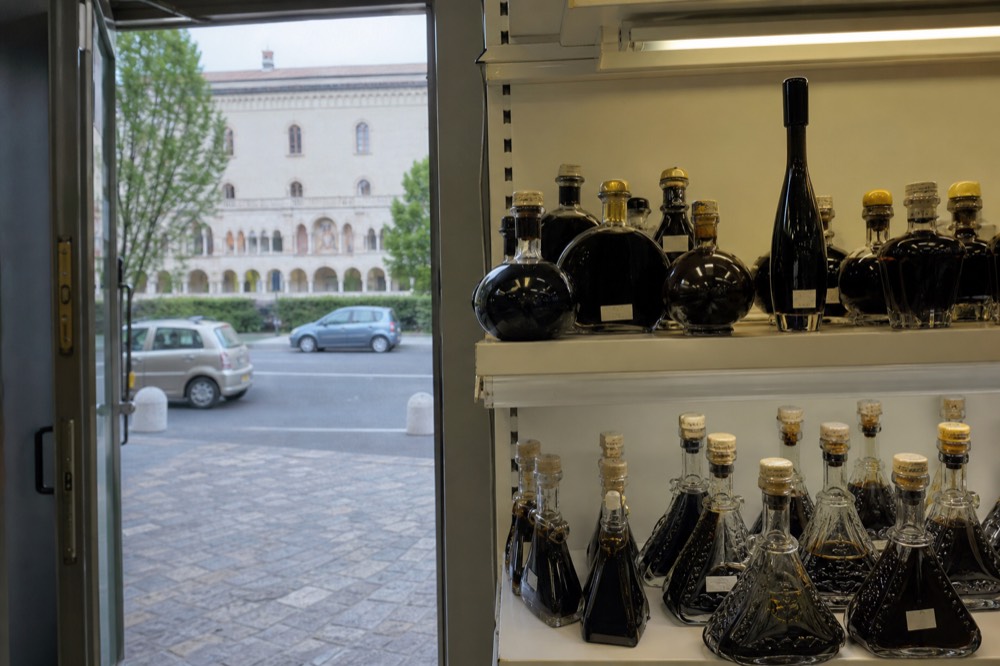
At Bologna Guglielmo Marconi Airport, the food shops carry a wall of balsamic products. The first thing you see is the larger decorative bottles in ceramic, wood or coloured glass, often with a pourer and a ribbon. None of them carry the DOP seal. They are the IGP or a generic condiment, and they are sold as gifts. The real DOP bottle is the small Giugiaro one, and it is usually on a lower shelf or behind the counter. The price at the airport is marked up, and the staff may not know the difference between the seal and the label. If you buy a bottle without the seal, you have not bought the Traditional Balsamic Vinegar of Modena DOP.
The airport is also the place where the "balsamic glaze" and "balsamic cream" appear most often. These are condiments, not vinegar, and they are thickened with starch or sugar. They are fine on a salad, but they are not the protected product. The seal is the only way to be sure.
| Airport buy | Seal? | Verdict |
|---|---|---|
| Small Giugiaro bottle, numbered seal, DOP label | Yes | The real deal, buy it |
| Large ceramic bottle, "balsamico di Modena", no seal | No | IGP or generic, not the 12-year |
| Gift set with two bottles and a pourer, no seal | No | Souvenir, not the DOP |
| Balsamic glaze or cream in a tube | No | Condiment, not vinegar |
If you are flying with hand luggage only, the 100ml bottle fits the liquids rule. The seal is fragile, so pack it in the middle of your bag. The airport is the last chance, but the acetaia and the market are the better places.
How To Spot A Counterfeit Balsamic Vinegar
A counterfeit bottle will almost always get the bottle shape wrong, omit the numbered seal, or use wording that is close but not exact. The words "Aceto Balsamico Tradizionale di Modena DOP" are a legal statement, and any variation means the product is not the protected one.
The most common counterfeit is a decorative bottle with a label that says "Aceto Balsamico di Modena" but without the IGP or PGI logo. That is a generic vinegar, and it is legal to sell, but it is not the traditional product. The second is a bottle that looks like the Giugiaro shape but is made of thin glass and has a simple screw cap with no seal. The third is a bottle that says "balsamic vinegar of Modena" in English, which is a translation, not the protected name. The real bottle always has the Italian wording and the seal. A visit to a working acetaia is the surest way to learn the seal.
The DOP consortium's website lists the permitted wording and the seal design. The seal is a small plastic cap with a tear-off strip, and the serial number is printed on it. The bottle is heavy for its size. If you hold it up to the light, the glass is thick and the base is flat. The label is a simple paper wrap with the consortium's mark and the grade. There is no vintage year, because the disciplinare forbids it.
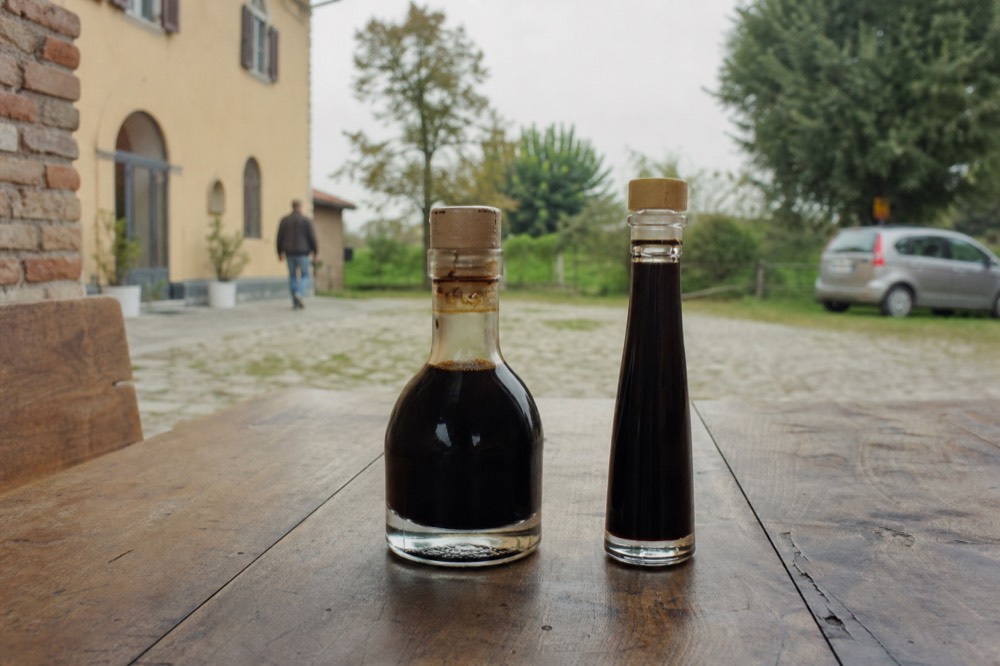
| Real DOP bottle | Counterfeit |
|---|---|
| Giugiaro glass, 100ml | Any shape, often larger |
| Numbered seal, A or E prefix | Screw cap, no seal |
| "Aceto Balsamico Tradizionale di Modena DOP" | "Balsamic vinegar of Modena" or "Aceto Balsamico di Modena" without IGP |
| Consortium mark | No mark |
| Heavy, thick glass | Thin, lightweight glass |
The IGP is a genuine product and is often sold in the same shops. The difference is the seal and the ageing. The IGP is a good vinegar for cooking, but it is not the barrel-aged vinegar that pours like syrup. The real DOP is a condiment, not a dressing, and a few drops are enough. The price reflects that.
The DOP And IGP Differences At A Glance
The DOP is cooked grape must aged for at least 12 years in a battery of small barrels, with no additives. The IGP is cooked and/or concentrated must with at least 10% wine vinegar added, and a minimum of 60 days in wood. The DOP is a sipping vinegar; the IGP is a cooking and dressing vinegar.
The two products live side by side in Modena, and both are protected. The DOP is the one that ends up on a spoon at the end of a meal, or on a sliver of Parmigiano Reggiano (see Dairy Factory Tours). The IGP is the one you pour over a salad or use to deglaze a pan. The price gap is wide, and it is explained by the ageing time. The DOP loses volume to evaporation every year, and the barrel battery is a capital asset that takes decades to build. The IGP is made in much larger volumes and is exported to over 130 countries. The ageing grades explain the taste difference between the two.
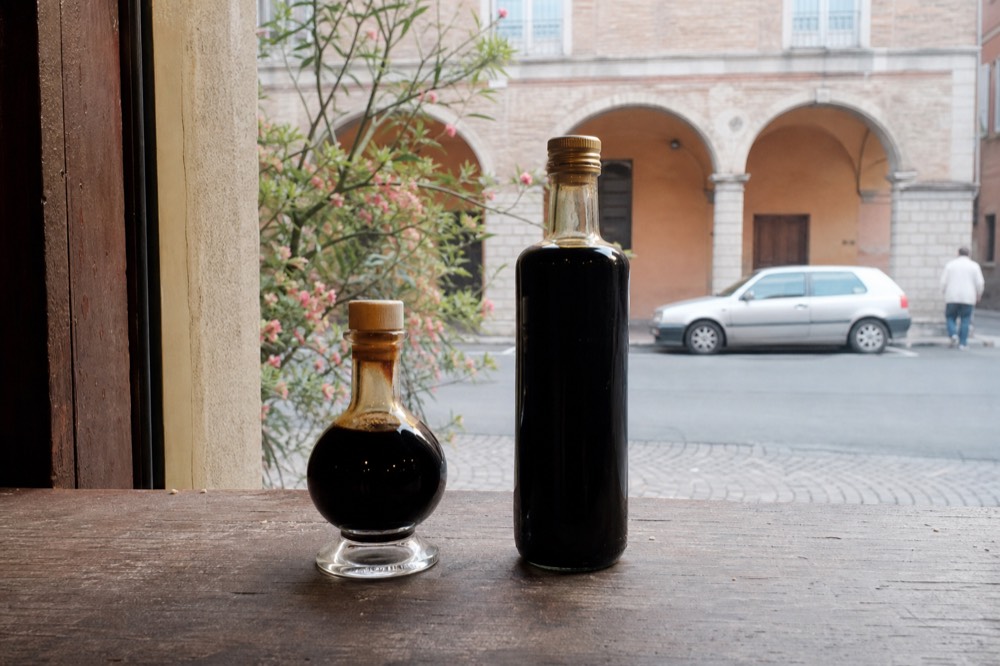
| Feature | DOP | IGP |
|---|---|---|
| Base ingredient | Cooked grape must only | Cooked/concentrated must + wine vinegar |
| Minimum ageing | 12 years (Affinato), 25 years (Extra Vecchio) | 60 days in wood |
| Additives | None | Up to 2% caramel for colour |
| Bottle | Giugiaro glass, 100ml common | Any glass, wood, ceramic, terracotta, 0.1L-5L |
| Seal | Numbered, non-reusable | None |
| Production zone | Modena province only | Modena and Reggio Emilia provinces |
| Use | Spoon, dessert, cheese | Cooking, dressing, marinade |
Understanding the difference is the key to buying the right bottle. The seal is the physical proof, and the wording is the legal one. If you want the 12-year vinegar, you look for the seal. If you want a good everyday vinegar, the IGP with the EU logo is the right choice.
What To Do When You Get Home
Once you have the real bottle, keep it upright, away from direct heat and light, and use it sparingly. The DOP vinegar does not go bad, but it will continue to mature very slowly in the bottle. The seal is proof of authenticity, and you can keep the bottle as a record.
The real DOP vinegar is a living product, and it will last for years. The taste will deepen slightly over time, but the real change happens in the barrel, not the bottle. The 100ml bottle is meant to be used a few drops at a time, so it lasts a long time. The seal is not a tamper-proof cap that you throw away; it is part of the bottle's identity. If you want to show someone the real thing, you show them the seal.
The IGP vinegar is more forgiving and can be used freely. The bottle will last for months in a cupboard, and the taste will stay consistent. The label is the guarantee, and the EU logo is the thing to look for when you buy it again.
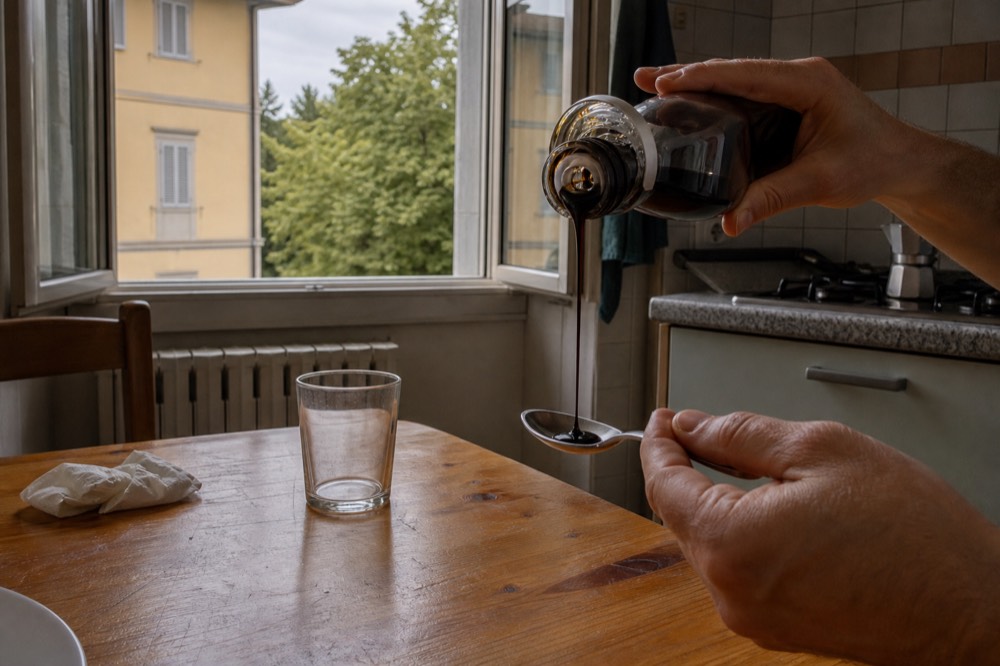
The organic acetaia at Vignola, south of Modena, is a private format that crosses the Lambrusco vineyards before the barrel loft. The tasting is one-on-one, and the bottle you buy carries the same seal. The drive from Modena is about 25 minutes, and the appointment is made directly with the family.
The market and the airport are the two most common places to buy, but the acetaia is the only place where you can watch the seal go on. The bottle that comes home with you is the same one that was filled in front of you. That is the real difference.
The small family acetaia in Modena itself is a hands-on cellar visit that books out further ahead than its size suggests. The tasting is short and direct, and the bottle you buy is the one you just tasted. The seal is the same.
The Cavedoni cellar, the organic Vignola acetaia and the city food walk that includes the market are three ways to buy the real vinegar. The seal is the common thread, and the bottle is the proof.
The seal, the bottle shape and the label wording are the three checks that confirm you are buying real balsamic vinegar from Modena. Whether you are at the acetaia, the market or the airport, the same rules apply, and a bottle that fails any one of them is not the protected product.
Common Questions About Buying Real Balsamic Vinegar
How Can You Tell If Balsamic Vinegar Is Real?
Look for the Giugiaro glass bottle, the numbered non-reusable seal and the words "Aceto Balsamico Tradizionale di Modena DOP". Any bottle that lacks these three features is not the DOP product. The IGP vinegar has a different label with the EU PGI logo and the full name "Aceto Balsamico di Modena IGP".
What Is The Best Balsamic Vinegar From Modena?
The best is the Traditional Balsamic Vinegar of Modena DOP, aged at least 12 years (Affinato) or 25 years (Extra Vecchio). It is made from cooked grape must, aged in a battery of small barrels with no additives, and sold in the Giugiaro bottle with a numbered seal.
Where Should I Buy Balsamic Vinegar In Modena?
The best place is a working acetaia, where you can taste the vinegar and buy the bottle with the seal applied in front of you. Mercato Albinelli is the next best option for the IGP and the DOP, and the airport is the most expensive and risky place.
What Is The Difference Between DOP And IGP Balsamic Vinegar?
The DOP is cooked grape must only, aged a minimum of 12 years in wood, with no additives. The IGP is cooked and/or concentrated must with wine vinegar added, aged a minimum of 60 days in wood. The DOP is a sipping vinegar; the IGP is for cooking and dressing.
Can I Buy Real Balsamic Vinegar At The Airport?
Yes, but only if you find the small Giugiaro bottle with the numbered seal and the DOP label. Most airport bottles are decorative IGP or generic vinegars without the seal. The price is higher than at the acetaia or the market.
How Long Does Real Balsamic Vinegar Last?
The DOP vinegar lasts indefinitely if kept upright, away from heat and light. It will continue to mature very slowly in the bottle. The IGP vinegar will last for months in a cupboard and keeps its taste.