What Type Of Italian Wine Is Lambrusco In Modena?
Lambrusco explained: the grape family, the six DOC denominations, four of them in Modena province, and the full secco to dolce style range that decides whether a visitor likes it.
 By Marco Montanari, Modena food tour guide and Emilian culinary specialist
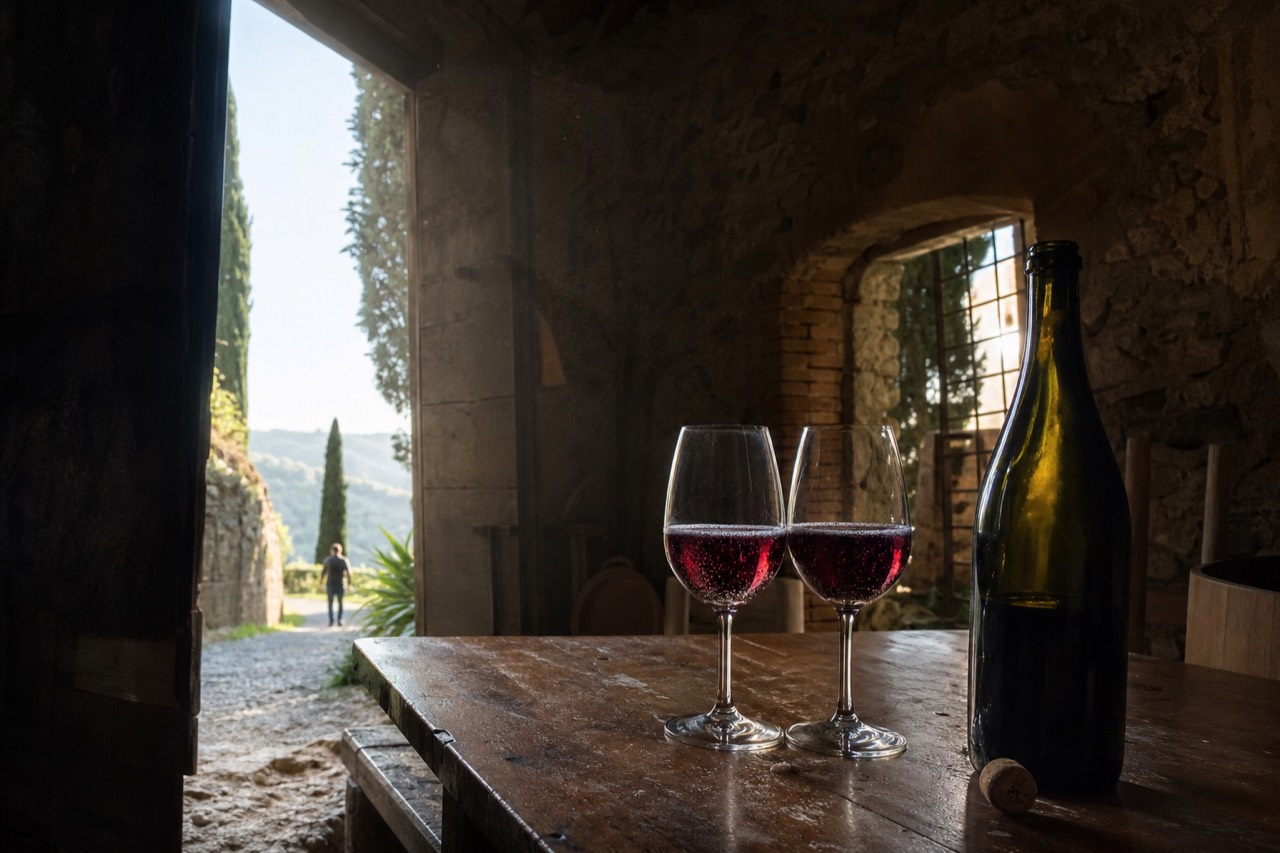
What Type Of Italian Wine Is Lambrusco?
Lambrusco is a sparkling red wine, usually frizzante rather than fully spumante, made from a family of related grape varieties of the same name in Emilia-Romagna, Italy. It is protected by six DOC denominations, four of which sit in Modena province, and it is produced across a full style range from dry secco to sweet dolce. Around 40 million bottles a year come out of those denominations.
That is the short answer, but the word "Lambrusco" carries more weight than most visitors expect. It is not one wine, one grape or one style. It is a family of varieties, some cultivated since Etruscan times, spread across the plain and hills between Modena and Reggio Emilia, and each growing zone makes something recognisably different from its neighbour (see Via Emilia). The Consorzio Tutela Lambrusco, recognised on 1 January 2021 out of a merger of three earlier protection consortia, oversees the whole denomination system, and its consortium site is the reference for what may legally carry the name.
The second thing to understand is the sparkle. Frizzante styles, the lightly sparkling ones, represent roughly 90 percent of Lambrusco production, which tells you the wine's identity is tied to its gentle fizz rather than to a still format. The bubbles come from a second fermentation, usually in pressurised tanks, and they are soft by Champagne standards. That lightness is exactly why the wine works with the rich food of the region.
The third thing is the style range, and this is where most visitors get surprised. Every one of the six denominations permits secco, semisecco, amabile and dolce versions, so "Lambrusco" can be bone-dry or frankly sweet depending on the bottle in your hand. The dry secco style is the one that gets poured alongside Modena food, and it is the one this site's Food Tours in Modena itineraries keep coming back to.
There is also a naming trap worth flagging early. Because Lambrusco is both the grape family and the wine, a label can name a specific variety, such as Lambrusco di Sorbara or Lambrusco Salamino, or it can name the broader denomination. The variety names and the denomination names overlap heavily but not perfectly, and Italian labelling law does not make the distinction obvious to a casual reader. When a Modenese producer talks about "Sorbara", they mean both a grape and a tightly defined territory around it.
If you want to taste the range rather than read about it, these three experiences cover it well:
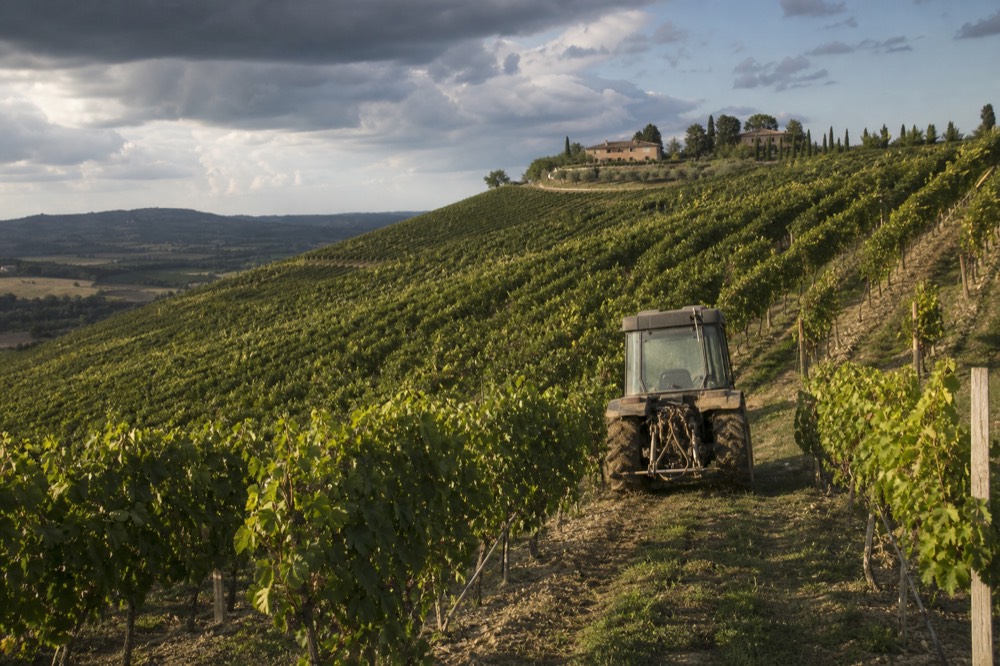
Where Does Lambrusco Grow And Which Denominations Exist?
Lambrusco grows across roughly 10,000 hectares of vineyard in Modena and Reggio Emilia provinces, organised into six DOC denominations: Lambrusco di Sorbara, Lambrusco Grasparossa di Castelvetro, Lambrusco Salamino di Santa Croce, Modena, Reggiano and Colli di Scandiano e di Canossa. Four of the six are in Modena province. The other two belong to Reggio Emilia.
The denominations are not marketing labels. Each one is tied to a defined territory, a defined set of grape varieties and a defined character, and the differences are real enough that a Sorbara and a Grasparossa poured side by side taste like distant cousins rather than siblings. Sorbara is the pale one, violet-scented and high in acid, with red fruit and a delicate foam. Grasparossa di Castelvetro, from the high plain and the hills behind the town of Castelvetro, is the most structured of the group, with pronounced body and tannin. Salamino di Santa Croce sits between them, deep ruby, raspberry and cherry, medium-bodied and drunk through a whole meal.
| Denomination | Province | Typical character |
|---|---|---|
| Lambrusco di Sorbara DOC | Modena | Pale colour, violet and red fruit, high acidity, delicate fizz |
| Lambrusco Grasparossa di Castelvetro DOC | Modena | Darkest of the group, most body and tannin, hills fruit |
| Lambrusco Salamino di Santa Croce DOC | Modena | Deep ruby, raspberry and cherry, medium body, all-meal wine |
| Modena DOC | Modena | Central band of the province, includes white, rosato and novello alongside Lambrusco |
| Reggiano DOC | Reggio Emilia | Broad plain denomination around Reggio Emilia |
| Colli di Scandiano e di Canossa DOC | Reggio Emilia | Hill denomination south of Reggio Emilia |
Modena DOC deserves a note of its own, because it is broader than the name suggests (see Is Modena Worth It). It covers a central band of the province and takes in white, red, rosato and novello frizzanti and spumanti alongside the Lambrusco wines, so a bottle labelled Modena DOC is not automatically a Lambrusco at all. Check the variety on the label if that matters to you.
For visitors, the practical consequence is geography. The heartland of the two most distinctive denominations, Sorbara and Grasparossa, is a short trip out of Modena: Sorbara sits in the comune of Bomporto to the north, and Castelvetro is in the hills to the south, reachable on SETA bus line 740 from Modena Autostazione in 41 to 47 minutes, per the timetables published on SETA's own line list. Our guide to Lambrusco tastings around Modena maps out which producers you can actually visit in each zone.
The single best-known name in the denomination story is Cleto Chiarli, Modena's oldest commercial Lambrusco house, founded in 1860, which pours four of its wines in its own cellars at Castelvetro. If a cellar tasting is on your list, check the live listing for the next available dates before you build the day around it.
Is Lambrusco Dry Or Sweet?
Every one of the six Lambrusco denominations permits four styles: secco, semisecco, amabile and dolce. So Lambrusco is made across the full range from dry to sweet, and no honest answer can call the whole family one or the other. The dry secco style is simply the one that local tradition pours with food in Modena.
This matters because the wine's reputation abroad was built, unfairly, on sweet exported versions from decades ago, while the bottles on Modena tables are usually secco or semisecco. The residual sugar ladder is straightforward once you know it exists. Secco is the driest. Semisecco carries a little softness. Amabile is noticeably sweet. Dolce is openly sweet, a dessert register. None of these words is a quality grade; they are sweetness categories, and good and mediocre bottles exist at every rung.
| Style | Sweetness register | Where you usually meet it |
|---|---|---|
| Secco | Bone-dry, crisp finish | The default pour with savoury Modena dishes |
| Semisecco | Off-dry, gentle roundness | A common middle ground in trattorie |
| Amabile | Clearly sweet | Often served to visitors expecting the exported style |
| Dolce | Fully sweet | Dessert pairing, and the style that shaped the old export reputation |
The useful skill for a visitor is reading the label. The style word is printed on the front of the bottle in small type, usually near the denomination name, and it tells you more about what is in the glass than the vintage does. A Grasparossa secco and a Grasparossa dolce are two different drinking experiences from the same denomination, the same grape and possibly the same producer.
It is also worth knowing that no consortium statement or sourced volume split exists for how much of production is secco versus amabile or dolce. Anyone who tells you a precise percentage is guessing. What can be said with confidence is that the full range is legal in every denomination, that frizzante accounts for about 90 percent of output, and that the secco style is the one the region itself drinks with dinner.
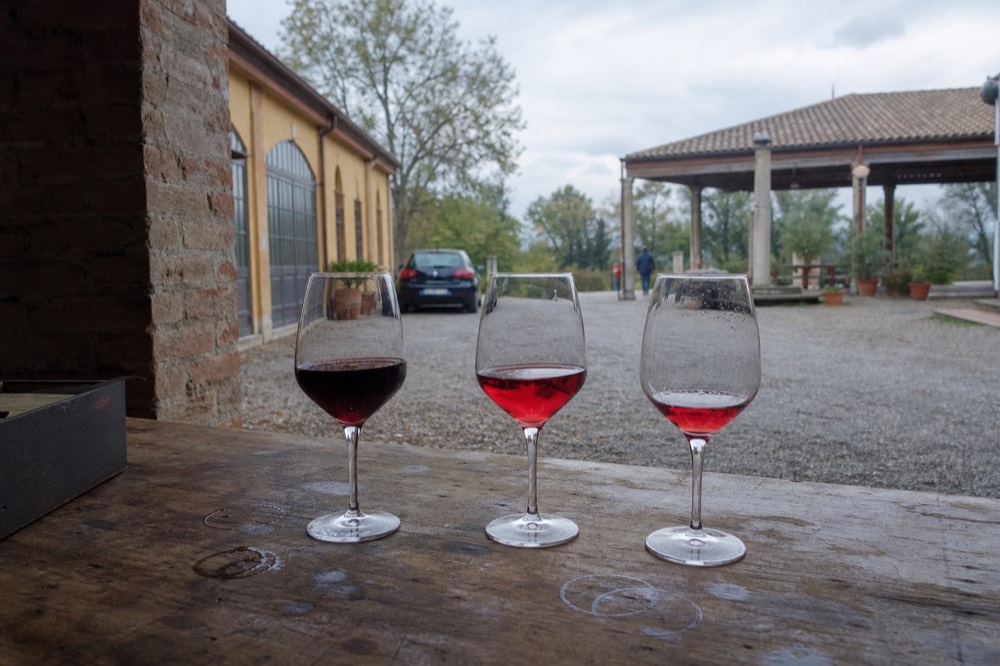
A sommelier-led tasting is the fastest way to internalise the differences, because the styles only become obvious when they are poured side by side. The cellar tour with a sommelier at Nonantola ends on exactly that comparison, three styles in three glasses, and it is worth checking the current price before you commit an afternoon to it.
How Should You Drink Lambrusco With Modena Food?
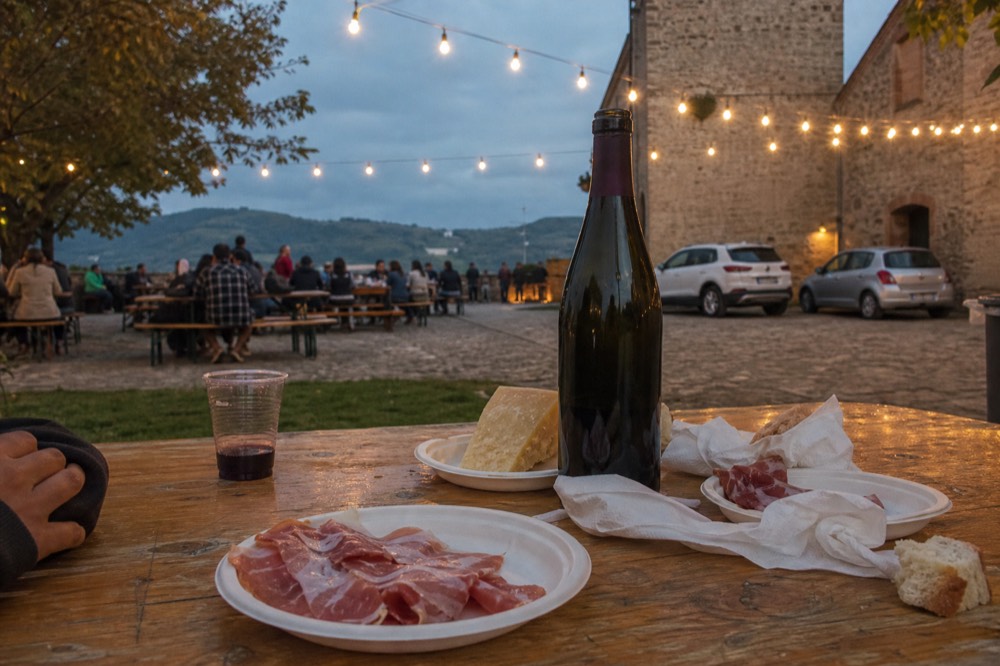
Lambrusco is drunk young, well chilled and with the rich dishes of the Emilian table: tortellini in brodo, cured pork, gnocco fritto and aged cheese. The dry secco style is the classic match, because the wine's acidity and soft fizz cut through the fat that defines this cuisine. It is an everyday table wine in Modena, not a special-occasion bottle.
The logic of the pairing is fat against acid. Emilian food is built on pork, butter-rich pasta and long-aged cheese, and a still red with heavy tannin would sit heavily on top of it. Lambrusco's high acidity scrubs the palate between bites, and the bubbles do the same work a sparkling wine does with fried food anywhere in the world. Serve it cold, around 8 to 10 degrees, which is colder than most reds but exactly right for a frizzante.
The cheese pairing is worth singling out, because Parmigiano Reggiano and Lambrusco are a canonical couple in this province (see Parmigiano vs Parmesan). The cheese is only milk, salt and rennet, with no additives or preservatives and an edible rind, per the Consorzio's own product pages, and its savoury crystals against a dry Sorbara are as local as a pairing gets. The white crunch in an aged wedge is tyrosine, and it grows with age, which is why the older the wheel, the better the wine match.
| Dish | Lambrusco match | Why it works |
|---|---|---|
| Tortellini in brodo | Sorbara secco | High acid and pale fruit lift the rich capon broth |
| Gnocco fritto with salumi | Grasparossa secco or semisecco | Tannin and body stand up to cured pork and fried dough |
| Erbazzone and vegetable tortas | Salamino di Santa Croce | Medium body bridges greens, butter and pastry |
| Aged Parmigiano Reggiano | Sorbara secco | Acidity against the savoury tyrosine crystals |
| Zuppa inglese and desserts | Amabile or dolce | Sweetness meets sweetness without either dominating |
If you are planning around tasting rather than dinner, the hill estates around Castelvetro make the most sense as a base. Fattoria Moretto, a small family estate in the Grasparossa hills, walks you through the vineyard as well as the cellar before the wines are poured, and Opera 02 on the same hillside makes both the wine and the traditional balsamic vinegar, so one short tasting covers the Grasparossa and the acetaia in the same room. See the next available dates on the live listings before you choose a day.
The calendar can decide this for you. Castelvetro's Sagra dell'Uva e del Lambrusco Grasparossa runs 19 to 27 September 2026, a nine-day festival in the heart of the denomination, and the same late-September window brings Acetaie Aperte on Sunday 27 September 2026, when more than 30 vinegar houses across the province open their doors. A trip timed to that fortnight puts wine, vinegar and festival food in one visit.
Is Lambrusco Like Prosecco Or Other Sparkling Wines?
Lambrusco and Prosecco are both Italian sparkling wines, but they are different in grape, colour, region and method: Prosecco is a white from Glera grapes in the Veneto and Friuli, while Lambrusco is a red, or occasionally rosato, from Emilia-Romagna made in a full dry-to-sweet range. Lambrusco is also usually frizzante, with softer fizz than a spumante.
The comparison comes up constantly, and we answer it in detail in is Lambrusco like Prosecco. The short version is that the two wines share a lightness of spirit and little else. Prosecco's default register is off-dry and floral. Lambrusco's default in Modena is dry and savoury, with red fruit and a chalky finish that Prosecco never has. A visitor who likes one may or may not like the other, and the only reliable test is tasting the styles side by side.
That point about the range is the one worth repeating, because it is the single fact that decides whether a visitor likes Lambrusco at all. Someone handed an amabile bottle at a tourist-oriented tasting may come away thinking the wine is a sweet novelty. The same person given a chilled Sorbara secco with a plate of salumi often becomes a convert. Style, not grape, is the variable.
There is a final distinction that matters in Modena specifically, and it is one the region's producers are careful about. Lambrusco is the wine of the province's everyday table, while Aceto Balsamico Tradizionale di Modena DOP, the vinegar aged a minimum of 12 years in graded barrel batteries, is the province's other great grape-derived product. They come from the same vineyards and the same must, but they are entirely different things, and conflating them in a tasting room marks you as a visitor faster than any accent. The best tastings in the province, like the one at Opera 02, deliberately show both so the difference is unmistakable.
For the practical questions, how the wine is served, at what temperature and with which meal, our piece on how you are supposed to drink Lambrusco covers the table manners, and the Lambrusco tastings guide covers where to go.
These three experiences are the ones we would point anyone at, whichever style they land on:
Lambrusco is a sparkling red wine from a family of grape varieties in Emilia-Romagna, protected by six DOC denominations, four of them in Modena province, and made in styles from dry secco to sweet dolce. The questions below cover the details visitors ask most often: whether the wine is sweet, how many denominations exist, whether it should be chilled, and how it differs from Prosecco.
Common Questions About Lambrusco
What Type Of Italian Wine Is Lambrusco?
Lambrusco is a sparkling red wine, usually frizzante, made from a family of related grape varieties in Emilia-Romagna. It is protected by six DOC denominations, four of them in Modena province, and it is produced in styles from dry secco to sweet dolce.
Is Lambrusco Always Red?
No. Most Lambrusco is red, but rosato versions exist, and the Modena DOC denomination also covers white, red, rosato and novello frizzanti and spumanti alongside the Lambrusco wines.
Is Lambrusco A Sweet Wine?
Not inherently. Every denomination permits secco, semisecco, amabile and dolce styles, so the wine runs from bone-dry to sweet. The dry secco style is the one traditionally poured with Modena food.
How Many Lambrusco Denominations Are There?
Six: Lambrusco di Sorbara, Lambrusco Grasparossa di Castelvetro, Lambrusco Salamino di Santa Croce, Modena, Reggiano and Colli di Scandiano e di Canossa. Four are in Modena province, two in Reggio Emilia.
Should Lambrusco Be Chilled?
Yes. It is served well chilled, around 8 to 10 degrees, colder than most red wines. The cool temperature keeps the fizz fine and the fruit fresh.